The LORD God our shelter

https://odb.org/2026/06/18/run-for-shelter
Psalm 91:9–16 (NIV): 9 If you say, “The LORD is my refuge,” and you make the Most High your dwelling,
      10 no harm will overtake you, no disaster will come near your tent.
      11 For he will command his angels concerning you to guard you in all your ways;
      12 they will lift you up in their hands, so that you will not strike your foot against a stone.
      13 You will tread on the lion and the cobra; you will trample the great lion and the serpent.
      14 “Because he loves me,” says the LORD, “I will rescue him; I will protect him, for he acknowledges my name.
      15 He will call on me, and I will answer him; I will be with him in trouble, I will deliver him and honor him.
      16 With long life I will satisfy him and show him my salvation.”

As the rain began to come in torrents, we splashed through muddy puddles and rushed into a nearby school gym. Thoroughly soaked, we huddled with strangers for the next half hour, still hoping the storm would end. When we ventured back out, we saw that the band was packed up and ready to leave.

When the storms of life come, where can we run? Sorrow, worry, illness, and confusion can make us fearful and in need of refuge. We need a strong shelter that’ll protect us. Psalm 91 reminds us that God has promised to rescue us and to be with us in trouble. “Because he loves me . . . I will rescue him; I will protect him, for he acknowledges my name” (v. 14). When we need help, we can call on His name and He “will answer” us (v. 15). (Cindy Hess Kasper, Our Daily Bread 18th June 2026)

When it comes to running to God for shelter in times of trouble or we need the LORD as our refuge because of the storms of life coming our way, it is important to note that there are conditions as we can see in Psalm 91. Because salvation is by the grace of God and not through our efforts in any way, we sometimes assume that everything else concerning God may be proceeded on that basis. Christ died for our sins while we were yet sinners. He didn’t die for only those who were living righteous lives. Yet in order to live in the glorious fellowship with Christ, we need to live a righteous life befitting His name. We are not required to be righteous to be saved but righteousness is key to living in the centre of God’s will where His abundant grace and mercy flows after we are saved. That is why salvation or faith without works is dead. We are called to do good works once we are saved although good works is not conditional to our salvation.

Even Psalm 91:14-16 emphasises this fundamental principle:

Psalm 91:14-16 14 “Because he loves me,” says the LORD, “I will rescue him; I will protect him, for he acknowledges my name. 15 He will call on me, and I will answer him; I will be with him in trouble, I will deliver him and honor him. 16 With long life I will satisfy him and show him my salvation.”

God will rescue us and answer our call and be with us when we are in trouble because we love Him, because we acknowledged His name. Not totally conditional as He may still intervene regardless of the state of our relationship with Him, yet somewhat conditional. In other words, we cannot expect God to intervene if we live godless and unrighteous lives, if we are obstinate and do not treat Jesus as King. If we only play lip service to our confession that Jesus Christ is our Lord, it will be difficult for God the Father to be our refuge and shelter. We cannot be living recklessly and wickedly and yet expect God’s protection and providence and provision.

The message this morning is simply return to God today. Repent from our sins and our wayward ways today. Seek His forgiveness. He will forgive us for He is a just and compassionate God. Then we may live under the shadow of His wings and He will truly be our shelter and refuge in time of trouble and when storms of life come crashing into our lives! Amen!
Highway of Holiness

https://odb.org/2026/06/16/the-way-of-holiness

Isaiah 35:8–10 (NIV): 8 And a highway will be there; it will be called the Way of Holiness; it will be for those who walk on that Way. The unclean will not journey on it; wicked fools will not go about on it. 9 No lion will be there, nor any ravenous beast;
they will not be found there. But only the redeemed will walk there, 10 and those the LORD has rescued will return. They will enter Zion with singing; everlasting joy will crown their heads. Gladness and joy will overtake them, and sorrow and sighing will flee away.

The prophet Isaiah shared God’s promises to His people, those exiled from their home. Away from the temple, where they would experience His presence, they must have felt bereft and forlorn. The promises, therefore, of the Way of Holiness, the path to God, would give them hope and strength. To think of entering “Zion with singing,” without fear or sorrow, would lead them to rejoice (v. 10).

Even as Jennifer holds on to these assurances from centuries ago, so too can we who believe in Jesus trust that as we journey with Him, we’ll know gladness and joy (v. 10). Whatever trials we face in this life—however taxing or life-altering—we know that God’s way leads us home to Him. (Amy Boucher Pye, Our Daily Bread 16th June 2026)

Isaiah prophesied that the Israelites would be disciplined and exiled to Babylon for their covenantal unfaithfulness (Isaiah 39:6-7; see Jeremiah 25:11). He also prophesied that once the seventy-year chastisement was completed, God would bring them back to the promised land and restore and prosper their land (29:10-11). Isaiah pictures them making their way back to Him on “the Highway of Holiness,” traversing “a great road . . . through that once deserted land . . . only for those who walk in God’s ways” (Isaiah 35:8 nlt). (K.T Sim, Insight, Our Daily Bread 16th June 2026)

In Isaiah 35:8, Isaiah prophesied that there will be a highway of holiness for the Israelites exiled to Babylon to return. They were disciplined for their disobedience to their covenantal obligations, in particular, their obstinance when it came to not bringing other idols into Israel (idolatry), for not keeping the Sabbath and for social injustice within their society. After their exile of 75 years, they were allowed by the Persian King Cyrus the Great to return (after Persia invaded and conquered the Babylonians).

But note that the path of return is the highway of holiness. It is a path of restoration and righteousness with a return to the way of godliness and forsaking of idolatry and ungodliness. The Israelites would have by then returned to God spiritually – in their hearts first before they were actually delivered and brought back to Israel (in the natural, the LORD supernaturally worked in the Persian King to engineer their return). Unlike the bunch enslaved to Egypt for 460 years which God raised Moses to deliver them from the Pharaoh, these Babylonian exiles were allowed to return by the Persian King himself. In their 75 years sojourn in Babylon, the remembered Israel and Jerusalem and missed their God, the LORD God, having repented from their sins.

In terms of application, two things are relevant for us to take note this morning. One is that wherever we are and no matter how far we have drifted away, there is always a path prepared by Jesus for us to return to Father God. It is not a path fraught with challenges but a path of righteousness and holiness. It is a path of joy and victory. Yet, secondly, it is path preceded by repentance and a genuine willingness to depart from our wayward ways. It is not a return to God if we still cling on tight to our old self, our old selfish nature. In Christ, we are a new a creation, the old has passed away. Then we will experience Isaiah 35:10 – “and those the LORD has rescued will return. They will enter Zion with singing; everlasting joy will crown their heads. Gladness and joy will overtake them, and sorrow and sighing will flee away.”

Generosity as a Christian virtue

https://odb.org/2026/06/15/given-to-give

2 Corinthians 9:6–15 (NIV): 6 Remember this: Whoever sows sparingly will also reap sparingly, and whoever sows generously will also reap generously. 7 Each of you should give what you have decided in your heart to give, not reluctantly or under compulsion, for God loves a cheerful giver. 8 And God is able to bless you abundantly, so that in all things at all times, having all that you need, you will abound in every good work. 9 As it is written: “They have freely scattered their gifts to the poor; their righteousness endures forever.” 10 Now he who supplies seed to the sower and bread for food will also supply and increase your store of seed and will enlarge the harvest of your righteousness. 11 You will be enriched in every way so that you can be generous on every occasion, and through us your generosity will result in thanksgiving to God. 12 This service that you perform is not only supplying the needs of the Lord’s people but is also overflowing in many expressions of thanks to God. 13 Because of the service by which you have proved yourselves, others will praise God for the obedience that accompanies your confession of the gospel of Christ, and for your generosity in sharing with them and with everyone else. 14 And in their prayers for you their hearts will go out to you, because of the surpassing grace God has given you. 15 Thanks be to God for his indescribable gift!

Equally amazing was that even though Stanley wasn’t wealthy or savvy at investing, his small investment did impressively well, enabling him to keep giving. Whenever someone thanked him, he’d point upwards and smile, as if to say, “It came from God, not me.” God, he often said, helped him to help others.

This was what Paul alluded to in 2 Corinthians 9 as he wrote about giving. Proud of the Corinthians’ readiness to help fellow believers (v. 2), he hoped to pick up a collection they had started (v. 3). Imploring them to give generously and cheerfully, he noted that God would not only reward those who gave (vv. 6-7) but also bless people so they could give even more (v. 8). (Leslie Koh, Our Daily Bread 15th June 2023)

A fundamental spiritual principle we all know by now is that we reap what we sow. It was an easy principle to relate to the ancient Jews as most were farmers and toil the land. If we sow good seeds, we get a good harvest. Of course, a good soil toiled properly is an essential factor. Weather also plays an important role as ancient agriculture relies on rainwater or rivers. That is why the Old Testament stories often revolved around such themes and on how God intervened during famines like the story of Joseph saving the clan of Jacob, the ancient clan that led to the birth of Jesus Christ many, many years down the road. Or how Elijah was fed by the widow with little olive oil and flour for months during a great time of famine.

One consequential principle to “we reap what we sow” is “generosity breeds generosity”. If we are generous to people, God is likewise generous to us. In fact, Paul implies that the Lord will ensure that we will be able to continue blessing others, by blessing us. Not so much an exchange but more like a necessity in the sense if we have nothing, we will not be able to bless anyone with anything.

Some prosperity gospel ministers however preach that as we give into their ministries, God will open the gates of heaven and pour out abundant blessings upon us. Some believers unfortunately saw this as a quick get rich formula. Hence, the coining of the term, “prosperity gospel”. Meaning we could become prosperous or wealthy by giving to God.

Many years ago when I was a university student with little money, I attended a seminar and heard this preached. I was tempted by the 10 or even hundred fold blessings of my giving or pledge. The preacher even went to the extent to encourage us to swipe our credit cards (which I didn’t have then!) believing that God will bless us with the finance to pay off that credit when its due, and much more!

After many years as a believer of Christ, nowadays, I’ll give if prompted by the Holy Spirit but more to individuals in need or worthy causes like missions. It stems from God having blessed me with much from the little I used to have. As a way for me to repay Him via the body of Christ or society at large for His goodness and generosity, and grace and faithfulness in my life and my family. Perhaps 2 Corinthians 9:10-11 (see below) will become a reality to me.

“10 Now he who supplies seed to the sower and bread for food will also supply and increase your store of seed and will enlarge the harvest of your righteousness. 11 You will be enriched in every way so that you can be generous on every occasion, and through us your generosity will result in thanksgiving to God.“

But even if not strictly in that fashion, I will still willingly give, as prompted by the Holy Spirit, to those in need, especially to our own brethren in Christ and it is my prayer that all of us will develop this habit of giving and make generosity a part of our spiritual character.

Have a good week ahead, everyone! May the LORD our God bless us with wisdom and discernment, and His grace even as we face various issues at work or in school or elsewhere, in all that we do! Amen!

Beauty in the dead of winter

https://odb.org/2026/06/12/seasons-of-love

Romans 5:6–8 (NIV): 6 You see, at just the right time, when we were still powerless, Christ died for the ungodly. 7 Very rarely will anyone die for a righteous person, though for a good person someone might possibly dare to die. 8 But God demonstrates his own love for us in this: While we were still sinners, Christ died for us.

Flowers don’t have to be in bloom to be beautiful, says famed landscape designer Piet Oudolf. Even in the dead of winter, the Dutch gardener’s award-winning designs are known for their stunning appeal. “Beauty is in so many things you wouldn’t think of,” Oudolf says, although some may disagree. “The moment you say I love plants that are dead [dormant],” he said, “then you have a problem because people don’t like dead plants.” Oudolf’s appreciation of plants’ life cycles echoes a core spiritual principle: While we were dead in our sins, God still loved us. “You see,” explained the apostle Paul, “at just the right time, when we were still powerless, Christ died for the ungodly”. Paul continued, “God demonstrates His own love for us in this: While we were still sinners, Christ died for us” (v. 8).

Jesus chose disciples with flaws. He ate meals with known sinners. He healed outcasts. Oudolf, likewise, is “interested in plants not only for their flowers, but also for their personality”—seeing beauty “in things that, on first sight, are not beautiful.” (Patricia Raybon, Our Daily Bread 12th June 2026)

An important principle in Christ we all know is that He came for the weak, the oppressed and the powerless. So we need not be well off and successful to be accepted into the Kingdom of God. Christ accepts us as we are, broken people who are sinners with flawed characters and personalities. It is practical as no one is perfect. So while we were powerless and sinners, Christ died for us and our sins and gave us hope.

A follow through to that principle is that we need not be perfect in God before we start serving Him. Yes, we need to equip ourselves with His Word and the knowledge of Christ. That can be done in parallel. In the meantime as Christ transforms us from inside out, we are already a new creation and we have the capacity and capability to serve Him in His church and in ministry. There is no need to wait until we get a theological degree or until we have removed all skeletons in our closet amd achieve a certain level of Christ likeness.

The Christian life is and will always be a journey of transformation. We will only achieve perfection when the new heaven and new earth appear in all its glory with God dwelling amongst His people at the end of time. In the meantime we serve God to the best of who we are in Him. We fulfil His plans and purposes for our lives at the various stages of our life transformation. We serve God despite we are WIP (work in progress).

Going back to Piet Oudolf, there is beauty in plants even in the dead of winter, away from the glorious spring and summer flower blooms! We will likely have lifecycles in our spiritual lives – but God nevertheless loves us. Perhaps we have not been as consistent as Christ would have wanted us to be, God is still faithful in His loving kindness as His loving kindness is steadfast and renewed like dew every morning. Wherever we are, pick ourselves up and march on Christian soldiers! “Onward Christian soldiers, marching as to war. With the cross of Jesus, going on before!” No looking back indeed!

Have a good weekend ahead! Go to church in person and worship Him in spirit and in truth, not in our pyjamas and with a cup of coffee. Dress up, drive to church. Worship as a community of believers, a congregation of God’s people. Give Him all glory and honour for He truly deserves all our worship and adoration! Remember, while we were yet powerless and sinners, Christ died for us…

Planting seeds of faith

https://odb.org/2026/06/11/be-prepared-3

1 Peter 3:13–17 (NIV): 13 Who is going to harm you if you are eager to do good? 14 But even if you should suffer for what is right, you are blessed. “Do not fear their threats; do not be frightened.” 15 But in your hearts revere Christ as Lord. Always be prepared to give an answer to everyone who asks you to give the reason for the hope that you have. But do this with gentleness and respect, 16 keeping a clear conscience, so that those who speak maliciously against your good behavior in Christ may be ashamed of their slander. 17 For it is better, if it is God’s will, to suffer for doing good than for doing evil.

The teenager stood her ground. While her high school group was visiting a home for people in rehab from addictions, Claire engaged in conversation with a twentysomething man who towered over her in size. They talked about faith. Claire clearly presented the gospel of Jesus. He countered with his spiritual views, which were very different. Though he didn’t put his faith in Jesus, a seed had been planted. And while Claire would have loved for the young man to have received Christ, her disappointment was balanced by the reality that she’d done what God had called her to do that day: “Be prepared to give an answer” (1 Peter 3:15). She had lovingly shared God’s plan of salvation. (Dave Branon, Our Daily Bread 11th June 2026)

The key idea in 1 Peter 3:13-17 is that a hope-filled life in Christ can trigger conversations about the gospel. Notice how the apostle puts it: “Always be prepared to give an answer to everyone who asks you to give the reason for the hope that you have” (v. 15). In a world filled with brokenness and despair, when people see someone living with hope that transcends this world, it gets their attention and can cause them to desire what that person has. (Bill Crowder, Insight, Our Daily Bread 11th June 2026)

If we have received training before, we’ll know that sharing the Gospel can start with questions like, “Do you know what happens after you die?” – talking about death and the afterlife will open us to speak about Jesus dying for our sins and expounding on John 3:16. We can go back to the beginning from the creation story of Genesis 1 and then move on to Genesis 3 on the fall of mankind. Then we may talk about what eternal life means by referring to Revelation 21 and 22. We can then show how God created man and how man fell into sin with John 3:16 being God’s plan to redeem and rescue us, culminating in the new heaven and new earth at the end of time. Not just heaven as a place in another dimension but heaven as the ultimate place on earth as per God’s original plan for mankind in the Garden of Eden.

However, if we are new to the faith, the easiest way to share the Gospel if we are not entirely sure of the points on salvation, is to share our faith and experience with Jesus and God. Actually, the reality of our faith will move hearts and touch the soul of a person.

But, in the end, it is the work of the Holy Spirit, not us that turn hearts to God. Our role is to share and proclaim the goodness of God, the reality of His power in our lives. How we have changed since we came to faith? We are to plant the seed of faith. The Holy Spirit will grow it and it will grow well if the heart of the hearer is good soil in the spiritual sense. That’s because the seed will grow strong roots to stand firm even when storms and strong winds were to come. The seed will overcome thorns of doubts that will try to overcome and overwhelm the seed of faith.

Have a good day ahead, everyone! Share our faith journey and the Gospel when we see the opportunity. Our job is planting seeds of faith and we’re done!

Eden recreated – Revelation 21

https://odb.org/2026/06/10/no-more

Revelation 21:1–5 (NIV): 21 Then I saw “a new heaven and a new earth,” for the first heaven and the first earth had passed away, and there was no longer any sea. 2 I saw the Holy City, the new Jerusalem, coming down out of heaven from God, prepared as a bride beautifully dressed for her husband. 3 And I heard a loud voice from the throne saying, “Look! God’s dwelling place is now among the people, and he will dwell with them. They will be his people, and God himself will be with them and be their God. 4 ‘He will wipe every tear from their eyes. There will be no more death’ or mourning or crying or pain, for the old order of things has passed away.”
5 He who was seated on the throne said, “I am making everything new!” Then he said, “Write this down, for these words are trustworthy and true.”

Visiting Switzerland had been my dad’s lifelong dream. After his diagnosis of frontotemporal dementia, my mom decided to go with him while he was still physically able. “One day, with the snow blowing around us on Mount Titlis,” she said, “I saw the profound joy in your father’s face. It was the joy of a dream come true.” Later, however, my mom’s tears flowed when my dad asked, “Where are we again?” My dad may have forgotten he was in Switzerland, but “the visit was worth it,” my mom said. “At least for one moment, he knew, and he was happy.”

God reassures us of a time when joy will never be taken away from us again. Because of our hope in Jesus, we can look forward to “a new heaven and a new earth” (Revelation 21:1), where we’ll be free from sin and death (Romans 5:12). In this perfect world, God will make “everything new” (Revelation 21:5). “ ‘He will wipe every tear from [our] eyes. There will be no more death’ or mourning or crying or pain, for the old order of things has passed away” (v. 4). (Karen Huang, Our Daily Bread 10th June 2026)

The Word of God starts with the creation story of God creating the heavens and earth and all the things in it. It then moves on to zero in on the creation of man and woman and in chapter 3 speaks about the fall of mankind and their banishment from the Garden of Eden. Sin came into humankind and the world. Eden was where man was supposed to live forever and where things do not fall apart. Ironically, man pursued immorality and the fountain of youth since time immemorial, an implied return to the days of Eden.

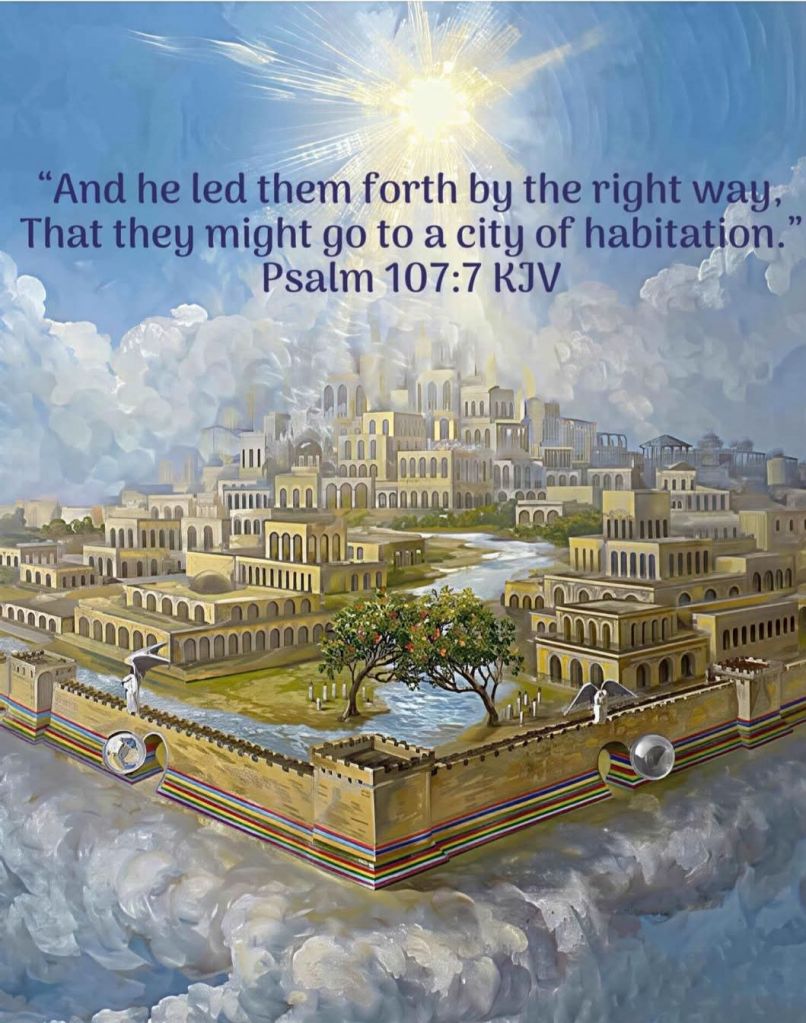
But because God so loved the world (that was already in sin and decaying by the day), He sent His only begotten Son to earth so that whosoever believes in Him shall not perish but have life everlasting (John 3:16). Jesus came, walked the earth, preached the Good News of salvation. He was crucified for our sins and in the process defeated sin and death that whosoever believed in Him and confess that He is Lord will not be  banished to the place of gnashing of teeth but will have life eternal. At the island of Patmos, where John was imprisoned, Jesus revealed to John the things that were to come including the new heaven and new earth, the place which for whosoever who believed in Him, shall live for eternity with God amongst us. It is called Eden recreated because the supposed eternity of things and the immortality of mankind will be restored once again on earth. Most importantly, the Tree of Life and the streams of living waters will be there for us to freely partake. It is the place of the fountain of youth pursued by kings and emperors throughout the ages.

Eden Restored
Revelation 22 – Then the angel showed me the river of the water of life, as clear as crystal, flowing from the throne of God and of the Lamb 2 down the middle of the great street of the city. On each side of the river stood the tree of life, bearing twelve crops of fruit, yielding its fruit every month. And the leaves of the tree are for the healing of the nations. 3 No longer will there be any curse. The throne of God and of the Lamb will be in the city, and his servants will serve him. 4 They will see his face, and his name will be on their foreheads. 5 There will be no more night. They will not need the light of a lamp or the light of the sun, for the Lord God will give them light. And they will reign for ever and ever.

Eden recreated and the new heaven and new earth in Revelation 21 and 22 is really the reward we are looking forward to at the end of our journey of faith. It is the treasures we store in heaven – it is that mansion with many rooms Jesus promised He had gone ahead to prepare for us! How will life be then? John was given a glimpse of it:

Revelation 21:3-4 “Look! God’s dwelling place is now among the people, and he will dwell with them. They will be his people, and God himself will be with them and be their God. 4 ‘He will wipe every tear from their eyes. There will be no more death’ or mourning or crying or pain, for the old order of things has passed away.”

I know that this topic is oft-repeated in these pages. In fact, I alluded to it in my post just yesterday! But it will never be a boring subject! This is what we look forward to at the end of our spiritual journey that all that we may suffer here on earth will pale in comparison to the reward and glory that awaits us at the end of time. So long as we remain true to the faith until our last breath, we will one day be dwelling at Eden recreated! That’s our inheritance in the saints as true believers of Christ! Amen!

Demigods and our human mortality

https://odb.org/2026/06/09/glory-and-majesty

Isaiah 14:12–15 (NIV): 12 How you have fallen from heaven,
morning star, son of the dawn!
You have been cast down to the earth,
you who once laid low the nations!
13 You said in your heart,
“I will ascend to the heavens;
I will raise my throne
above the stars of God;
I will sit enthroned on the mount of assembly,
on the utmost heights of Mount Zaphon.
14 I will ascend above the tops of the clouds;
I will make myself like the Most High.”
15 But you are brought down to the realm of the dead,
to the depths of the pit.

In the prophet Isaiah’s day, the king of Babylon felt similarly about himself. Here was a king who longed to “ascend to the heavens” and “sit . . . on the mount of assembly,” where the gods were thought to reign (Isaiah 14:13). Instead, Isaiah prophesied that this king would fall (vv. 3-4), being “brought down to the realm of the dead” (v. 15) without even a tomb to be remembered by (vv. 18-19). Charles I met a similar fate. In an ironic twist, he was marched beneath the very ceiling depicting his supposed divinity before being executed outside Banqueting House in 1649.

It’s a sad fact that has repeated through time: Powerful people who claim divine glory for themselves will one day discover how human they are. For there is only one who is worthy of reigning from heaven, and all power, glory, and majesty are His alone (1 Chronicles 29:11). (Sheridan Voysey, Our Daily Bread 9th June 2026)

Throughout centuries, kings and emperors rule nations whether by birth and royal ascension or through fighting wars or political maneuvering. In ancient times, rulers fashion themselves like gods as though they are immortal although they are always aware of their mortality. They age, grow old and die but the Egyptian Pharoahs always believed they will rise again to rule in another era. Thus they bury with them treasures they may use in another time. In fact, the Chinese emperor in Xian had thousands of warriors carved out of stone (likely based on real living persons because of the unique features of each and every one of them Terracotta warriors).

The afterlife truly exists. There is life after death. Unfortunately, it will not be like the ancient kings had envisaged or imagined. The revelation was only given to John after Jesus ascended to heaven following His victory over sin and death. We now know not only the pathway to salvation and eternal life but how eternal life will look like at the end of time.

While rulers, empires and kings are one in millions (in the modern context, imcluding billionaires), we the ordinary and regular people of the world will not look at ourselves as though we are demigods. The reason is obvious – we do not enjoy the trappings of this world that privilege, wealth or power bring. For example, we can’t in our ordinary course of life even enjoy business class travel, what more first class or even private jets or yatchs. Even if we could afford the 4-fold price for that business class ticket, why do that when the 300% savings could pay for better food and lodging during our travels?

However, despite us not being demigods, we sometimes do forget our mortality. Perhaps not always, but sometimes we live as though we will live for many years to come. We know our days are numbered. But as we do not know the number, we tend to live as though the years will be long. Jesus taught this very clearly in the Parable of the Rich Fool (see Luke 12:16-21). The rich farmer thought he would live for many years to come. So he tore down his old barns to build bigger barns to store his grain for years to come, not knowing that God will take his life that very night!

Live life moderately. Save up for the future, yes. For our old age, yes. But don’t forget to also spend some of our money now because the future may well end tomorrow! Besides Jesus coming again in our generation, we may be called home to be with the Lord tomorrow or even tonight. Use our remaining time wisely as we heard in one of our recent sermon from the pulpit in my local church. Serve God. Fulfil His plans and purposes for our lives. Respond to His calling. Live in the centre of His will. Help others with our time and finance as the Holy Spirit prompts. Live every day such that we will have no regrets if Jesus were to call us home today! Amen!

Giving out of our lack

https://odb.org/2026/06/08/reciprocal-generosity

Philippians 4:10–19 (NIV): 10 I rejoiced greatly in the Lord that at last you renewed your concern for me. Indeed, you were concerned, but you had no opportunity to show it. 11 I am not saying this because I am in need, for I have learned to be content whatever the circumstances. 12 I know what it is to be in need, and I know what it is to have plenty. I have learned the secret of being content in any and every situation, whether well fed or hungry, whether living in plenty or in want. 13 I can do all this through him who gives me strength.
14 Yet it was good of you to share in my troubles. 15 Moreover, as you Philippians know, in the early days of your acquaintance with the gospel, when I set out from Macedonia, not one church shared with me in the matter of giving and receiving, except you only; 16 for even when I was in Thessalonica, you sent me aid more than once when I was in need. 17 Not that I desire your gifts; what I desire is that more be credited to your account. 18 I have received full payment and have more than enough. I am amply supplied, now that I have received from Epaphroditus the gifts you sent. They are a fragrant offering, an acceptable sacrifice, pleasing to God. 19 And my God will meet all your needs according to the riches of his glory in Christ Jesus.

Matt’s selfless, loving act illustrates how one person’s abilities and resources can supply the needs of another person or group. Paul highlights the beauty of such reciprocal generosity in his letter to the Philippians. The believers in Philippi had shared in his “troubles” and “sent . . . aid more than once when [he] was in need” (Philippians 4:14, 16). Having received their gifts, Paul recognized that God had provided amply for his needs.

Our willingness to share with one another is often the conduit of God’s provision in our lives. Sometimes we’re in a position to give of our time, talent, or treasure; other times we’re in need ourselves and must rely on the support of another. Through His Spirit working in us, our gifts are “pleasing to God” and a manifestation of our shared life in the body of Christ (v. 18). (Kirsten Holmberg, Our Daily Bread 8th June 2026)

The church in Macedonia received high praise from Paul. Not only were the Macedonians quick to respond to his needs, in this case they were the only church to do so (Philippians 4:15). Additionally he notes, “You sent me aid more than once when I was in need” (v. 16). Indeed, in 2 Corinthians 8, the apostle pointed to the economically poor Macedonian church as an example for the wealthy church in Corinth (vv. 1-2). This is the context in which the apostle writes, “My God will meet all your needs according to the riches of his glory in Christ Jesus” (Philippians 4:19). As God provides for us today, we can in turn give to others. (Tim Gustafson, Insight, Our Daily Bread 8th June 2026)

The well-known example of the church in Macedonia giving out of their lack is a goal that every believer should aspire to. Although it is not something sustainable to be done on a regular basis, we should all be mindful of the spiritual principle that we may still give and bless despite not having much. The logic is that we could deprive ourselves of certain things or indulgences in order to make that blessing.

But we need to be careful of our motivation. Are we doing it to prove that we could still give and bless out of our lack? Or are we testing whether the gates of heaven will open because of our giving? In my view, both motivations are misconceived as we should only respond in this manner if prompted by the Holy Spirit. It is OK if we are doubtful whether we heard correctly as exercising faith is a life-long learning process. Just do it if we are prompted although we may not be 100% sure. We will get better at hearing as we respond in faith more and more.

The gates of heaven may or may not open for us here on earth but what’s certain is that more will be credited in our heavenly account as Paul highlighted in Philippians 4: 17 – “Not that I desire your gifts; what I desire is that more be credited to your account.” When we give and bless out of our lack, we are storing riches in heaven as I believe that every good deed contributes towards our heavenly treasures. The things we do for God in response, particularly, to His calling and plans and purposes for our lives will all contribute to our heavenly account. It is worth every effort expanded as unlike treasures on earth that we can’t bring across when we pass or where moth and rust may destroy, our heavenly treasures will last for all eternity.

Have a good week, everyone! It’s back to the grind after the long break. The schools have reopened and the traffic snarl will return with parents and students doing the school run and in Malaysia, the weather is so hot nowadays! Life goes on. But remember, Jesus is there to walk with us in our journey of life with the Helper, the Holy Spirit, whispering words of encouragement to prompt us to do the right thing all the time!

Swallowed by a big fish

https://odb.org/2026/06/05/epic-encounters

Jonah 2:1–10 (NIV): From inside the fish Jonah prayed to the LORD his God. 2 He said: “In my distress I called to the LORD,
and he answered me. From deep in the realm of the dead called for help, and you listened to my cry. 3 You hurled me into the depths, into the very heart of the seas,
 and the currents swirled about me; all your waves and breakers  swept over me. 4 I said, ‘I have been banished from your sight; yet I will look again toward your holy temple.’ 5 The engulfing waters threatened me, the deep surrounded me;  seaweed was wrapped around my head.  6 To the roots of the mountains I sank down; the earth beneath barred me in forever. But you, LORD my God, brought my life up from the pit. 7 “When my life was ebbing away, I remembered you, LORD, and my prayer rose to you, to your holy temple.” 8 “Those who cling to worthless idols turn away from God’s love for them. 9 But I, with shouts of grateful praise, will sacrifice to you. What I have vowed I will make good. I will say, ‘Salvation comes from the LORD.’ ” 10 And the LORD commanded the fish, and it vomited Jonah onto dry land.

One moment Adrián Simancas was kayaking in the Strait of Magellan in Chile with his father. The next, the twenty-four-year-old was engulfed in the mouth of a humpback whale. “I thought I was dead,” Adrián told a news outlet. After a few seconds, the whale released Adrián into the frigid waters. His life vest caused him to float to the water’s surface, and his father helped him to safety.

The Old Testament prophet Jonah also had an encounter with a large sea creature. Jonah refused to follow God’s directive to preach a message of repentance to the Israelites’ enemies, the Ninevites, so he boarded a ship in the opposite direction of Nineveh. When the ship got caught in a storm, Jonah convinced the crew to throw him overboard (Jonah 1:11-12, 15). “Now the Lord provided a huge fish to swallow Jonah, and Jonah was in the belly of the fish three days and three nights” (v. 17). Jonah went from fleeing from God to crying out to Him: “From inside the fish Jonah prayed to the Lord his God” (2:1). (Nancy Gavilanes, Our Daily Bread 5th June 2026)

When the story of Adrian Simancas’s encounter with a humpback whale first broke out, it invariably invited comparisons with Jonah and Pinocchio.

You may catch Adrian’s story and a video of his encounter at the link below: https://www.ynetnews.com/environment/article/byuxuv3tye

The reason was obvious. Both Jonah and Pinocchio stories involved being swallowed by a gigantic fish of the ocean. Jonah is biblical while Pinocchio is fiction. I am not exactly sure how Jonah survived 3 days 3 nights in the belly of the fish but in the modern context, scientists and marine biologists are of the view that Adrian was never in danger of being swallowed by the humpback whale although he was at the whale’s mouth for a fleeting second. This is because the humpback’s esophagus was not designed to swallow something as large as a human with their food of just super-tiny krill and small schooling fish like anchovies and herring and their “teeth” acting as filters to remove larger prey.

If we were to dwell deeper into Jonah’s encounter with the big fish, the story’s focus was Jonah’s wilful disobedience to God’s calling arising from his own prejudice against the evil people of Nineveh. He travelled in the complete opposite of where Nineveh was. Yet the LORD found a way to reach out to him – from the belly of a big fish! There must have been some poetic licence expanded on this story by its writers but the point is Jonah prayed and the LORD heard his prayer notwithstanding that he was somewhere deep in the ocean in the belly of a humongous fish!

The lesson we could apply for our modern lives from a biblical story like Jonah is that no matter where we are, we could pray and cry out to God and He will hear our prayers. We could be all alone and lost deep in the middle of a forest in danger of being hunted by wild beasts, yet God hears us. Or we could be adrift in the vast ocean and God hears us. In fact, we could be travelling in a train amidst a sea of thousands of commuters and God will still hear us as we pray. The LORD is always only a prayer away. Take the opportunity to pray and talk to Him. Jesus is one prayer away from us. Don’t give up hope. Persevere on with life. Reach out to Him in prayer. There is much ahead for us in God’s plans and purposes for our lives.

In the end, at verse 10 of Jonah 2, the big fish vomited Jonah out of its belly unto dry land (also not quite sure how that was possible without beaching) and Jonah went on to fulfil God’s calling for his life which was to preach to the Ninevites. Ultimately they repented of their sin and God forgave them of their unrighteousness.

Perhaps this morning, we could think about the calling that God had placed in our hearts all this while and whether we are running away or working towards it?

Have a good weekend, everyone! Enjoy the coming break although the long holidays are now over! Welcome back to school to students and those in teaching as well as parents in the daily school run! The long break will officially end this weekend!

Albatross around our neck

https://odb.org/2026/06/04/freedom-in-gods-love

1 John 1:5–9 (NIV): 5 This is the message we have heard from him and declare to you: God is light; in him there is no darkness at all. 6 If we claim to have fellowship with him and yet walk in the darkness, we lie and do not live out the truth. 7 But if we walk in the light, as he is in the light, we have fellowship with one another, and the blood of Jesus, his Son, purifies us from all sin. 8 If we claim to be without sin, we deceive ourselves and the truth is not in us. 9 If we confess our sins, he is faithful and just and will forgive us our sins and purify us from all unrighteousness.

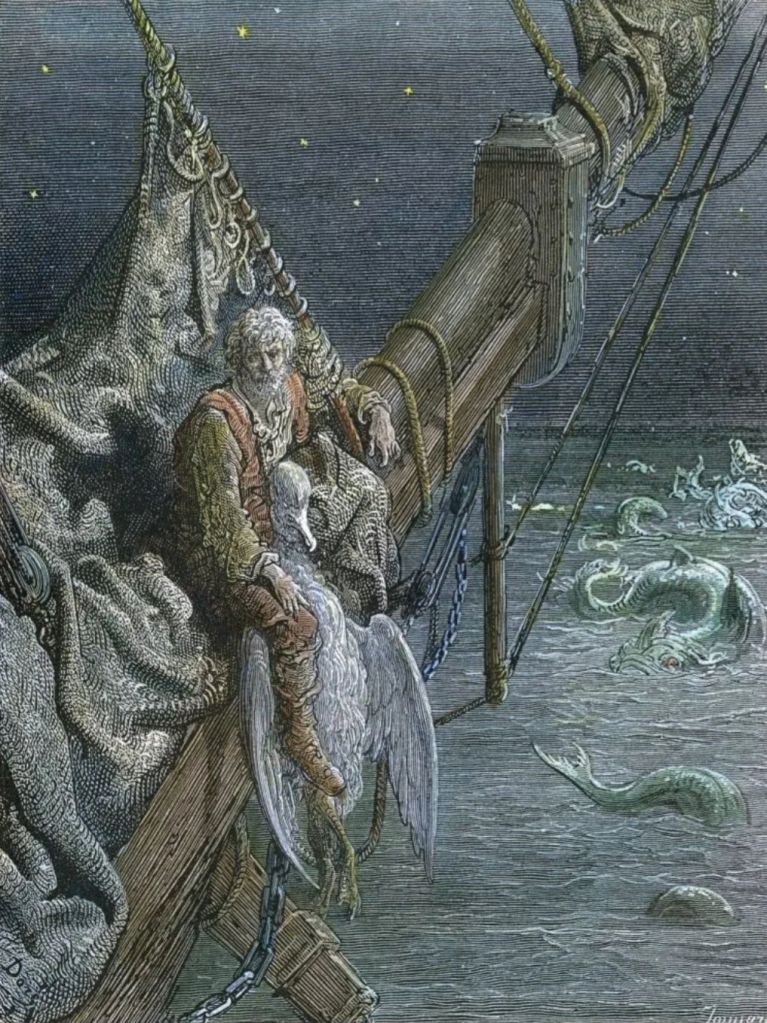
If you’ve ever heard the expression “albatross around my neck”—a phrase referring to a tiresome burden—you’ve heard an allusion to English poet Samuel Coleridge’s famous poem “Rime of the Ancient Mariner.” In the poem, a sailor shoots and kills a harmless, friendly albatross. The crew believes the mariner’s cruel deed curses their voyage and forces him to wear the dead bird around his neck as punishment. Are there regrets in your life that feel like a heavy weight around your neck? All of us have moments we’d do anything to take back. It can feel like we’re cursed to carry the weight of our guilt and regret forever. In Coleridge’s poem, the tormented mariner also eventually experiences this grace. When love for God’s creation rushes into his heart and compels him to pray, the albatross falls off his neck, vanishing forever “like lead into the sea.” (Monica La Rose, Our Daily Bread 4th June 2026)

The apostles wrote during a tumultuous time in the history of the church. They had to correct misunderstandings of the gospel, including who were truly part of the church as well as a broad range of misunderstandings of what God’s grace really meant. In his first letter, John addressed early church teachings that openly tolerated worldly sin while still claiming one could be in fellowship with Jesus. The apostle shuts that down by saying that only those who “walk in the light” (1 John 1:7) have a true relationship with God. But that doesn’t mean believers in Christ don’t sin (v. 8). Instead, it means that because of their relationship with God, they can confess their sin and enjoy both forgiveness and fellowship no matter how heavy the burden of regret (v. 9). (Jed Ostoich, Insight, Our Daily Bread 4th June 2026)

Do we have an albatross around our neck, a burden so great that it weighs us down even though we have been a believer of Christ for many years. It could be something we had done in the past that we still regret despite the years having gone by.

I have one and it’s those few but harsh words spoken to my late mum before she passed. I still recall that morning more than 17 years ago. She had wet herself outside the bathroom in her room and my dad had to clean up. She hadn’t reached the stage where she needed to wear pampers yet, but that morning could be the start. So I asked her why she had to do that? I didn’t know that those were practically the last words I spoke to her as we sent her to the hospital and she slipped into a coma due to diabetic ketoacidosis.

I try to bury this memory amongst the many other regrets of my life; but every now and then, I remember it and I remind myself to be kinder, in words and deeds, to those closest to me, to those I love the most. Sometimes when we are emotional, it’s better to keep quiet or walk away than to speak out harsh words.

The past is the past. We cannot erase it. It is part of our life as much as it may have tainted us. I think the best way forward is to forget the past and avoid going into similar situations in the future. If we had wronged God, seek His forgiveness. If we confess our sins, he is faithful and just and will forgive us our sins and purify us from all unrighteousness (1 John 1:9). Ground ourselves in this Word that God will forgive us as He is a faithful and just God. He will purify us from all unrighteousness. Although as humans we still sin, His forgiveness will ensure we are not tainted in His eyes. Jesus’s blood washes away our sins and leaves no blemish that we are righteous before Him as white as fresh snow!

I pray today that whatever may be our albatross around our neck that the grace and forgiveness of God through our Lord Jesus Christ will cause it to fall off and vanish forever “like lead into the sea” (in the words of the English poet Samuel Coleridge). I pray that we will all (myself especially) be set free from this burden or regret. Let the past stay the past as we chart out God’s plans and purposes for our future and remaining days on this earth that we may live out His will perfect will for the glory of His name! Amen!