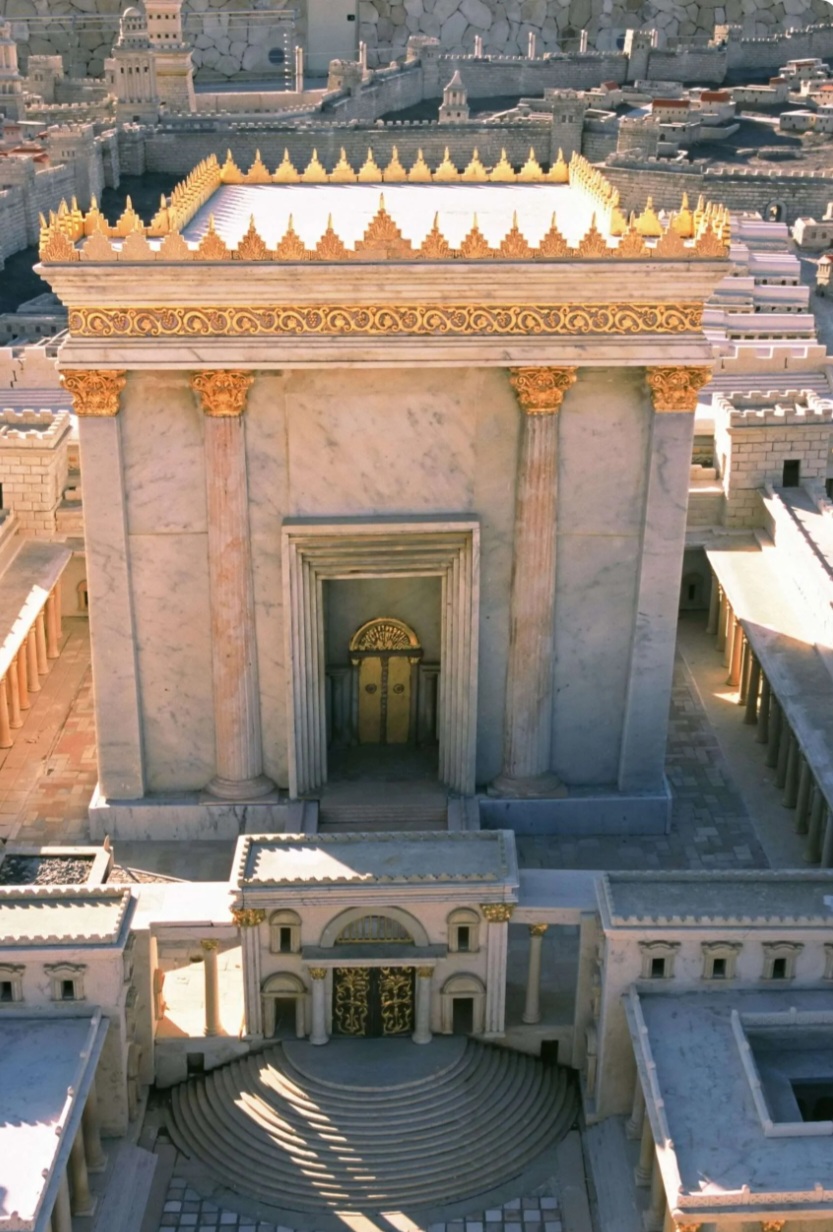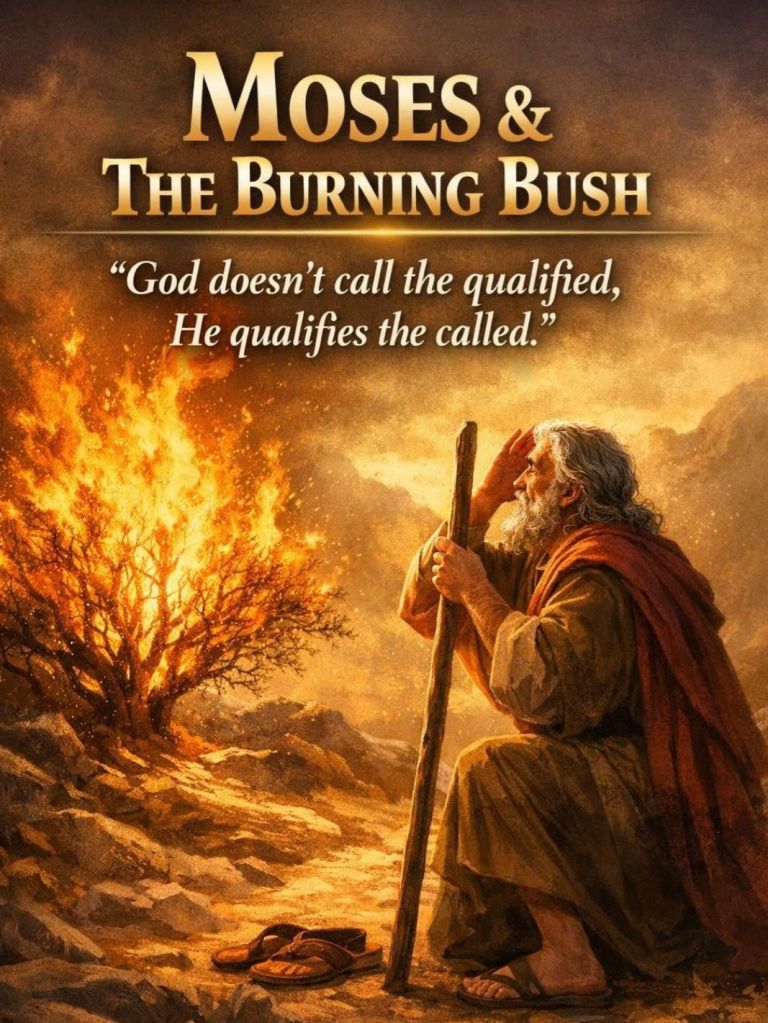
The LORD’s grandeur and majesty!

https://odb.org/2026/05/15/seeing-gods-grandeur

Psalm 104:1–7 (NIV): 1 Praise the LORD, my soul. LORD my God, you are very great;  you are clothed with splendor and majesty.
      2 The LORD wraps himself in light as with a garment; he stretches out the heavens like a tent
         3 and lays the beams of his upper chambers on their waters. He makes the clouds his chariot and rides on the wings of the wind.
      4 He makes winds his messengers, flames of fire his servants.
      5 He set the earth on its foundations; it can never be moved.
      6 You covered it with the watery depths as with a garment; the waters stood above the mountains.
      7 But at your rebuke the waters fled, at the sound of your thunder they took to flight;

The nineteenth-century poet Gerard Manley Hopkins’ sonnet “God’s Grandeur,” this literary artist celebrates the countless ways creation is “charged”—intensely filled—with “the grandeur of God.” Hopkins describes God’s breathtaking glory flaming and glistening “like shining from shook foil.” But if God’s beauty is so vibrant, why do so many people miss it? Hopkins suggested one reason is that humanity has covered everything with “man’s smudge” and “man’s smell”—leaving many unable to see anything beyond themselves.

Psalm 104 is also a celebration of God’s beauty in creation. Using vivid imagery, the poet describes God “clothed with splendor and majesty” (v. 1), revealing His beauty, power, and care in wind and fire (v. 4), thunder and waves (v. 7), water, grass, and trees (vv. 10-16). (Monica La Rose, Our Daily Bread 15th May 2026)

Most people when confronted with the beauty and grandeur of creation, marvel at the glory of God. Just the magnificence of the sun rise and sunset can sometimes make us teary as we soak in the splendour of His glory. The view of the mountains in the horizon or just the stillness and oxygen filled clean air in the middle of the forest are just a few of the many experiences nature offers.

Yet there are those who can’t see God in anything. Perhaps they are blinded by their unbelief or they are under the gravely mistaken notion that God doesn’t exist. For example, if God exists, why is there pain and suffering, wars and famine? As Christians, we know better that disasters and calamities occur because nature has its own cycle and rhythm. Humans choose to live by the coastlines and rivers for trade and accessibility reasons. These areas are however more prone to floods and storms. Wars that cause sufferings and mass killings are however purely man-made, driven by the will of those in power for geo-political reasons.

Like those who can’t see the truth about Jesus (for example, those still disputing that Jesus cannot be the son of God when they see the Holy Trinity through human eyes), there are also those who can’t see God in anything. We can only pray that the scales blinding them be removed and one day they will see and experience God in their lives.

As for us, we must always praise God for His goodness and be thankful that there is the provision and providence of God in our lives as children of the Great I Am. We may go through life like any other, its struggles and challenges, but there is a special grace of God that covers us. The impact of the mistakes we make or even our obstinance are not magnified when we live in the shadow of His wings! Amen! Hallelujah! Praise the Lord!

Strive forward, fulfilling His plans and purposes for our lives. Respond positively and willingly to His calling and He will bestow upon us the peace of God that surpasses all understanding (Philippians 4:7) as we look forward to the prize and crown of glory that await us when we finish the race appointed us with our faith intact!

Good soil in God

https://odb.org/2026/05/14/good-soil-in-god

Luke 8:4–8 (NIV): 4 While a large crowd was gathering and people were coming to Jesus from town after town, he told this parable: 5 “A farmer went out to sow his seed. As he was scattering the seed, some fell along the path; it was trampled on, and the birds ate it up. 6 Some fell on rocky ground, and when it came up, the plants withered because they had no moisture. 7 Other seed fell among thorns, which grew up with it and choked the plants. 8 Still other seed fell on good soil. It came up and yielded a crop, a hundred times more than was sown.”
When he said this, he called out, “Whoever has ears to hear, let them hear.”

Luke 8:11–15 (NIV): 11 “This is the meaning of the parable: The seed is the word of God. 12 Those along the path are the ones who hear, and then the devil comes and takes away the word from their hearts, so that they may not believe and be saved. 13 Those on the rocky ground are the ones who receive the word with joy when they hear it, but they have no root. They believe for a while, but in the time of testing they fall away. 14 The seed that fell among thorns stands for those who hear, but as they go on their way they are choked by life’s worries, riches and pleasures, and they do not mature. 15 But the seed on good soil stands for those with a noble and good heart, who hear the word, retain it, and by persevering produce a crop.

In late spring each year, I plant cucumber seeds in our garden. The seeds produce leaves quickly, but it takes time to see the fruit. In fact, one summer after I watered the seeds and waited, I questioned whether I’d get any cucumbers at all. I thought, Did I put too many seeds too close together, or was the ground not warm enough when I’d planted them? But one day, I spotted a green bulb. The next week, I spotted another. Then another. Within a few weeks, we moved from only vines to almost enough fruit to make salad for a week. Spiritual growth looks like that sometimes. We don’t always see the things we’ve been praying for: patience, self-control, being gentle and loving (see Galatians 5:22-23). But if we ask God to help us create the conditions needed for growth—prayer, studying the Scriptures, worship, serving others—the Holy Spirit will produce the growth. (Katara Patton, Our Daily Bread 14th May 2026)

In the parable of the sower in Luke 8:1-15, the focus isn’t on the sower who scatters the seed but on the soil where the seed is sown. The life-bearing seed is “the word of God” (v. 11), and the soil represents the heart condition of the one who receives it. Jesus highlights different outcomes depending on where the seed falls. The seed that falls on “good soil” (v. 8) represents receptive hearts “who hear God’s word, cling to it, and patiently produce a huge harvest” (v. 15 nlt). We are “God’s field” (1 Corinthians 3:9) where “the word of God” is planted. Even as we cultivate good soil, it’s God who makes “things grow” (v. 7) and makes us fruitful (vv. 6-9). (K.T Sim, Insight, Our Daily Bread 14th May 2026)

We should all have heard about the Parable of the Sower in Luke 8:1-15 preached at least once in our lifetime or read about it as any attempt to read the Bible by a new believer inevitably starts at the Gospels. In fact when I was first exposed to the Word during my pre-believer days, I had an English-Malay translation of the Gospels lying in my home book shelf. Thus, as a young boy, I had also read about the Parable of the Sower.

The Parable of the Sower is easily understood as explained by K.T Sim above. It is God or the Holy Spirit sowing the seed of faith in our hearts and whether we retain the seed and turn it into fruit in our lives depends really on the condition of our hearts. It can be looked at purely from the hearts of non-believers being ready to come to faith or extended to every time a believer hears or reads the Word whether we are ready to apply it as heard into our lives. The point is that it is the condition of our hearts that determines whether the Word takes root and transforms our lives.

The interesting point in today’s ODB is that Katara Patton highlights that we may ask the Lord to make our hearts as good soil, ready to let the Word take root and grow the Word that we read or listen to. If we pray for our hearts to be good soil, God will grant us our request although practically the cares of the world may choke away the Word or the trials of life may cause us to fall away.

That is why we pray that our hearts be good soil and not a rocky path or grow up with thorns that choke up the Word. Our prayer is that our hearts be good and fertile soil, strong to withstand trials and tribulations and firm so that we are not easily deceived or tempted by the bright lights or the riches and pleasures of the world. May our hearts always be ready to embrace and apply the Word, spoken or written, whole-heartedly that we will grow spiritually in the knowledge of our Lord Jesus Christ and experience His grace and mercy each day of our lives! May goodness and mercy indeed follow us the rest of our days and may we dwell in the house of the Lord forever (Psalm 23:8)!

We will reap what we sow

https://odb.org/2026/05/13/waiting-for-the-harvest-2

Galatians 6:7–10 (NIV): 7 Do not be deceived: God cannot be mocked. A man reaps what he sows. 8 Whoever sows to please their flesh, from the flesh will reap destruction; whoever sows to please the Spirit, from the Spirit will reap eternal life. 9 Let us not become weary in doing good, for at the proper time we will reap a harvest if we do not give up. 10 Therefore, as we have opportunity, let us do good to all people, especially to those who belong to the family of believers.

In 1962, Joanne Shetler and Anne Fetzer made an arduous trek by bus and foot into the rugged mountains of the Philippines to share the gospel with people who’d never heard of Jesus. For five years, they translated Scripture into the people’s language, but the Balangao villagers weren’t receptive. They did, however, help build a primitive landing strip so new supplies could be flown in. One day, a plane dubbed “magic from another world” by the people arrived. The pilot then flew a deathly ill, pregnant village woman to a faraway clinic. When the plane later returned with the recovered woman and her healthy newborn, the people began asking about “this God” they’d been told about. Soon the village had a church full of believers in Christ. (Dave Branon, Our Daily Bread 13th May 2026)

In Galatians 6:7-10, Paul emphasizes the theme of sowing and reaping—that is, that the choices we make come with real consequences. A life guided by “the flesh” (self-reliant human nature focused on self-gratification—5:16-21) inevitably leads to “destruction,” whereas a life guided by Christ’s Spirit leads to “eternal life” (6:8) and an abundant “harvest” (v. 9). Remembering this principle can strengthen the resilience and fortitude of believers in Jesus as they seek to “serve one another humbly in love” (5:13). (Monica La Rose, Insight, Our Daily Bread 13th May 2026)

One of the spiritual principles I believe most of us are well acquainted with is this principle of sowing and harvest although we are mostly taught sowing. In reaching out and preaching the Gospel, we are to just sow the seeds of faith and as we sow, we pray that one day, those seeds will take root and grow into big trees on fertile ground (representing the hearts of those we sowed). Ultimately, salvation is the work of the Holy Spirit and we need to always remember that humans are bestowed a will to make his or her decision. It’s a free will acceptance of Christ that is real and genuine.

But God also promises a harvest as a labourer is worthy of his wages (1 Timothy  5:18). Wages in the sense that we want to see the fruition of our efforts. If we work to set up an outreach, we want to see it thriving with the glory of God, if possible, in our lifetime. Some harvest can only be seen in generations to come where whole villages come to faith.

Taken at a wider context, sowing also speaks of what we invest in for our lives. In Galatians 6:7-9, Paul reminds us that a man reaps what he sows. Whoever sows to please their flesh, will reap destruction; whoever sows to please the Spirit, will reap eternal life. Therefore, let us not become weary in doing good, for at the proper time we will reap a harvest if we do not give up.

This is similar to the concept promulgated and articulated by our Lord Jesus Christ that we store up riches in heaven where moth and rust will not destroy. Everlasting treasures are in heaven written in our names, treasures we can enjoy at the time when we live for eternity. For we know that we come to this earth naked and we will leave naked; from dust to dust. Nothing from this world we can bring over when we pass on. We will reap what we sow. So will we reap eternal life or destruction and damnation? Are we on the narrow road that leads to eternal life?

Heed Paul’s advice – do not stop doing good, especially to those who belong to the family of believers (Galatians 6:10). Do good whenever we have the opportunity. Do not grow weary doing good. One day, we will reap the harvest. When we do good, we are also sowing towards our riches in heaven and we will reap what we sow!

Being able to handle the Word correctly

https://odb.org/2026/05/12/getting-equipped

2 Timothy 2:14–19 (NIV): 14 Keep reminding God’s people of these things. Warn them before God against quarreling about words; it is of no value, and only ruins those who listen. 15 Do your best to present yourself to God as one approved, a worker who does not need to be ashamed and who correctly handles the word of truth. 16 Avoid godless chatter, because those who indulge in it will become more and more ungodly. 17 Their teaching will spread like gangrene. Among them are Hymenaeus and Philetus, 18 who have departed from the truth. They say that the resurrection has already taken place, and they destroy the faith of some. 19 Nevertheless, God’s solid foundation stands firm, sealed with this inscription: “The Lord knows those who are his,” and, “Everyone who confesses the name of the Lord must turn away from wickedness.”

As soon as I jumped into the pool, my goggles filled with water, and I could barely see. Despite having no formal swimming instruction, I slowly persevered for the two laps of a race I had entered on a whim. Years later, after taking lessons and learning the proper breathing and swimming techniques, I enjoyed learning all four competitive swim strokes.

What a difference it makes when we have the proper training. The same applies to reading the Bible. In his final letter, the apostle urged Timothy to study the Scriptures: “Do your best to present yourself to God as one approved, a worker who does not need to be ashamed and who correctly handles the word of truth” (2 Timothy 2:15). (Nancy Gavilanes, Our Daily Bread, Condensed, 12th May 2026)

In 2 Timothy 3:16-17, we find both the source and the purpose of the Scriptures: “All Scripture is God-breathed and is useful for teaching, rebuking, correcting and training in righteousness, so that the servant of God may be thoroughly equipped for every good work.” The words of the Bible have been breathed out by God, revealing Himself to us so that we might be completely equipped for serving Him. As we come to know who He is, we’re encouraged to love and serve Him with our whole hearts. (Bill Crowder, Insight, Our Daily Bread, 12th May 2026)

I have always been keen to serve God since I came to faith at 14 and have actually been serving God one way or another, for the past 40 years plus. I had never been a full-time worker or pastor. My service had always been in a lay capacity. Been very much part of the world via my working career but always aware that I’m not of this world.

Despite my involvement in ministry, there were two things that sort of defined me in those years, especially the initial ones. One was that I prefer to be in the background and not as a leader. Rather than in the core group, I was more used to be in the peripheral group yet committed. So I was not a Sunday-only worshipper but not so keen on leadership roles. Secondly, I was not very good at the Word in terms of my bible knowledge or church history. Didn’t spend that much time reading the Bible in my formative growing up years. So I always felt inferior to those who came from mainline church backgrounds. I had never joined a Sunday school when I was young and did not grow up singing hymns.

In 2 Timothy 2:15, we find this exaltation from Paul to Timothy for the latter to present himself as one approved, who does not need to be ashamed and who correctly handles the word of truth. In 2 Timothy 3:16-17, Paul emphasised that all Scripture is inspired by God and will thoroughly equip a servant of God to do good works. In other words, being able to handle the Word of God correctly is actually a very good tool in our service to God in ministry, in whatever capacity God calls us to.

I just like to say this morning that as much as we would like to remain in the peripheral but committed, we must equip ourselves with the knowledge of the Word of God. We have to be able to handle the Word correctly so that we are seen to be approved by the Lord and are not ashamed by our own lack of knowledge. It will take time and it’s a life-long process but one we can never avoid.

I’ll say that ever since I started writing these devotionals for the past 10 years or so, I have gained much in my knowledge of the Word although Our Daily Bread as material is actually basic Christian knowledge geared more towards new believers. Nevertheless, this response to God’s calling for my life has enriched me tremendously and I’ll encourage every one of us to read and follow the articles in ODB by their distinguished writers on a daily basis. Doing this regularly will certainly increase our knowledge of Scriptures and equip us to correctly handle the Word!

The Word of God endures forever

https://odb.org/2026/05/11/gods-word-endures

Isaiah 40:3–8 (NIV): 3 A voice of one calling:
         “In the wilderness prepare
         the way for the LORD;
         make straight in the desert
         a highway for our God.
      4 Every valley shall be raised up,
         every mountain and hill made low;
         the rough ground shall become level,
         the rugged places a plain.
      5 And the glory of the LORD will be revealed,
         and all people will see it together.
           For the mouth of the LORD has spoken.”
      6 A voice says, “Cry out.”
         And I said, “What shall I cry?”
         “All people are like grass,
         and all their faithfulness is like the flowers of the field.
      7 The grass withers and the flowers fall,
         because the breath of the LORD blows on them.
         Surely the people are grass.
      8 The grass withers and the flowers fall,
         but the word of our God endures forever.”

In the early 1900s, successful steel businessman Charles Schwab decided to build perhaps the most lavish mansion in New York City. Completed in 1906, his Riverside Drive estate took its inspiration from French chateaus and spanned an entire city block, with lush gardens, grand halls, and opulent interiors. It stood in stark contrast to the rising apartment buildings that would soon define Manhattan. Despite its grandeur, the estate struggled to find a buyer after Schwab’s death. The mansion was too large, too costly, and out of step with real estate trends. Riverside Drive estate was demolished in 1948. Both the mansion and the man faded away. The words of Isaiah 40 remind us, “All people are like grass, and all their faithfulness is like the flowers of the field” (v. 6). What the prophet says about people, grass, and flowers is true (vv. 6-7). But the truth of God Himself? It will outlast men and mansions and wealth and ambition and accolades. Yes, “the word of our God endures forever” (v. 8).(John Blase, Our Daily Bread 11th May 2026)

We have to be reminded every now and then that even the grandeur of kings, political/royal dynasties and billionaires are fleeting. They may be remembered by future generations but alas they are no longer around to see or witness that. The reason is obvious. The average life expectancy in 2025 for men in Malaysia is 73.1, while for women 77.9. In other words, our lifespan on earth only spans 70-80 years while God lives forever for all eternity. If we are in the faith, yes, we will live for eternity with God one day. But as for this world, our time is limited.

So what is the legacy we want to leave behind? Having lost both my parents already, I recall although we still keep some of their things like their clothes and memorable stuff, clothes run out of fashion and sizes are usually not of right match. I recalled my mum used to write out songs in manuscript in songbooks. They were nearly discarded but my wife salvaged most of them. They are in our old house (my parents stayed with us to help us care for our boys growing up). But one day, we may sell or demolish that old house. Question is how long more will we keep their stuff? Similarly, one day we ourselves will pass on and our own possessions and stuff will either be sold or given away or just thrown away for disposal by the rubbish truck.

Old beautiful mansions may just remain as relics of the past overtaken by time, demolished to make way for new buildings or just left abandoned and overgrown by crawlers and even smaller trees! The other day, I had a meeting at one of the many new office buildings in the city and it was so nice, posh and efficient. No wonder the older office buildings in the city have problems getting tenants nowadays. For comparable or slightly higher rental, you can get into any of the brand new offices. Why settle for the old where things break down now and then, lifts are slow and overcrowded and parking spaces are narrow and dim?

The Word of God endures forever. Jesus Christ is everlasting. He is the same yesterday, today and forever. He is the Alpha and Omega. Pursue what really matters. Build for eternity, not the fleeting. Sow into the future, for the Kingdom, into the infants, children and youth of today as they will be our future for tomorrow. Invest and build into the Kingdom of Heaven as it will last for eternity, beyond even the end of time! Yes, we need to live and survive in this world. But never at the expense of our spiritual life and our place in the Kingdom of God!

Have a good week everyone! May the LORD our God bless each and every one of us in His grace with wisdom and discernment to do the right thing at work and at home as we are led and prompted by the Holy Spirit!

Learning never ends

https://odb.org/2026/05/08/miracle-year

John 1:1–14 (NIV): 1 In the beginning was the Word, and the Word was with God, and the Word was God. 2 He was with God in the beginning. 3 Through him all things were made; without him nothing was made that has been made. 4 In him was life, and that life was the light of all mankind. 5 The light shines in the darkness, and the darkness has not overcome it. 6 There was a man sent from God whose name was John. 7 He came as a witness to testify concerning that light, so that through him all might believe. 8 He himself was not the light; he came only as a witness to the light. 9 The true light that gives light to everyone was coming into the world. 10 He was in the world, and though the world was made through him, the world did not recognize him. 11 He came to that which was his own, but his own did not receive him. 12 Yet to all who did receive him, to those who believed in his name, he gave the right to become children of God—13 children born not of natural descent, nor of human decision or a husband’s will, but born of God. 14 The Word became flesh and made his dwelling among us. We have seen his glory, the glory of the one and only Son, who came from the Father, full of grace and truth.

In 1905 a scruffy young man holed up in his apartment in Bern, Switzerland, engaging in complex thought experiments regarding the nature of the universe. With frenzied focus, the physicist worked and reworked his calculations. Four mind-crunching months later, this man had rewritten much of what was known about how the world works.

The man was Albert Einstein. He was twenty-six. Yet despite possessing a great scientific mind, Einstein said, “The more I learn, the more I realize how much I don’t know.” (Kenneth Petersen, Our Daily Bread, 8th May 2026)

In our human existence, we realise that there is just so much out there that there is just no limit to what we can learn. In fact, the more we learn, the more we realise that there is still so much we don’t know as expressed by the world renowned physicist, Albert Einstein.

Recently I was given a new portfolio in my job at Telekom Malaysia’s legal headquarters. This is in addition to the work I’m still carrying, covering all legal matters of the subsidiary I was previously attached to. This new role manages and assists Business Units in TM’s strategic contracts post-execution as they face project implementation and other issues. As I dive deeper into the contracts/projects, I realise, for example, that my previous understanding of liquidated ascertained damages or LAD was just superficial. Now when we have to impose LAD for late delivery, there are practical aspects of the law that I didn’t really appreciate previously. For instance, when I was in legal practice, we took pains to draft LAD clauses to avoid them being construed as a penalty in contradiction to our Malaysian Contracts Act. But it is only now that I realise there are practical consequences in such drafting. I am thankful that even at this ripe old age approaching retirement, there are still aspects of the law that I am still learning.

If we are in the quest to study about Jesus and God, we will realise that we get to learn something new nearly every day. And all that without even embarking on a formal theological journey. There is so much to learn and absorb. Of course what’s most important is not just knowledge but how such knowledge is translated into making us a better person in God that the things we learn become part of our character. Head knowledge is useful but does not mature us spiritually if not applied into the challenges we face as a believer. In the end, how we face life struggles while maintaining our spiritual composure and faith is what really matters when we breathe our last. We need to reach the finish line of the race appointed us, victorious in Christ, upholding our faith!

Have a good weekend everyone! Recharge ourselves before we face another week in this journey of life! Life may sometimes feel endless but the reality is that death is our destiny as much as God has placed eternity in our hearts. Do what we can for Christ while we still can!

Prayer as an expression of our love

https://odb.org/2026/05/07/faithful-in-prayer

Romans 12:9–19, 21 (NIV): 9 Love must be sincere. Hate what is evil; cling to what is good. 10 Be devoted to one another in love. Honor one another above yourselves. 11 Never be lacking in zeal, but keep your spiritual fervor, serving the Lord. 12 Be joyful in hope, patient in affliction, faithful in prayer. 13 Share with the Lord’s people who are in need. Practice hospitality.
14 Bless those who persecute you; bless and do not curse. 15 Rejoice with those who rejoice; mourn with those who mourn. 16 Live in harmony with one another. Do not be proud, but be willing to associate with people of low position. Do not be conceited. 17 Do not repay anyone evil for evil. Be careful to do what is right in the eyes of everyone. 18 If it is possible, as far as it depends on you, live at peace with everyone. 19 Do not take revenge, my dear friends, but leave room for God’s wrath, for it is written: “It is mine to avenge; I will repay,” says the Lord. 21 Do not be overcome by evil, but overcome evil with good.

The apostle Paul wrote to the early church, “Be joyful in hope, patient in affliction, faithful in prayer” (Romans 12:12). In his letter, Paul exhorted believers to do many things that displayed love in action—hating evil and loving good (v. 9), honoring others above yourself (v. 10), passionately serving God (v. 11), and practicing hospitality (v. 13). These good works would be empty without the love of Christ working in us. That’s where faithful prayer comes in. Paul called his friends to “join [him] in [his] struggle by praying to God for [him]” (15:30). Prayer empowers us to live in a way that “overcomes evil with good” (12:21). Though we may not always see the outcome, it creates a legacy of faithfulness for generations to come. (Karen Pimpo, Our Daily Bread 7th May 2026)

Here in Romans, we see that love can overcome evil as we live in faithful dedication to others (v. 21). Mirroring the words of Christ in His Sermon on the Mount (see Matthew 5-7), the apostle advocates that the Roman believers embrace humility, meekness, and faithfulness (Romans 12:10-16). For them and for us today, a life of love overcomes the evil in the world and shows the worthiness of Christ, who Himself never repaid evil for evil but first loved those who hated Him. As we’re “faithful in prayer” (12:12), the Holy Spirit will help us love others and leave a legacy of faithfulness. (Jed Ostoich, Insight, Our Daily Bread, 7th May 2026)

When I was younger, I used to pray for those in the congregation in my church and my friends. Not a sweeping prayer covering everyone but a specific prayer naming each and every one of them. So I would imagine the faces in church and the faces of my friends, and pray for each and every one of them. So if I know someone is going through something, I pray for that person for that situation. Otherwise, I’ll just pray for his or her spiritual life, their general well-being, their health and jobs. It is a long process and quite tiring and so I didn’t do it often. However, it illustrates that we can love others by praying for them. No one will know, but Jesus hears our prayers. The Holy Spirit will do the work and in time we will see change amd transformation.

As believers, we are called to love, not hate. Of course, there are people who are difficult to love. Especially those who are hell bent to undermine or stab us in the back so that in the process they prove that they are better. It is tough or even quite impossible to wish or pray that God is good to such people. The tendency is to pray for fire from heaven to consume them!

There are all kinds of people we meet in this world, but our calling is still to love. Most of the time, we can’t do much or anything meaningful, except to pray for them. It’s illustrative of our love and compassion as well as our despair. There are times when we can do something but we are limited by distance and time. We work 5 days a week. Saturdays we catch up with our household chores and Sundays we are at church. So we are busy and tied down most of the time.

Prayer during our quiet time is a good way to respond to Jesus’s calling to us to love others. Try it. We will find it refreshing and satisfying. Pray for our family, loved ones, our cell group members, our congregation and our friends. Soon we will see that 30 minutes has passed so quickly!

Crumbs that fall from the table

https://odb.org/2026/05/06/fueled-by-faith

Matthew 15:21–28 (NIV): 21 Leaving that place, Jesus withdrew to the region of Tyre and Sidon. 22 A Canaanite woman from that vicinity came to him, crying out, “Lord, Son of David, have mercy on me! My daughter is demon-possessed and suffering terribly.”
23 Jesus did not answer a word. So his disciples came to him and urged him, “Send her away, for she keeps crying out after us.”
24 He answered, “I was sent only to the lost sheep of Israel.”
25 The woman came and knelt before him. “Lord, help me!” she said.
26 He replied, “It is not right to take the children’s bread and toss it to the dogs.”
27 “Yes it is, Lord,” she said. “Even the dogs eat the crumbs that fall from their master’s table.”
28 Then Jesus said to her, “Woman, you have great faith! Your request is granted.” And her daughter was healed at that moment.

They were demonstrating the kind of faith that Jesus values. Matthew 15:21-28 records another example. A daughter’s condition drove a woman to seek Him. “Lord, Son of David, have mercy on me! My daughter is demon-possessed and suffering terribly” (v. 22). Her “great faith” (v. 28) in Jesus contrasted with the faithlessness of the Jewish leadership whose hearts were far from God (v. 8). While Christ recognized the outward pedigree of those belonging to Abraham, His commendation was for a gentile woman who possessed the faith of Abraham.

What compels you to look to Jesus today? A personal, family or community need? Whatever prompts you to go to Jesus, go—even if you feel that you’re limping. Go to Him because it’s not the size of your faith that matters. What matters is the object of your faith: Jesus and Jesus alone. (Arthur Jackson, Our Daily Bread 6th May 2026)

The encounter with the Canaanite woman has often perplexed Bible students because Jesus’ treatment of her seems out of character. Why would He be so harsh with this hurting woman? Perhaps His interaction with her regarding her demon-possessed daughter was more for the disciples’ benefit to show them the hardness of their own hearts as they repeatedly pushed Christ to send her away (Matthew 15:23). (Bill Crowder, Insight, Our Daily Bread 6th May 2026)

Matthew 15:21-28 is a difficult passage to understand because it appears to contradict what Yahweh of the Old Covenant stands for, that is, justice for all in Israel including the widows, the fatherless and the foreigner. The Gentile woman was the foreigner in this context. It is also out of character for Jesus to reject her at the beginning when He always professed to have come for the poor, weak and oppressed. Of course as the Christian faith developed in time, we know that Jesus later called Paul to reach out and preach to the Gentiles and in the present day, we could say that 99.9999% (or even more) of believers are non-Jewish Gentiles!

Perhaps as Bill Crowder pointed out, it is more to show to the disciples what a hardened heart looked like or rather the opposite of that. Perhaps Jesus wanted to show the contrast between the faith of the outsider foreigner here and that of the supposedly most religious of the Jews, the Pharisees and Sadducees. I think the pointed statement made was that “even the dogs eat of the crumbs that fall from their Master’s table“, the Canaanite woman equating herself to dogs when compared to the lost sheep of Israel.

I think for us in this post-Jesus era, we sometimes feel so privileged as grafted children of God, that we forget that just 2,000 years ago, we can’t even enter the inner courts of the Temple of God. Jesus’s death and resurrection have done much to us, bringing the presence of God to where we are as we pray and worship Him in the name of Christ. The time has now come where we are able to worship Him in spirit and in truth. Do not take this privilege for granted. Treasure it. Come to God in full humility and we may have the faith of the Canaanite woman of Matthew 15. Can we accept if we are given only crumbs that fall from the table? Or are we so proud that we will only eat of the full loaves served at the table? In the end, it is our heart’s attitude and posture that matters.

Our destiny is death

https://odb.org/2026/05/05/plan-on-it

Ecclesiastes 7:1–10 (NIV): 7 A good name is better than fine perfume, and the day of death better than the day of birth. 2 It is better to go to a house of mourning than to go to a house of feasting, for death is the destiny of everyone; the living should take this to heart. 3 Frustration is better than laughter, because a sad face is good for the heart. 4 The heart of the wise is in the house of mourning, but the heart of fools is in the house of pleasure.
5 It is better to heed the rebuke of a wise person than to listen to the song of fools.
6 Like the crackling of thorns under the pot, so is the laughter of fools. This too is meaningless. 7 Extortion turns a wise person into a fool, and a bribe corrupts the heart. 8 The end of a matter is better than its beginning, and patience is better than pride. 9 Do not be quickly provoked in your spirit, for anger resides in the lap of fools. 10 Do not say, “Why were the old days better than these?” For it is not wise to ask such questions.

Death is a sobering reality we all must face. King Solomon, who searched for the meaning of life in pleasure, work, and knowledge, and came up empty, said, “It is better to go to a house of mourning than to go to a house of feasting” (Ecclesiastes 7:2). Negative situations give more perspective than happy times. If we face the reality of death, we can better prepare for what comes after. Verse two adds, “Death is the destiny of everyone; the living should take this to heart.” We should ponder it and plan on it. Preparation comes from receiving forgiveness of sin from Jesus, who died for us and rose again. Everyone dies because death came when the first man, Adam, disobeyed God, and we have followed his ways. But “everyone who belongs to Christ will be given new life” (1 Corinthians 15:22 nlt). (Anne Cates, Our Daily Bread 5th May 2026)

As the saying goes, there are two things man cannot avoid in life – death and taxes. As much as kings have pursued and searched for immorality, it remains a fantasy only seen in novels and films. Immortality only exists in our make-believe world. The reality is, as we can see in ourselves – we grow older by the day. It is also evidenced by the funerals we attend. People will pass on one by one from this world to the next. “For death is the destiny of everyone; the living should take this to heart” (Ecclesiastes 7:2B)

One thing I learnt from attending funerals is that our attendance is for the living. The dead is gone. Some believe that the spirit of the dead lingers on for a while but as far as our Christian theology is concerned, once we die, our spirit returns to God. The dead is gone and is no longer a part of the affairs of the living. When we die, the tasks and deadlines we chase at work cease to matter. How much money we have to live on also ceases to matter since we are already dead! After we die, we don’t need to eat anymore!

To prepare for our inevitable destiny, most importantly, we need to settle our hearts with God. Make our peace with our Maker, our LORD God. Our sadness, disappointments, even anger at how our life or certain things had turned out, settle all that with God. Seek forgiveness of sin from Jesus Christ our Lord, from our Heavenly Father. Reconcile in our spirit with our Father God in heaven.

Then we should prepare for the living. Our family, our loved ones, our church and ministry. Because, in the end, our departure will affect them the most. They will not see us again in our present self. We will meet them one day but that day may be a long time more to come, after all the events predicted in Revelation come to pass.

Finally, before we meet our ultimate destiny, do the things we always wanted to do. Travel abroad if we can afford to. Be kinder to the people around us. Spend more time with our loved ones. Make that road trip to the smaller towns in Malaysia, some still frozen to a bygone era of the 50s and 60s. Have meals with our friends. Continue to serve God fervently in whatever capacity assigned to us. When the day finally comes, we will have no regrets – we have done our best for God and our loved ones. We are ready to meet Jesus face to face.

Ecclesiastes 7:8 “The end of a matter is better than its beginning“. Let’s all end well, no matter how we started or how we have journeyed thus far!

P/s If my late dad is still alive, he would be 84 today…

Apocalypse

https://odb.org/2026/05/04/the-purpose-of-the-apocalypse

Revelation 1:12–18 (NIV): 12 I turned around to see the voice that was speaking to me. And when I turned I saw seven golden lampstands, 13 and among the lampstands was someone like a son of man, dressed in a robe reaching down to his feet and with a golden sash around his chest. 14 The hair on his head was white like wool, as white as snow, and his eyes were like blazing fire. 15 His feet were like bronze glowing in a furnace, and his voice was like the sound of rushing waters. 16 In his right hand he held seven stars, and coming out of his mouth was a sharp, double-edged sword. His face was like the sun shining in all its brilliance. 17 When I saw him, I fell at his feet as though dead. Then he placed his right hand on me and said: “Do not be afraid. I am the First and the Last. 18 I am the Living One; I was dead, and now look, I am alive for ever and ever! And I hold the keys of death and Hades.

The ominous word apocalypse intrigues us. It’s the Greek title of the book of Revelation (apokalypsis). But the word doesn’t only mean a catastrophe or the end of the world. As the title Revelation implies, it also refers to an unveiling, a revealing. The book opens, “The revelation from Jesus Christ” (Revelation 1:1). Revelation reveals Jesus as the Lamb of God, a term John uses in the book more than twenty-five times to describe Him. Revelation also reveals Christ as one whose “eyes were like blazing fire. (Bill Crowder, Our Daily Bread 4th May 2026)

Although the Greek word of apokalypsis has given rise to the English word apocalypse, which means end of the world, apokalypsis originally meant revelation or an unveiling. Thus, the Greek didn’t name the book of Revelation written by Apostle John as end of the world. However, if they had done so, they wouldn’t be far too wrong either as indeed Revelation speaks of the end of this world, the world as we know it. The world that we know today with its various human advancements like the internet and artificial intelligence, air travel, electric cars and smartphones, to name a few, will come to an end when Jesus Christ comes again as Lord and King.

It will culminate in the new heaven and new earth and the new Jerusalem where God will once again dwell amongst His people. The Tree of Life which enables eternal life will once again be available and accessible to humanity again. Except that only those whose names are written in the Book of Life will continue to live on this earth, including believers and followers of Jesus Christ throughout the ages who will now be resurrected to their glorified bodies. To some, this end time scenario may seemed far-fetched or even illusionary but that’s the bitter truth as revealed by the book of Revelation or Apokalypsis in Greek. We may choose not to believe but unbelief by itself will not change things as we all know very well because truth does not depend on our belief. But wait, there is even more to this – the end-time scenario may even start during our lifetime when the events predicted and revealed by the book of Revelation start to unravel one by one.

Apocalypse as it is understood today is not something to be feared because in the new heaven and new earth, there will no longer be tears or sadness or evil or injustice. Satan would have been banished to hell and sin and death will no longer exist. How the new world will look like, we do not know but as believers, we know that we will be a part of it because we believe and put our trust and hope in our Lord and Saviour, Jesus Christ.

Whatever age we are today and whatever struggles or troubles we face today, always remember that so long as we keep our Lord Jesus Christ in our hearts and abide by His Word, we have no fear if our lives were to end tomorrow or the world as we know it comes to an end. For example, if the Iran War in the Middle East somehow leads to a devastating nuclear war killing millions – whether we survive in that aftermath or perish with the millions, we have no fear because our LORD God is with us and we will be with Him again at the end of time. Practically, we must cling on to our faith come what may! Never give up on God, keep on striving and moving ahead, serving Him and worshipping Hin until our very last breath!