King David’s sin and repentance

https://odb.org/2026/07/06/turtle-dancing

2 Samuel 6:9–15 (NIV): 9 David was afraid of the LORD that day and said, “How can the ark of the LORD ever come to me?” 10 He was not willing to take the ark of the LORD to be with him in the City of David. Instead, he took it to the house of Obed-Edom the Gittite. 11 The ark of the LORD remained in the house of Obed-Edom the Gittite for three months, and the LORD blessed him and his entire household.
12 Now King David was told, “The LORD has blessed the household of Obed-Edom and everything he has, because of the ark of God.” So David went to bring up the ark of God from the house of Obed-Edom to the City of David with rejoicing. 13 When those who were carrying the ark of the LORD had taken six steps, he sacrificed a bull and a fattened calf. 14 Wearing a linen ephod, David was dancing before the LORD with all his might, 15 while he and all Israel were bringing up the ark of the LORD with shouts and the sound of trumpets.

David lost the joy described in 2 Samuel 6:12-15 and instead found himself estranged from God because of his sin (see Psalm 32; 38:1-4; 40:12). After he committed the double sin of adultery with Bathsheba and the murder of her husband, Uriah, he was unrepentant for close to a year until the prophet Nathan confronted him (2 Samuel 11-12). Psalm 51 describes how David confessed his sin (vv. 1-7) and longed for renewed intimacy with God. He prayed, “Oh, give me back my joy again; . . . Create in me a clean heart . . . . Restore to me the joy of your salvation, and make me willing to obey you” (vv. 8-12 nlt). Like David, when we confess our sins, God will forgive us. We can ask Him to “unseal [our] lips” (v. 15 nlt) so we may praise Him again and “joyfully sing of [His] forgiveness” (v. 14 nlt). (K.T. Sim, Insight, Our Daily Bread 6th July 2026)

One of the things I admire about the bible is that it didn’t cover up the sins and iniquities of its stars. David is definitely its brightest star, a king who personally led Israel to many battles. He was chosen by God from a young age to be the next king to replace Saul, faced an ardous journey to be king when Saul tried to assassinate him twice. At his youth, he defeated Goliath of the Philistines with only a sling, an event so famous that it came to symbolise and represent that underdogs may triumph when faced with seemingly insurmountable odds whether it’s a campaign against established players in the industry or even governments. Our Lord Jesus Christ Himself, YHWH incarnate in human flesh, took pains to trace His lineage to the house of David, Israel’s most illustrious son. In other words, Jesus Himself is proud to be associated with David. This is more so when most of the kings after David in the divided kingdom of Northern Israel and Judah were bad rulers.

David was not without blemish as he sinned against God when he committed adultery with Bathsheba and in his quest to possess her, sent her husband Uriah to the frontlines and was killed. Fortunately he didn’t defy God when Nathan confronted him, nearly a year away. Four of his sons died including his first born with Bathsheba as divine retribution of his sins. He nevertheless repented and is well-known for his heart that is after God’s heart. God forgave him and his consolation was despite his sin, God allowed Bathsheba’s second son with him (David had four more sons with Bathsheba after the first died of illness shortly after birth), Solomon to succeed his throne – Solomon became the wisest and wealthiest king Israel ever had having credited with writing three books of the Old Testament, namesly, Proverbs, Ecclesiastes and the Song of Songs.

The most important lesson we could learn and apply from David in our lives as believers is that indeed the LORD our God is faithful and just to forgive us our sins and cleanse us from all unrighteousness if we confess our sins before Him (1 John 1:9) . We will suffer the consequences of our sins but Jesus as He forgives us restores our relationship with Him and the Father. He will restore us the joy of our salvation as David prayed – “O Lord, give me back my joy again…”

Salvation is a free gift given us by God’s grace. We can’t work for it. But sanctification and righteousness are to be pursued and require work and effort on our part. It’s a continuous effort to be close and to remain close to God and His presence. If there’s sin, that bond is broken. Confess our sins and repent, and we will restore that bond of intimacy with our Father God. Temptation will always be there. So long as we do not entertain it, we will not sin. Pray that God will lead us not into temptation but instead give us our daily bread as we forgive those who trespass against us. May Your will indeed be done here on earth as it is in heaven, for our lives and those of our loved ones! Amen!

Have a good week ahead everyone as we chase our deadlines! May we dwell in the joy of His presence and glorify Him as He bestows us His wisdom and discernment!

One step at a time

https://odb.org/2026/07/03/step-by-step-2

Isaiah 40:25-26,29-31 (NIV): 25 “To whom will you compare me? Or who is my equal?” says the Holy One.
      26 Lift up your eyes and look to the heavens: Who created all these? He who brings out the starry host one by one and calls forth each of them by name. Because of his great power and mighty strength, not one of them is missing.
      29 He gives strength to the weary and increases the power of the weak.
      30 Even youths grow tired and weary, and young men stumble and fall;
      31 but those who hope in the LORD will renew their strength. They will soar on wings like eagles; they will run and not grow weary, they will walk and not be faint.

The woman walked gingerly up each step to the church’s sanctuary for that night’s prayer service. As she paused because of her pain or breathlessness, a man passing by said, “One step at a time. That’s the only way you’re going to make it. Take it easy.” His words were meant to encourage the woman and may have given her the boost she needed to reach the top. They certainly encouraged my weary soul during my visit that evening.

In our faith journey, we may feel tempted to quit when the path seems too long or difficult. Yet in these moments, we can find solace in the words the prophet Isaiah spoke to comfort the Israelites. He told them God would eventually redeem them from their decades of captivity in Babylon, and He reminded them that God wasn’t like powerless idols (Isaiah 40:18-20). Almighty God, who created the heavens and earth, “will not grow tired or weary,” and He strengthens the weak (vv. 28-29). “Those who hope in the Lord will renew their strength. They will soar on wings like eagles; they will run and not grow weary, they will walk and not be faint” (v. 31). (Nancy Gavilanes, Our Daily Bread 3rd July 2026)

One of the fundamental things I learned as a Christian for more than 40 years is that our Christian life is indeed a journey. There are ups and downs not only in life in general but also in our spiritual walk. There are times when we are spiritually edified but at other times we may just be on a plateau – not to say boring but nothing exciting is happening. There are also occasions when we may have fallen or backslided, perhaps distracted by the bright lights of the world or in somewhat blind pursuit of our career goals. Or something tragic could have happened in our lives like the loss of a loved one that brought us into a season of depression.

That is why when it comes to our journey of faith, we must always keep in mind that it’s always a marathon and never a sprint. It is a long distance cross country run, never a track and field race. The route goes through many paths and obstacles, through the countryside and the forest with its streams of water and canopy of trees and undulating terrain. It is not on a purpose built track made of special materials to ease our run. The route is as unforgiving as it gets, as nature has made it over its thousands of years of existence.

My motto in my spiritual walk has always been – one step at a time. We take small steps of faith in accordance with our confidence, capability and belief, rather than leaps or runs of faith. Yes, there are times we speed things up as prompted by the Holy Spirit. But mostly it’s a step by step walk led by Christ, hand in hand, moulding us in the process. One step at a time, but moving forward towards the goal set ahead for us by Christ. We set our own pace but we nevertheless move forward. Never pausing too long at any place and neither going backwards. It must not be one step forward, two steps back as that simply means we are not making progress.

I have seen high flyers of the past faded into oblivion while those of us who had been trudging along faithfully are still at it 40 years later. Consistency is the key, not flashes of brilliance. There are still days, weeks, months and perhaps some years to come. We are definitely nearer to the grave than a decade ago, but nevertheless we are still at it in this business of following Christ and serving God. One step at a time but never giving up!

I like to end this week with this exaltation from Paul in Philippians 3:13-14 NIV:

“But one thing I do: Forgetting what is behind and straining toward what is ahead, I press on toward the goal to win the prize for which God has called me heavenward in Christ Jesus”.

Have a good weekend and do make it a point to freshen up, get dressed and attend church physically to worship God and to fellowship with our fellow believers as we all make our way forward in our respective journeys of faith!

Two are better than one

https://odb.org/2026/07/02/team-effort

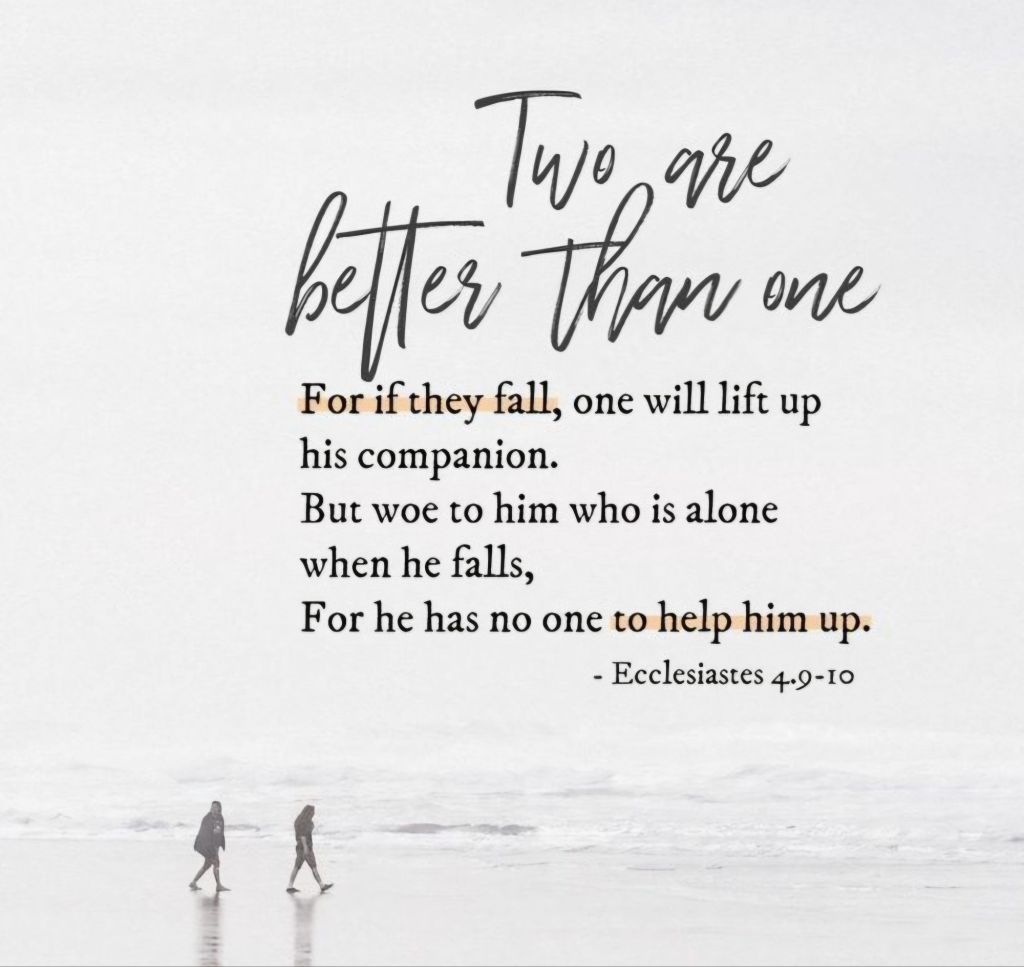
Ecclesiastes 4:9–12 (NIV): 9 Two are better than one, because they have a good return for their labor:
10 If either of them falls down, one can help the other up. But pity anyone who falls and has no one to help them up.
11 Also, if two lie down together, they will keep warm. But how can one keep warm alone?
12 Though one may be overpowered,
two can defend themselves. A cord of three strands is not quickly broken.

In 1869, construction began on the Brooklyn Bridge in New York City. Soon after work commenced, chief engineer Washington Roebling became very ill. His wife, Emily, pitched in to help. She studied his plans, revised specifications, and gave instructions to his assistants. Emily assisted her husband in any way she could, and when the bridge opened in 1883, she rode in the first carriage across it. Her husband praised her “remarkable talent” and “her thorough knowledge of the work and plans.”

Such teamwork is beautiful and the secret to the most meaningful work of our lives. Solomon explained the basis of teamwork in Ecclesiastes: “Two are better than one, because they have a good return for their labor: if either of them falls down, one can help the other up” (4:9-10). And Paul said we should view teamwork as a key to the work of the church: “There are many parts, but one body” (1 Corinthians 12:20). He further explained that there should be “no division in the body” (v. 25) as everyone serves together, caring for each other. (Dave Branon, Our Daily Bread 2nd July 2026)

I was tasked with chairing the organising of this year’s church family camp for our local church. We have planned for it for the upcoming Merdeka break. By the early bird closing date of 30 June, we already have 95 registrations, which is a little more than our projection of 80. Initially, I wasn’t quite keen to lead as I have a heavy workload at work. But as others have already led before, it is my turn to contribute to the cause. Fortunately, the team that are used to organise our camps are still very much there to help out including our elder and senior pastor. So, in the end, it’s a team effort that will make this upcoming camp a success!

It’s the same with other ministries in the church. Two are better than one. Even the band is a combination of a few musicians hearing each other and playing in sync with the worship leader and the AV team working in the background on sound and video for Zoom. Every Sunday worship service, the highlight of a church, is a culmination of efforts from various people – preparing the place, ushering in the congregation, in some places parking arrangements are essential, taking care of the children and youths, preparing the elements for Holy Communion and in some churches, the lunch that follows after the service. It usually starts early in the morning and ends late afternoon. That is why full-time workers of the church usually have Mondays as their rest days. They are mostly exhausted after Sundays!

In terms of the family unit, parents are usually a partnership in the modern context. While it was more common for families with sole bread winners during my parent’s generation, it is more common nowadays for married couples to be double-income units. The economics is such that it is tough not only to survive but also to provide a better future for our children if only one spouse works. That is why when it comes to marriages, two is better than one. Both are equal partners although the husband is the head of the family with Jesus being our ultimate head. In reality, the wife has the final say in most things anyway!

As a believer, we should ask ourselves – why do it alone when we can do it together? Solomon advised in Ecclesiastes 4:9-10 9 Two are better than one, because they have a good return for their labor:
10 If either of them falls down, one can help the other up. But pity anyone who falls and has no one to help them up. That’s God’s wisdom from heaven indeed!

Bring to remembrance our memories

https://odb.org/2026/07/01/full-grown-pleasure

Luke 22:14–23 (NIV): 14 When the hour came, Jesus and his apostles reclined at the table. 15 And he said to them, “I have eagerly desired to eat this Passover with you before I suffer. 16 For I tell you, I will not eat it again until it finds fulfillment in the kingdom of God.” 17 After taking the cup, he gave thanks and said, “Take this and divide it among you. 18 For I tell you I will not drink again from the fruit of the vine until the kingdom of God comes.”
19 And he took bread, gave thanks and broke it, and gave it to them, saying, “This is my body given for you; do this in remembrance of me.” 20 In the same way, after the supper he took the cup, saying, “This cup is the new covenant in my blood, which is poured out for you. 21 But the hand of him who is going to betray me is with mine on the table. 22 The Son of Man will go as it has been decreed. But woe to that man who betrays him!” 23 They began to question among themselves which of them it might be who would do this.

A pleasure is full grown only when it is remembered.” These words, uttered by a character in C. S. Lewis’ book Out of the Silent Planet, depict the joy one has in reminiscing over cherished experiences in life. Though we rightly delight in the breathtaking scenery along the path of a hike or in sharing an important milestone with a loved one, what we feel might be merely the initial pleasure. Often, later reflection on such moments (and those like them) compound the joy of having experienced them.

Perhaps this is another reason Jesus instructs His disciples to regularly share in the Lord’s Supper. As He shared the Passover meal with them the night before His death, He infused it with a new layer of meaning. When partaking of the unleavened bread and “fruit of the vine,” Jesus described them as representing His body and His blood (Luke 22:19-20). His disciples were to share this meal regularly, doing so “in remembrance of [Him]” (v. 19). (Kirsten Holmberg, Our Daily Bread 1st July 2026)

God commanded the Jews to observe the Passover to remind them how the blood of the lamb saved them from death. The Passover, a family meal, commemorated their new beginning as God’s redeemed people (Exodus 12). Jesus gave the bread and wine new meaning when He celebrated the Passover with His disciples before going to the cross (Luke 22:15-20). He instituted the Lord’s Supper or Communion as a reminder that He’s “the Lamb of God” (John 1:29), “our Passover lamb” (1 Corinthians 5:7), who was sacrificed to take away our sins. (K.T. Sim, Insight, Our Daily Bread 1st July 2026)

One of the many talents naturally bestowed us as humans is the ability to remember and bring into rememberance things of the past. I’m sure we are not unique as a species when it comes to memories as we know elephants have excellent memory. I have seen a documentary on the matriarch of a large elephant herd, usually the oldest, being able to bring the family back to places of habitation and water over many miles time and time again over years. It was like a pilgrimage etched deep in her memory that ensured the survival of the herd over changing seasons year in year out. Crucial as elephants have very large appetite and require lush vegetation to survive, especially in savanna lands.

Our memories serve as gateways into our past, into things we enjoy and love and cherish. The times we were so happy, our childhood days, when we had few cares except perhaps finishing our homework! For me who have lost both parents, memories bring back moments we spent together as a family – traveling from the East Coast back to Ipoh or those times we spent at home in cool weather looking at the flood waters in front of our Malay style raised wooden house in Pasir Puteh. Basically, just living life. Or those times we spent worshipping God and hearing sermons preached at our home as a church outreach and house fellowship.

There were many happy moments and as we remember them by replaying them in our mind, we reinforce and etch those happy moments permanently into the recess of our minds. We could recall those moments to cheer us up when we are sad and every now and then, those memories are even replayed in our dreams when we sleep albeit in different forms. In our dreams, we have little control but for me, I get to relive those moments very much as though my parents were still alive and living with me.

Similarly, Jesus turned the Passover meal which the Jews celebrated year after year to remember the time their ancestors were delivered from slavery in Egypt. The Passover meal that Jesus had just before His death has now become the Holy Communion although the early church practised it as part of a larger meal taken together by everyone in the community. It is now a ritual that we practice as part of our worship service whether once or twice a month or every time we meet. In my previous church, we prepare and serve Communion at every service and we spend time praying with and for one another in small groups.

The Holy Communion is a good practice as it brings into rememberance Jesus’s atoning death on Calvary, which secured us a place in the new heaven and new earth at the end of this age. We remember and reinforce the memory of what Jesus did for us so that we are always reminded of our salvation and what led to it. In the process, we are strengthened and encouraged to persevere on in the faith as we face life with its trials and tribulations. Maybe the next time we partake of the elements, we should recall and remember those times we first accepted Christ, the pure joy of knowing our Saviour, of being introduced into this wonderful family of God! Those memories should serve us well to encourage and strengthen our faith for the present and the days to come.

Have a good day ahead, everyone! Hallelujah! Praise the Lord!

Praying to grow

https://odb.org/2026/06/30/praying-to-grow

1 Corinthians 3:1–9 (NIV): 3 Brothers and sisters, I could not address you as people who live by the Spirit but as people who are still worldly—mere infants in Christ. 2 I gave you milk, not solid food, for you were not yet ready for it. Indeed, you are still not ready. 3 You are still worldly. For since there is jealousy and quarreling among you, are you not worldly? Are you not acting like mere humans? 4 For when one says, “I follow Paul,” and another, “I follow Apollos,” are you not mere human beings?
5 What, after all, is Apollos? And what is Paul? Only servants, through whom you came to believe—as the Lord has assigned to each his task. 6 I planted the seed, Apollos watered it, but God has been making it grow. 7 So neither the one who plants nor the one who waters is anything, but only God, who makes things grow. 8 The one who plants and the one who waters have one purpose, and they will each be rewarded according to their own labor. 9 For we are co-workers in God’s service; you are God’s field, God’s building.

After Lam Wai Chan moved from his native Singapore to pastor a church in Japan, he panicked. The church had barely twenty members. In a nation known as a “missionary graveyard,” where about one percent of the nation’s people are Christian and many churches sit empty, Lam felt “like I was taking over a sinking ship.” Crying out to God, he sensed the answer: Offer the church back to Me.

Rather than “update” worship or music, Wai Chan asked members to pray—for their needs, family members, and friends who didn’t know Jesus. Slowly, the church doubled in size. (Patricia Raybon, Our Daily Bread 30th June 2026)

The Corinthian church was plagued by a partisan spirit that threatened to divide it. Each group exalted their favorite teacher over the other teachers (1 Corinthians 1:10-17). Paul warned that leaders like himself were merely God’s servants whom God had assigned specific tasks to help build up the community (3:5). He stressed that it’s God who makes the church grow (vv. 6-7). It doesn’t matter which tasks we’ve been assigned—“what’s important is that God makes the seed grow” (v. 7 nlt). Those entrusted to build up God’s people are “servants of Christ,” and all servants “must prove faithful” (4:1-2). As “co-workers in God’s service” (3:9), God will help us be faithful in building up each other. As we persevere through prayer, He’ll grow His church and reward His faithful servants “for their own hard work” (v. 8 nlt). (K.T. Sim, Insight, Our Daily Bread 30th June 2026)

In ministry, we strive to show tangible results to justify our position and in some situations funding. So if there’s a budget allocation (for example, from the church’s coffers which are usually tithes and offerings), we need to show results. This unfortunately is very much like the world in terms of the key performance indicators (KPIs) of our secular job. We understand the rationale for KPIs, even in the church context. But in ministry and church work, 1 Corinthians 3:6-8 is an important principle to always bear in mind:

6 I planted the seed, Apollos watered it, but God has been making it grow. 7 So neither the one who plants nor the one who waters is anything, but only God, who makes things grow. 8 The one who plants and the one who waters have one purpose, and they will each be rewarded according to their own labor.

If there needs to be KPIs, it should be in terms of the planting and the watering of the seed, not the growth itself. So if there is an outreach, the people tasked with that outreach should be evaluated based on their faithfulness and diligence doing the work there. For example, conducting worship services, preaching, bible study classes, visitations and evangelism. Whether there is spiritual growth in the lives or an increase in numbers, that’s the work of the Holy Spirit. We can only teach the Word and guide. In the end, it is for the congregation to apply the Word for their own spiritual growth. Salvation is a free gift from God by grace, and thus accepting Jesus is not something for us to engineer or manipulate. It is always a battle between spiritual forces influencing the heart with a free will to decide.

As taught in today’s ODB life example of Lam Wai Chan, we pray for God’s intervention. We give back His work to Him. We pray and let Him prosper and grow the work. It is His outreach, fellowship or cell group. Sometimes God’s work may be confined to the handful of people in our midst, the 8 to 10 faithful people in our cell group or house fellowship. That’s our sphere of influence, our field. That is where we water and plant. But it is God who grows and nourishes as we apply His Word in the challenges we face in life. We grow spiritually as we rely on God and walk in faith. We remain stagnant in our faith if we are always fearful to trust God and instead walk by sight and our own understanding, and not in faith or in God’s wisdom. We need to step out of our comfort zone and trust Him.

Have a good week, everyone! May we live in the wisdom of His overflowing grace and achieve much for His glory this coming week!

P/s – I was not able to write yesterday as I needed to leave my home in a smaller city for our city home 70 kms away early in the morning to avoid rush-hour traffic. It took us 45 mins to reach our city home, instead of the usual 90 mins plus.

Who is our neighbour?

https://odb.org/2026/06/26/whos-my-neighbor

Luke 10:30–37 (NIV): 30 In reply Jesus said: “A man was going down from Jerusalem to Jericho, when he was attacked by robbers. They stripped him of his clothes, beat him and went away, leaving him half dead. 31 A priest happened to be going down the same road, and when he saw the man, he passed by on the other side. 32 So too, a Levite, when he came to the place and saw him, passed by on the other side. 33 But a Samaritan, as he traveled, came where the man was; and when he saw him, he took pity on him. 34 He went to him and bandaged his wounds, pouring on oil and wine. Then he put the man on his own donkey, brought him to an inn and took care of him. 35 The next day he took out two denarii and gave them to the innkeeper. ‘Look after him,’ he said, ‘and when I return, I will reimburse you for any extra expense you may have.’
36 “Which of these three do you think was a neighbor to the man who fell into the hands of robbers?”
37 The expert in the law replied, “The one who had mercy on him.”
Jesus told him, “Go and do likewise.”

When an expert in God’s law asked Jesus who his neighbor was (Luke 10:29)—that is, who he was obligated to show love to—Jesus told a story of a man badly beaten by robbers, lying near death by the side of the road (vv. 30-31). A priest and then a Levite approached, but both passed by on the other side. Finally, a Samaritan stopped to help. What made this so unusual was that Jews and Samaritans had a bitter history of scorn for each other. Yet it was the Samaritan who stopped and “took pity” on the man (v. 33). After telling this parable, Jesus asked which was a neighbor to the fallen man. The expert in the law replied, “The one who had mercy on him” (v. 37). Jesus told him, and us, “Go and do likewise.” (Alyson Kieda, Our Daily Bread 26th June 2026)

The question as to who is our neighbour is anchored on the all encompassing commandment of Jesus for us to love our neighbour as ourselves (Mark 12:31, Matthew 22:39). It is actually the embodiment of the second commandment in the Ten Commandments of Mosaic law (Exodus 20:6, Leviticus 19:18). It follows the first commandment – “You shall have no other gods besides Me” or it may be rephrased as “to love the LORD your God with all your heart, soul and mind”.

But the twist that Jesus introduced to Levitivus 19:18 – Do not seek revenge or bear a grudge against anyone among your people, but love your neighbor as yourself. I am the Lord – is to expand the notion of the neighbour, which Jesus also mentioned in Matthew 5:44 – “But I tell you, love your enemies and pray for those who persecute you.”

In the Parable of the Good Samaritan, Jesus illustrates the point that despite deep-seated past and present hostilities between the Jews and the Samaritans, it was a Samaritan who helped the badly injured Jew and paid for his recovery at an inn. It speaks of us as believers the need to treat every other human as another human being and not to be prejudiced by skin colour, race or creed. It is of course easier said than done in real life perhaps due to the racism and discriminatory injustice we ourselves face in life. I guess helping another person is easier but not to hold a grudge or have feelings of hatred is tougher and possibly as tough as to love our enemies and to pray for those who persecute us.

However, one way to overcome our own grudges, hatred and prejudices is to apply Paul’s teaching in Ephesians 6:12 – ” For our struggle is not against flesh and blood, but against the rulers, against the authorities, against the powers of this dark world and against.” It is the spiritual forces behind the enemies of our faith that we are fighting. Not the ones in flesh and blood. So we pray for their spiritual well-being although they may habour hatred towards us. We pray against the spiritual forces behind them.

Indeed the expectation by Jesus on us is sky high. The Old Testament was somewhat Jewish nation centric. The commandment is not to hate or hold a grudge against those in the nation or community. Jesus however expanded that to be all-inclusive covering everyone else. Translated it doesn’t mean we only love those in our family or church but everyone else including those power obsessed politicians saying all those terrible things!

The fatherless find compassion in God

https://odb.org/2026/06/25/the-fathers-open-arms

Hosea 14:1–3 (NIV): 14 Return, Israel, to the LORD your God.
Your sins have been your downfall!
2 Take words with you
and return to the LORD.
Say to him:
“Forgive all our sins
and receive us graciously,
that we may offer the fruit of our lips.
3 Assyria cannot save us;
we will not mount warhorses.
We will never again say ‘Our gods’
to what our own hands have made,
for in you the fatherless find compassion.”

Mary Slessor’s compassionate heart led her to open her arms to those in need. The Scottish missionary, born in 1848, served among the people of Okoyong in a distant land. Superstition led people of that region to believe that when twins were born, one was good and one was the child of a demon. This often led to both twins dying—being abandoned to starvation or other dangers. Reflecting the loving heart of God, in time Mary helped save hundreds of the at-risk children, adopting nine as her own!In his inspired words to the rebellious nation of Israel, the prophet Hosea offers a glimpse into God’s caring heart for children. The prophet said of Him, “In you the fatherless find compassion” (14:3). (Tom Felten, Our Daily Bread 25th June 2026)

If we were raised by a father and a mother, notwithstanding they may not be in our eyes perfect parents, remember that it’s a privilege because not everyone are raised by both parents. There are those amongst us who lost their fathers at a young age and grew up only with their mother as a single parent. Worse, there are those whose father abandoned them and they grew up never knowing a father, with their mum acting as both father and mother in the family. Either situation is tough as it is already difficult to raise children as a couple nowadays, what more as a single parent. In today’s world, most families need double incomes just to survive. That is why more couples are contemplating life without children.

The easiest mechanism to cope when there is less money in the household is to cut down on the luxuries. So we survive on the bare minimum. For example, we sleep on mattresses without bed frames and some even sleep on just mats if we live in elevated wooden houses.

During ancient times, it was even tougher to grow up without a father as mothers do not usually work and earn any income. That is why God made it a law for the Israelites to allow gleaning to enable widows and the fatherless a means to gather food for themselves so that no one in Israel goes hungry. Even if there is nothing else to go with it, there is at least bread on the table (or in the context of us in South East Asia, we could at least have a plate of plain rice mixed with soy sauce).

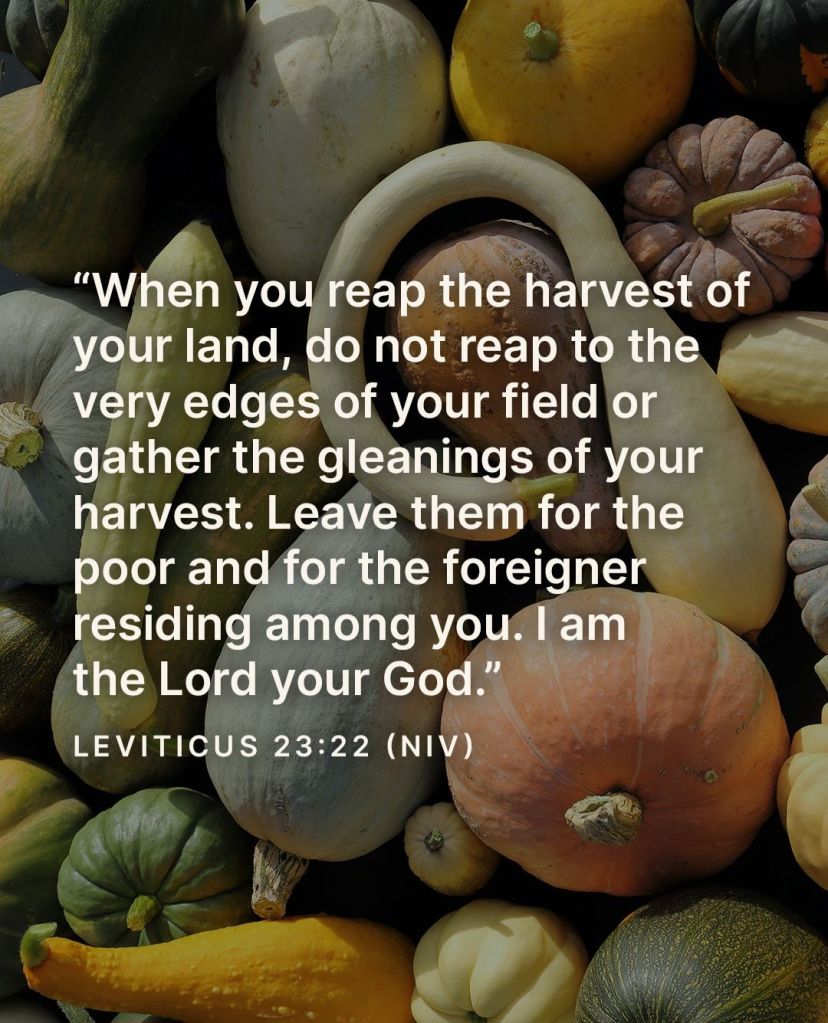
Besides the Mosaic law for the landed farmers to leave out the edges of their fields for the widows, orphans and foreigner to glean, God has compassion for the fatherless as seen in Scripture like today’s Hosea 14:3 – “Assyria cannot save us; we will not mount warhorses. We will never again say ‘Our gods’ to what our own hands have made, for in you the fatherless find compassion.” 

If we have ever been in a situation of the fatherless for whatever reason in the past or never even had a parent raise us at all, God is the person who has compassion for you. Like the children who were abandoned due to wrong beliefs in twins in Okoyong or children left behind due to parents executed under Chinese criminal laws in China or whose parents were killed by some road accident, a natural disaster or serious illnesses – the LORD God will be your father (and even your mother). He is your tower of strength, your stronghold! Cling on to Him, He will see you through life! Amen!

Nothing is impossible with God

https://odb.org/2026/06/24/faith-rooted-in-god

Matthew 19:23–26 (NIV): 23 Then Jesus said to his disciples, “Truly I tell you, it is hard for someone who is rich to enter the kingdom of heaven. 24 Again I tell you, it is easier for a camel to go through the eye of a needle than for someone who is rich to enter the kingdom of God.”
25 When the disciples heard this, they were greatly astonished and asked, “Who then can be saved?”
26 Jesus looked at them and said, “With man this is impossible, but with God all things are possible.”

I was inspired while reading a historical fiction account of the life of Mary McLeod Bethune, founder of Bethune-Cookman University. One account tells how in the early 1900s, she “described” the buildings at her school for young African American women to a wealthy businessman. But when he visited the “campus,” he found only one building. She’d described her dream to him, hoping that he would invest in the school. Bethune is credited with saying: “Without faith, nothing is possible. With it, nothing is impossible.” Her quote is similar to what Jesus told the astonished disciples who were asking questions about salvation. They were trying to figure out how people could “enter the kingdom of God,” or heaven (Matthew 19:24). They wanted to know “who then can be saved?” (v. 25). Jesus shared with His followers that faith in God was the only way, because “with God all things are possible” (v. 26). (Katara Patton, Our Daily Bread 24th June 2026)

The rich man was trusting in himself, his good works, and his wealth for eternal life rather than in God (Matthew 19:16-22). To highlight the impossibility that he could enter heaven based on his own merits, Jesus said it would be easier for a large camel to go through the small eye of a needle than for a rich man to save himself (v. 23). The Jewish belief at that time was that God bestowed wealth on the deserving. If a moral and rich person who had God’s favor couldn’t make it into heaven, then seemingly no one could (v. 25). Christ says it’s impossible for humans to save themselves but “with God all things are possible” (v. 26). God did the impossible and the unthinkable when “he gave his one and only Son, that whoever believes in him” would “have eternal life” (John 3:16). As believers in Jesus, we can trust God—who can do the impossible—to help us. (K.T. Sim, Insight, Our Daily Bread 24th June 2026)

I think it is necessary that when we read and rely on Matthew 19:26 – “with man this is impossible, but with God all things are possible” – we must remember that it was taught by Jesus in the context of the impossibility of man achieving salvation on his own. Salvation is by the grace of God and that’s when John 3:16 comes into play – “For God so loved the world that God gave His one and only Son that whosoever believes in Him shall not perish but have life everlasting“. Thus, it should not be applied in every context of an impossible situation we face in life.

While it is true that there are things that man cannot do that God can, natural laws have been put in place by God Himself as the creator of all things. While God may heal us and the atonement of our sins by the death of Jesus enables healing, we will get sick if we do not take care of our bodies and until Christ returns, we are still living in our fallen earthly tents. We will age, get sick and pass on in due course.

However, Bethune’s quote is somewhat different – “Without faith, nothing is possible. With it, nothing is impossible.” Faith in God and the corresponding perseverance and pushing through will achieve much in terms of our dreams and vision. It basically means there are no limits as to what we may achieve if put our faith in God. Sometimes it involves breaking through as what medical science has achieved over the years. For example, a plague like small pox killed millions in the past have now been nearly fully eradicated through vaccination after birth.

As believers we put our faith in God and we trust that He will lead us through a meaningful life as we strive to achieve His plans and purposes for our lives. His Kingdom and its purposes come first as we seek ye first the Kingdom of God and His righteousness. But if God has planted a seed of faith to see a bigger vision of what we see now through our physical eyes, follow that through and one day that dream and vision will come to pass as we continue to trust Jesus with our lives. That’s the story of Mary McLeod Bethune and that may become our own story in the context of our own dreams and vision.

Seek ye first the Kingdom of God and His righteousness and surely we will achieve more than what we now see. May the LORD our God open our spiritual eyes to see what’s not only in the spiritual realm like Elisha did for Gehazi, but also what lies ahead in terms of His vision for us, His plans and purposes for our lives! My prayer is that all of us will enter into and live in the center of His will and indeed achieve more than what our physical eyes can see or mind can even imagine! Amen!

Leave the edges of your field

https://odb.org/2026/06/22/ready-to-be-generous

Leviticus 19:9-10 9 “ ‘When you reap the harvest of your land, do not reap to the very edgesq of your field or gather the gleanings of your harvest. 10 Do not go over your vineyard a second times or pick up the grapes that have fallen. Leave them for the poor and the foreigner. I am the Lord your God.

My great-uncle’s memorial service featured a meal of roast beef, corn, and beans to honor the hospitality that he and his wife had lived out for many years. Each Sunday morning, they would put a large roast and veggies in the Crock-Pot before going to church. After the service, they would look for someone to invite for lunch. Sometimes it was a good friend, sometimes a stranger. Either way, they made sure there was plenty of food at home and those afternoons were especially set aside for hospitality. Their Sunday habit required an intentional readiness for generosity.

The Israelites followed a similar pattern. Through Moses, God commanded them to leave a portion of their food “for the poor and the foreigner” (Leviticus 19:10). During harvest time, they were instructed not to reap to the edges of their field, leave what had fallen, and not re-harvest their vineyards (vv. 9-10). With these redeeming methods, those who didn’t own land could still work to gather food. For the people of God, this wasn’t a one-time, spontaneous act—although that can be a beautiful blessing too. It was how they lived year after year. (Karen Pimpo, Our Daily Bread 22nd June 2026)

God promised to abundantly provide food for His people (Leviticus 25:18-19), and so, in remembrance of their enslavement in Egypt, He commanded them to feed the poor and needy (19:9-10; Deuteronomy 24:19-22). The story of Ruth took place in the backdrop of this law of gleaning (Ruth 2). God also wants us to be open-handed with his material blessings (see Deuteronomy 15:7-11). The apostle Paul says that God gives us material blessings for our enjoyment and commands believers in Jesus “to use their money to do good. . . . Be rich in good works and generous to those in need, always being ready to share with others” (1 Timothy 6:18 nlt). (KT Sim, Insight, Our Daily Bread 22nd June 2026)

I’m sure by now we already know that it was a law made by the LORD since the time of Moses that the Israelites when harvesting should not be too exact in gathering the wheat. This was to enable those without land and the poorer ones amongst society and the widows, the orphans and the foreigner the opportunity to work and gather the leftovers for themselves. It was in remembrance of their enslavement in Egypt and for them to be grateful for God having delivered them from slavery and gave them land at Canaan. Practically, it ensured that no one went hungry. In fact, that was how Naomi and Ruth survived after returning to Israel from Moab penniless. Of course, the story of Ruth, set against the backdrop of this law, led to her marrying Boaz whose great grandson was David and it was this glorious house of David that Jesus Christ our Lord and Saviour traced his ancestry to.

If we research this point on “gleaning” in ancient Israel history, we will find that this was strictly adhered to as part of the landowners’ civil and religious obligations. There were three elements to allow gleaning – one, was to leave the edges unharvested; two, was to leave the gleanings behind (not permitted to return to pick them up) and three, was to leave behind fallen fruit (like grapes in their vineyards). It was part of their societal responsibility and it was practiced every single time there was a harvest (not once in a while) and this religiously imposed social welfare system helped the poor, the fatherless, widows and the foreigner to have access to food.

In the contemporary modern context, the law does not apply to us believers in Christ. However it is a law that speaks of God’s heart for the needy and underprivileged in society. In terms of our own hearts, it encourages us to use our money to do good and help those in need generously (1 Timothy 6:18), amongst those in the congregation and those we know. In this connection, there will always be those who may not have or were not able to prepare effectively for their old age, particularly, some of those in full-time ministry who gave themselves to the Kingdom service but may not have had much to contribute to any provident or pension schemes. I know small independent churches in the early days do not provide EPF or pension contributions for their workers and when those workers are retired, many are left to fend for themselves with no or little family support as many remained single in their old age.

Thus, if we know of avenues to contribute to the welfare of these older and retired warriors of God, we should do so while we ourselves are financially able. God did not ask us to give them our “fields” or sell our “fields” to feed them, but let them have the edges. In the modern context, it means a portion of what we have. The church should be involved in this but I don’t believe it is structured to do so as retired workers are not usually kept on the churches’ payroll until death. The church sadly in this sense is very much like the world, if you’re no longer staff, you’re effectively forgotten.

Have a good week ahead, everyone! As we work, we remember that God has given us this opportunity to earn not just to feed our families but also to feed those in need! Take care and have a blessed week!

Shalom – peace that transcends all understanding

https://odb.org/2026/06/19/the-path-of-life

Proverbs 3:1–6 (NIV): 3 My son, do not forget my teaching, but keep my commands in your heart,
      2 for they will prolong your life many years and bring you peace and prosperity.
      3 Let love and faithfulness never leave you; bind them around your neck, write them on the tablet of your heart.
      4 Then you will win favor and a good name in the sight of God and man.
      5 Trust in the LORD with all your heart
  and lean not on your own understanding;
      6 in all your ways submit to him, and he will make your paths straight.

We sometimes feel overwhelmed by our circumstances. We experience setbacks. We find ourselves at a loss for where we should go. But Proverbs encourages us, “Trust in the Lord with all your heart and lean not on your own understanding” (v. 5). This is the Bible’s way of saying, “Let go and let God” lead your life. George Washington Carver followed God’s path, persevering against all odds, teaching himself botany and geology and eventually becoming a renowned scientist. He famously developed hundreds of uses for the peanut plant but also developed methods of crop rotation that revolutionized agriculture in the United States. God has a way of making the best out of bad situations. Whatever you’re facing today, the key is to “acknowledge Him” and listen for His voice. Watch Him open up the paths of your life. (Kenneth Petersen, Our Daily Bread 19th June 2023)

Throughout Scripture, we also find that in this fallen world God’s people often experience great hardship. Instead, the chapter points to the principle that since the world was created by God’s wisdom, human beings are most likely to thrive when they live in alignment with that wisdom. Peace in verse 2 (of Proverbs 3) is the Hebrew word shalom, a rich word capturing not just absence of conflict but flourishing. It describes a rich and abundant life. Shalom points to the world as it’s meant to be. When there’s harmony between God and creation, everyone thrives. Whatever we face, seeking God’s wisdom and direction can bring new life and hope to our situation. (Monica La Rose, Insight, Our Daily Bread 17th June 2026)

Our Malaysian Prime Minister, Datuk Seri Anwar Ibrahim, is famous for arguing that we did not choose to be born as Malay, Chinese, Indian, Kadazan or Iban. Thus it is not right to exclude any minority from the administration as everyone should be able to participate in governing the country. It is good point as Malaysia should celebrate our diversity, instead of focusing on the superiority of one ethno-religious community to the exclusion of others.

Therefore, as believers, we did not have a choice too – having been born in Malaysia as a minority or generally, having to go through a life of struggles or hardship. We wish we are surrounded by luxury, we can travel in style and comfort, and dine at the best Michelin restaurants but most of our realities are that life is not easy although we know that’s actually relative. Some of our lives are fraught with more challenges like we may be born with a congenital health condition or we face difficulty adapting at work or socialising in school or college.

However, because we know Christ, we have a tangible advantage in that we could live in harmony with God’s wisdom. Not having an easy life but nevertheless we live in the centre of God’s will, in His shalom. In Monica La Rose’s words – shalom a rich word capturing not just absence of conflict but flourishing. It describes a rich and abundant life. Shalom points to the world as it’s meant to be. When there’s harmony between God and creation, everyone thrives.

This is, in my view, always the balance we need to achieve in our walk of faith. We stay close to the ground to live out life and yet tap on the wisdom of heaven, that in the process, we experience the shalom of the LORD our God. A peace that transcends all understanding. Not only the spiritual matters (although it is true the eternal destiny of our souls matters the most), but the natural also. This is because we need to live in the natural. So since we have access to the spiritual and supernatural, why not align ourselves with God’s wisdom and abundant grace and mercy? Besides fulfilling God’s plans and purposes for our lives, we will live in the equilibrium, the perfect balance between the natural and the spiritual.

Have a good weekend, everyone! May we meet Him face to face in the spirit as we make the effort to go to church for worship this Sunday! Amen!