The easy and hard

https://odb.org/2025/01/16/easy-and-hard

Exodus 14 ESV12 Is not this what we said to you in Egypt: ‘Leave us alone that we may serve the Egyptians’? For it would have been better for us to serve the Egyptians than to die in the wilderness.” 13 And Moses said to the people, “Fear not, stand firm, and see the salvation of the Lord, which he will work for you today. For the Egyptians whom you see today, you shall never see again. 14 The Lord will fight for you, and you have only to be silent.”

After Moses, with God having inflicted the Egyptians with the 10 plaques, brought the Israelites out of Egypt, the Pharoah changed his mind and pursued the Israelites. The road to salvation was easy but then became hard when the Egyptians were in pursuit. The Israelites became afraid and blamed Moses for delivering them out of Egypt, preferring to remain slaves serving the Egyptians, a common trait that they carried on even in the wilderness. In the end, none who left Egypt as an adult (except Joshua and Caleb) entered the Promised Land as every single one of them died in the desert during those 40 years.

Sometimes, we could be like those Israelites who were delivered out of Egypt by Moses. Instead of being grateful and thankful for the salvation given to us by God’s love and grace, we grumble that it’s better for us to have remained in our old self. Perhaps Christian life was easy at the beginning but turned hard when we needed to make a stand for God. Perhaps when we live out our faith, we face discrimination and persecution. Perhaps doing the right thing had pleased God. But, it did not yield financial rewards or recognition from our peers. Or we thought Christian life would be rewarding and filled with good fortune when we have Christ in our lives. Instead, we are experiencing hardship and difficult times. Some of us couldn’t understand why God allowed our young loved ones to die in our arms or did not intervene when some misfortune or illness inflicted us.

Like the Israelites and Egyptians, the LORD allows both easy and hard times. He did all the work to convince the Pharoah (the 10 plagues) to release the Israelites but, in the end, allowed the Pharoah to pursue them. The hard part, however, was met with triumph when He parted the Red Sea, allowing the Israelites safe passage but He closed it back when the Egyptians followed so.

I believe that as much as there are easy and hard times, if we have God in our lives, God has a plan and reason for our hardships. Out of those hardships, heartbreaking moments, tears, and mourning, He is doing a special work in our hearts to bring us to the next level of our relationship with Him. When we experience pain and loss, we may become a vessel for God to minister to those experiencing pain and loss. If the Egyptians are at our backs, there will be a Red Sea moment for us to see and experience the glory of God working through us! Trust Him, the time will come! Hallelujah and Amen!


God’s love

https://odb.org/2025/01/15/you-too

Romans 5 ESV8 but God shows his love for us in that while we were still sinners, Christ died for us. 9 Since, therefore, we have now been justified by his blood, much more shall we be saved by him from othe wrath of God. 10 For if while we were enemies we were reconciled to God by the death of his Son, much more, now that we are reconciled, shall we be saved by his life.

While we know that Jesus died for our sins because God loved us, Jesus actually died for all mankind. God’s love was and is for everyone. He died for us while we were yet sinners, and that means He died for everyone else. The atonement and forgiveness of our sins are available for everyone. Salvation is a gift from God. It is by His grace. Mankind on our own, we can not gain salvation. Never a question of good deeds as we are all tainted by the original sin of Adam. Thus, the Second Adam (Jesus Christ) was required to rectify the situation and reconcile us back to God.

As much as the work has already been done, mankind still needs to take the step of faith to accept Jesus into our lives as our Lord and Saviour. This is because individually, we are justified by our faith in Jesus Christ. Everyone needs to come to God through Jesus Christ. He is the way, the truth, and the life, and no one comes to the Father except through Him (John 14:6).

The question this morning is, have you personally accepted Jesus Christ into your hearts as Lord and Saviour? If you haven’t, say the sinner’s prayer:

Dear Heavenly Father,

I know that I have sinned, and I repent from my sins. I thank you for sending Jesus Christ, your one and only beloved Son to die for my sins, and reconcile me back to You. I believe that Jesus died for me and rose again 3 days later. I accept Jesus Christ into my life and heart as my Lord and Saviour. I want to trust and follow Jesus for the rest of my life. In Jesus’s most precious name, I pray, Amen!

Share with others the Good News and guide them through the sinner’s prayer if they believe that Jesus Christ died for their sins and rose again and was victorious over sin and death. We all need to be on the road of righteousness that leads to eternal life! We all need to begin this journey to fulfil God’s plans and purposes for our lives! Amen!

Walking with God

https://odb.org/2025/01/14/walk

Genesis 5 NIV21 When Enoch had lived 65 years, he became the father of Methuselah. 22 After he became the father of Methuselah, Enoch walked faithfully with God 300 years and had other sons and daughters. 23 Altogether, Enoch lived a total of 365 years. 24 Enoch walked faithfully with God; then he was no more, because God took him away.

The Bible uses the imagery of walking to describe our journey of faith with God. Thus, a picture of two sets of footsteps on the beach is apt. As we go through life, Jesus is beside us, is one way to look at our walk of faith. There are times when the footsteps become one, and those are the times when Jesus carried us in His arms.

Perhaps another way, and a better one, to look at the footsteps on the beach is that we are walking with God to wherever He is leading us. God is still there as we go through life, but we are following Him. We are tagging along to where He is going. We are living in the centre of His will, fulfilling His plans and purposes for our lives. We are thus like the Israelites, as God leads them through Joshua, we are following God to enter into our Promised Land, the land flowing with milk and honey. The LORD is telling us to be strong and courageous. Do not be afraid and do not be discouraged for the LORD your God is with you wherever you go. See Joshua 1:9.

As God leads us and we follow Him, we need not be afraid or discouraged for He is with us. We do not know what life will bring us as the future is uncharted territory, but what we so know is that we are in good stead if we are following Jesus as our Lord and Saviour. He will strengthen us when we are weak and encourage us when we are down.

How’s our walk with God? Are we walking faithfully with Him like Enoch did? Or are we threading our own path and trying to force Jesus to tag along like a parent running after a toddler? Yes, Jesus will never let us go, and like a parent, He will try to make sure we will not fall down and hurt ourselves. But that’s not the path that Father God has appointed for us. Our own path is not God’s plan for us. It’s not the Promised Land flowing with milk and honey. Most importantly, it’s not the path of righteousness that leads to eternal life.

How’s our walk with God? If we have strayed, come back to Him quickly lest we drift farther and farther away as the devil came to steal, kill, and destroy, but Jesus came that we may have abundant life (see John 10:10).

Are you a scout or a soldier?

https://odb.org/2025/01/13/scouting-for-truth

James 1 NIV – 19 My dear brothers and sisters, take note of this: Everyone should be quick to listen, slow to speak and slow to become angry, 20 because human anger does not produce the righteousness that God desires.

It is interesting to note that more often, when confronted or in a conversation, we tended to behave like soldiers. We want to defend our position, and sometimes, in the process, the atmosphere is unwittingly escalated, and we end up quarrelling. This occurs, I believe, more often between husband and wife. A small thing like, “Did you put this here,” could potentially be turned into an explosive argument. Of course, quarrels between spouses are usually quickly reconciled. However, we can not be assured of the same between friends and colleagues as some have long-lasting effects.

That is why it is better to be a scouting soldier than a mere soldier out to defend our positions. In the army, there is always an elite group that goes out first to survey the terrain and possibly infiltrate into enemy territory before calling in the big guns – whether airstrikes, artillery, or the infantry. The scouts usually don’t attack as they are hidden. They are there to observe and report back. They have to be objective and tell it as they see it. Often, the success of the mission depends on their observations. That is why nowadays, people speak of a soldier or a scout mindset. Which are we?

This distinction is a most useful application of James 1:19 as our standard of behaviour is to be quick to listen, slow to speak, and slow to becoming angry. If we adopt a scout’s mindset, who is open to contrary viewpoints and always seeking the truth, it will be easy to meet James 1:9. Unlike a soldier, a scout wants to get to the bottom of the situation. The more information is shared by the counter-party, the more accurate the assessment will be. So we will listen rather than speak. If we are not out to defend, we will be less likely to become angry quickly.

A note of caution. The Word of God also has a standard when it comes to scouting specifically. Remember the 12 spies sent out by Moses to spy and give an account of the Promised Land? In spiritual matters, we need to look not in the natural but with eyes of faith, believing in God’s ability to move mountains. Always remember Joshua and Caleb.

Have a scout’s mindset, and we will be quick to listen and slow to speak and slow to become angry. It will be an excellent testimony of God’s work and grace in our lives if we can live out our lives in that fashion. But also remember that when it comes to formulating plans for ourselves or the church, we must always move with eyes of faith and not with our own strength in the natural.

Have a good week ahead, everyone! Be a scout rather than a soldier!

John Mark

https://odb.org/2025/01/12/unfairly-judged

The recorded conflict in Acts 15 of Paul with Barnabas over John, also called Mark (yes, it is believed that he is the writer of the Gospel of Mark although not as an eyewitness but based on materials provided by the Apostles, mainly Peter). Paul did not want to bring Mark along for his second missionary trip because the young missionary intern left them halfway in the first trip. Paul saw that as an unforgiveable defection and failure. Barnabas, however, disagreed with Paul’s assessment and parted ways with Paul. Barnabas restored Mark, and in 2 Timothy 4:11, Paul remembered and commended Mark. In the later years, Mark came under the tutelage of Peter and wrote the book of Mark.

2 Timothy 4:11Get Mark and bring him with you, because he is helpful to me in my ministry.

For me, this episode shows that the issues we face today in ministry and church have similarities to what the Apostles went through in the first century when Christianity had just started. Issues of discipleship, of giving up, of restoration and encouragement – are all human issues intertwined with spirituality that they faced and we still face today. God was real then, is still real, and will be real in the days to come. The bible records real-life interactions of believers living out their faith for Christ.

But the message this morning is that if we are unfairly judged, there is restoration if we persevere with God. The LORD will exonerate and vindicate us if we remain faithful to Him. John Mark is one of the shining examples. Paul eventually recognised Mark’s contribution to his ministry in his second letter to Timothy when he was in his second imprisonment in Rome, which he wrote just before he was executed.

Do not lose heart or give up if we have been unfairly judged. At the workplace, we often face this issue as some assessments are politically motivated or made to serve certain objectives. One day, the Lord will vindicate us. He will restore our reputation and name. Trust Him and continue in the faith.

Have a great time today worshipping God in the congregation of His people! May we get a personal touch from Him!

Deceivers out there

https://odb.org/2025/01/10/what-scripture-reveals

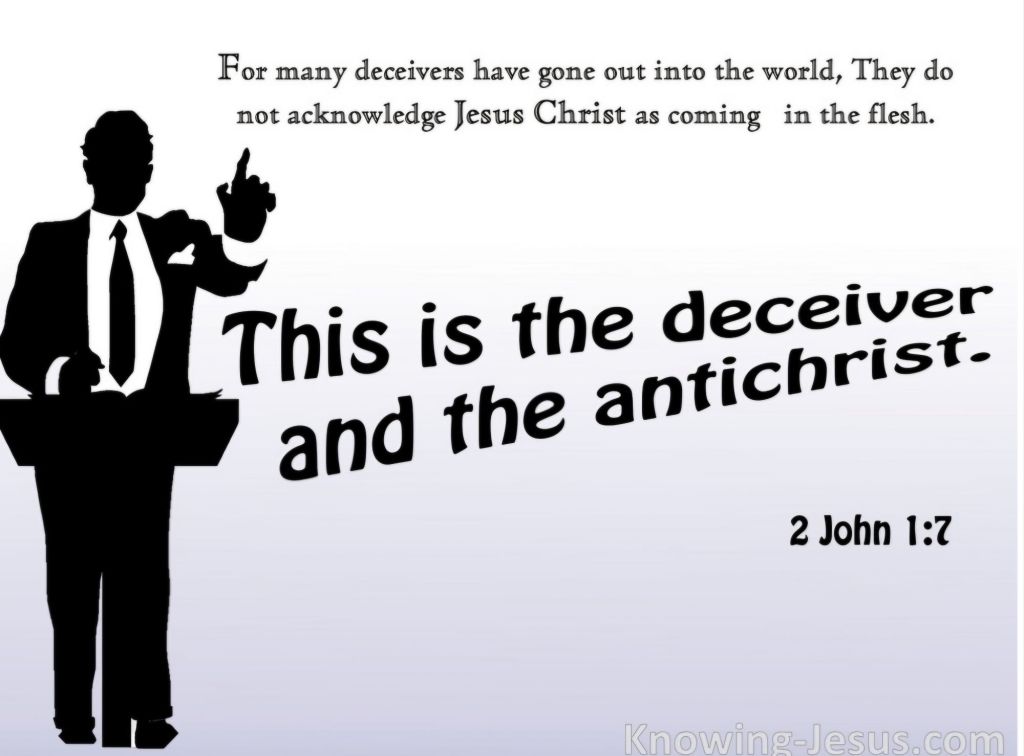
2 John 4 NIV7 I say this because many deceivers who do not acknowledge Jesus Christ as coming in the flesh have gone out into the world. Any such person is the deceiver and the antichrist. 8 Watch out that you do not lose what we have worked for, but that you may be rewarded fully.

It is undeniable that we are living in the era of the end times, and even ever since the birth of Christianity in the first century, there were and would always be deceivers out there. Some may even be unintentional. Teaching out of the sincerity of their hearts but nevertheless wrong. There are fundamental tenets, and there are those in the peripherals. It is the fundamental teachings that we must always keep and believe in. For example, we can not say that we are children of God if we do not believe that Christ was God in the flesh, that He is the Son of God in the Holy Trinity. If Christ was spirit and not flesh and blood when He walked the earth, then how could He have died for our sins? More crucially, how could He have resurrected from the dead to defeat the devil of the sting of death? It is only flesh and blood who will die and yet will live again. It is the crucifixion and resurrection of Christ that distinguishes us from Judaism and Islam. It is the hope of glory that forms the basis of our faith. If Christ was spirit, we would not, one day, share in His resurrection.

The focus is on the fundamental issues, although there are smaller issues out there. Should we celebrate Christmas and Easter when these were originally allegedly pagan festivals adopted by Christians in the early days of the faith? Why not when the message is more important than the date, especially when we are not worshipping pagan gods but giving all glory to the Father and the Son? Should Christians drink alcohol socially, or should we practise total abstinence? Should we listen to pop or rock, or should we only listen to Christian music? Should we wear makeup and colour our nails? Should we cover our hair? Should we see the doctor or totally depend on God healing us? Should we be vaccinated, or should we trust God to protect us?

We know the principle between the fundamentals and the peripherals. But have we been schooled enough to know for sure what’s the former? Do we know enough to tell what’s black and white, and what’s grey?

I feel the message this morning is that all of us (including myself) should spend time equipping ourselves with the knowledge of our Lord Jesus Christ. We need to know clearly what we believe and at the same time develop a closer walk with Christ and the Holy Spirit. With better knowledge and a deeper relationship with Christ, the devil will not be able to deceive and lead us astray. In time to come, we will be able to see through the hearts of men and sieve out those self-serving preachers peddling the name of God for their own gain, whether for fame or fortune. If their motives are not right, their teachings could be suspect too.

Your love is better than life

https://odb.org/2025/01/09/better-than-life-2

Psalm 63 NIV1 You, God, are my God, earnestly I seek you; I thirst for you, my whole being longs for you, in a dry and parched land where there is no water. 2 I have seen you in the sanctuary and beheld your power and your glory. 3 Because your love is better than life, my lips will glorify you.

There is a beautiful song written by Esther Mui, which she also performs accompanied by Patrick Lim on Psalm 63 – in fact, I am sure there are many others. We learnt and performed this song in church, and occasionally, a worship leader will sing this song to God for worship.

https://youtu.be/REx6twdA-Gk?si=amlZy_7JWaVWEZmd

The question that I used to ask about Psalm 63 is how it is that David could conclude that God’s love is better than life? During David’s time, the Israelites looked at the LORD as their sustenance of and for life. They held onto the Abrahamic Covenant of the promise that if they followed Him and adhered to His laws, He would bless and protect them. The concept of afterlife or eternal life was likely there in the background but not clearly spoken about until Jesus arrived on the scene.

Yet David proclaimed that God’s love was better than life. One possible explanation is that David experienced God’s love in such a personal way that he felt he owed his life and very existence to God. The LORD probably rescued him numerous times from Saul and later Absalom and preserved him in his many battles against the enemies of Israel. Why would God save him time and time again if not for His love for him? In Psalm 23, David declared that surely goodness and mercy shall follow me all the days of my life, and I will dwell in the house of the LORD forever. Proclaiming that God’s love is with him until his dying day and that he will spend eternity (forever) with God. Did David allude to eternal life, or is it just his way of speaking about his eventual death one day?

Be that as it may, what’s crucial to us is that we know Christ and His love for us, having sacrificed His life for us that we may be able to spend eternity with Him and Father God and the Holy Spirit one day. We rightfully should be able to proclaim that His love is better than life! In other words, His love is so powerful as experienced that we would rather be with Him than be here on earth if given a choice. Like Paul said, “to die is gain but to live is Christ” (Philippians 1:21, paraphrased).

Can we say as Paul in Philippians 1:21? Can we say like David in Psalm 63:3 that God’s love is better than life? Would we rather die and be with God than live? Are we so confident of where we stand before Christ in the Bema judgment seat of Christ? Things to ponder and reflect upon this morning.

It is finished

https://odb.org/2025/01/08/a-deaf-heart

John19:30 NIV – When he had received the drink, Jesus said, “It is finished.” With that, he bowed his head and gave up his spirit.

Hebrews 2:9, 14-15 NIV – 9 But we do see Jesus, who was made lower than the angels for a little while, now crowned with glory and honor because he suffered death, so that by the grace of God he might taste death for everyone. 14 Since the children have flesh and blood, he too shared in their humanity so that by his death he might break the power of him who holds the power of death—that is, the devil —15 and free those who all their lives were held in slavery by their fear of death.

Jesus, even though He was the Son of God in the Holy Trinity, became human, lower than the angels (who are spiritual beings), in order to share in our humanity. He became flesh and blood like us to defeat the devil and the sting of sin, death. In the process, He freed us. Our lives who were held in slavery because of our fear of death. With eternal life, death will not destroy us and keep us in the grave like in the case of Christ. One day, we will rise again and be resurrected into our glorified bodies, just like Christ!

But what I would like to highlight this morning is John 19:30. Jesus declared that – “It is finished.” It is completed and done. His mission on earth, being Immanuel, was accomplished after 33 years on earth. He fulfilled Father God’s plan and purpose for Him. He did not waiver but achieved God’s calling for Him. He responded and followed through to completion.

Are we doing the same thing for our lives? Can we safely and confidently say it is finished one day? Can we say like Paul in 2 Timothy 4:7 that I have fought the good fight? That I have finished the race? I have kept the faith?

It is a journey. A long one. It’s not a spur of the moment thing. It’s not something we could muster out at the last mile, the home stretch. It’s a culmination of our entire life in Christ on earth. We need to start today to call upon the name of Jesus and to heed His calling for our lives. Not at our dying breath. Not at the last moment. Even if we make it through by the grace of God by the strand of our hair, I feel we will be quite lost in eternity. We want the Lord to confidently and comfortably say to us that we have been a good and faithful servant!

Seeing God in His creation

https://odb.org/2025/01/07/seeing-god-in-creation

Job 42 Then Job replied to the Lord: 2 “I know that you can do all things; no purpose of yours can be thwarted. 3 You asked, ‘Who is this that obscures my plans without knowledge?’ Surely I spoke of things I did not understand, things too wonderful for me to know.

When we have doubts, we should look at His creation and marvel at His handiwork and craftsmanship. Look at the majestic mountains – snow capped in other places, but filled with much greenery in Malaysia. Look at the clouds and the blue sky and the sea. The sunrise is so magnificently beautiful. Marvel at the pouring rain, giving the much needed sustenance for the ground to yield its crops. In fact, every time I mow the lawn at my old house, I marvel at how fast the grass grows again! I missed mowing for a few weeks over the Christmas and New Year weekends, the triple effort needed!

But what I would like to point out today is what Job said in Job 42:1-3: I know you can do all things. No purpose of yours can be thwarted, meaning to say God’s sovereign will would prevail because He can do all things. Job concludes that in grumbling about his situation, he was speaking of things he did not understand, as God has a plan and His own timing. Those plans are the things that are too wonderful for him to understand.

We know God can do all things. When we look at His creation, we are astounded by His glorious power. Yet we know nature will run its course. You plunge a knife into a man’s heart, you will kill him. If you add salt to a glass of water, the water becomes salty. Yet sometimes we want to believe otherwise, like when we are stricken with illness or a misfortune befalls us. Can God do all things? Yes, He could, but nature will run its course. Will we blame God if He has not healed us? Will we blame God if He did not perform a miracle for us? Job said that he spoke of things he did not understand. Ultimately, as mere humans, as much as Jesus loves us, we submit and conform to His will. He knows best, and we know that His plans for us are to prosper us (for our good) and not to harm us but to give us hope and a future (Jeremiah 29:11).

When we say we know that God can do all things, we must accept and trust that He knows best, and He knows what’s best for us. If it’s tough, He has a purpose. If it’s filled with hurdles, hardship, tears, and pain, He has a purpose. The light will come at the end of the tunnel because we know that we have all eternity with Him in Christ. That’s what really matters, at the end of the day. Don’t ever lose sight of that, come what may!

Epiphany

https://odb.org/2025/01/06/little-town-of-bethlehem

Today, January 6, is the day the church celebrates Ephiphany (also known as the Feast of Ephiphany) to commensurate the first manifestation of Christ to the Gentiles through the Magi from the East, who travelled to Bethlehem following a star and presented baby Jesus with gold, frankincense, and myrrh. The Magi were likely astrologers from a place, possibly modern-day Iraq or Iran, and reflects that God’s grace through His Son, Jesus Christ, as encapsulated by John 3:16 is for all humanity and not only to Israel eventhough Christ first ministry were to the Jews. Jesus Christ came for everyone.

John 3:16 says, “For God so loved the world that He gave His only begotten Son, that whoever believes in Him should not perish but have everlasting life”.

Ephiphany is similar to revelation in the sense that there is a revealing scene or moments or that something is revealed. Yet it is different when it means the manifestation of a divine being, a sense not shared by revelation.

Let’s praise God for raising up Apostle Paul, whose primary goal in life was to preach Christ crucified and resurrected, particularly to the Gentiles, notably the Greek world, then existing in the first century. Western Europe was the centre of Western civilisation, and if the faith had not penetrated the Western world, Christianity would have remained a sect within Judaism and would have died a natural death as can be seen in modern day Israel. That is why the New Testament was written in Greek as opposed to Hebrew of the Old Testament.

Praise the Lord that Paul made the stand that new Gentile believers need not embrace Jewish customs to be accepted into the Kingdom of God. In fact, what started as a sect of Judaism began to be known as Christianity or its followers Christians in Antioch, the city from which Paul started his first missionary journey.

As the church celebrates Ephiphany, let us give all glory to God for His love, grace, and mercy that nations and communities from the world over have known Him through generations, enriching our lives with heavenly blessings while enjoying a communion that one day will extend beyond this natural realm into the new heaven and new earth where God in all His glory will dwell among His people.

As a Malaysian of Chinese ancestry that stretched hundreds of years in the Nusantara archipelago, I am indeed most grateful and thankful that the grace of God touched our family, my deceased parents, myself, my wife and our children. I pray that His grace will extend for generations to come in our families until He returns to this earth as the King of Kings and Lord of Lords. Amen!