
https://odb.org/2025/03/03/unexpected-neighbors
Luke 10:27–37 (NIV): 27 He answered, “ ‘Love the Lord your God with all your heart and with all your soul and with all your strength and with all your mind’; and, ‘Love your neighbor as yourself.’” 28 “You have answered correctly,” Jesus replied. “Do this, and you will live.” 29 But he wanted to justify himself, so he asked Jesus, “And who is my neighbour?” 30 In reply Jesus said: “A man was going down from Jerusalem to Jericho when he was attacked by robbers. They stripped him of his clothes, beat him, and went away, leaving him half dead. 31 A priest happened to be going down the same road, and when he saw the man, he passed by on the other side. 32 So too, a Levite, when he came to the place and saw him, passed by on the other side. 33 But a Samaritan, as he travelled, came where the man was; and when he saw him, he took pity on him. 34 He went to him and bandaged his wounds, pouring on oil and wine. Then he put the man on his own donkey, brought him to an inn, and took care of him. 35 The next day, he took out two denarii and gave them to the innkeeper. ‘Look after him,’ he said, ‘and when I return, I will reimburse you for any extra expense you may have.’
36 “Which of these three do you think was a neighbour to the man who fell into the hands of robbers?” 37 The expert in the law replied, “The one who had mercy on him.” Jesus told him, “Go and do likewise.”
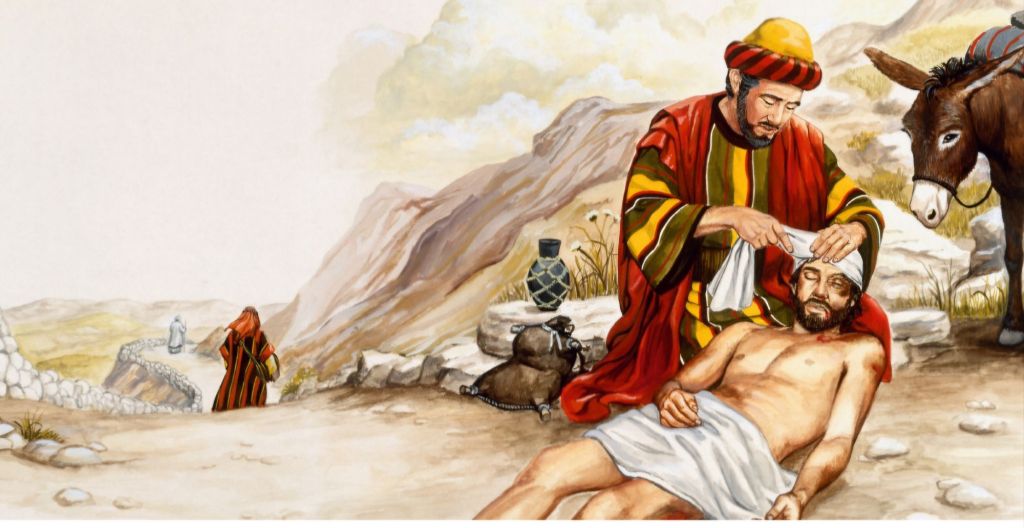
As we were growing up, we would have heard of the phrase “Good Samaritan” and, thus, the encouragement to be a good Samaritan. To be a good Samaritan is really to help someone else in need. Similar to the Boy Scout’s slogan, to do a good turn daily or to do a good deed a day. At that point, I didn’t know that the Good Samaritan actually originated from the bible in a parable taught by Jesus within the context of the commandment to love your neighbour as yourself. Jesus narrated the story of the Good Samaritan to illustrate the point on who your neighbour is and to stress the point that your neighbour could well be a stranger you meet who may have been robbed, beaten, and left on the road to die. If you love your neighbour, you will stop by and help him, and in the parable, the person who helped was a Samaritan, and the Samaritan did not only tended to his wounds but sent him to an inn for him to be cared for and guaranteeing his expenses there with a deposit and a promise to reimburse the inn later.
Pointedly in the parable, a priest and a Levite walked the other way when they saw the wounded man. The reason was that as the man was badly injured and bloodied, he could be close to dying. According to Jewish law, contact with a dead body would have rendered both the priest and the Levite unable to discharge their religious obligations. Jesus indirectly castigated Jewish society’s obsession with the law that they’ll rather leave an injured man to die to preserve their religious customary purity when human life should always take precedence. Either the religious law should provide an exemption, or they should attempt to save the man and be unclean. To add salt to the wound, in the parable, the person who helped was a Samaritan, an enemy of the Jews, or at least someone who is looked down on by them. Samaritans are actually descendants of Northern Jews left behind by the invading Assyrians and who intermarried with the Assyrians. As a religious sect, there are probably only 800-900 of them in the modern world, compared to more than 14 million Jews worldwide.
What’s our application for this parable? I think we tend to help people at our convenience, and it is justifiable since we are taking the trouble to help. In the real world, helping is not an obligation as people mind their own business. Thus, it is entirely voluntary, and we do it out of the goodness of our hearts. But as believers, our Lord has a higher calling for us. We should help even if it is troublesome for us. So long as we are not abeting a crime (for example, like help a criminal conceal his stolen goods), we should help whenever we see a need. How much we should help or how involved we should get? That’s based on the prompting of the Holy Spirit. I don’t think Jesus expects us to do as the Good Samaritan did as He teaches using extremes. But stopping and tending to his wounds is the least we could have done if we had met him on the infamous road from Jerusalem to Jericho.










 Ronnie's Thoughts