
Amos 4: 9-13 9“Many times I struck your gardens and vineyards, destroying them with blight and mildew. Locusts devoured your fig and olive trees, yet you have not returned to me,” declares the Lord. 10“I sent plagues among you as I did to Egypt. I killed your young men with the sword, along with your captured horses. I filled your nostrils with the stench of your camps, yet you have not returned to me,” declares the Lord.11“I overthrew some of you as I overthrew Sodom and Gomorrah. You were like a burning stick snatched from the fire, yet you have not returned to me,” declares the Lord. 12“Therefore this is what I will do to you, Israel, and because I will do this to you, Israel, prepare to meet your God.” 13He who forms the mountains, who creates the wind, and who reveals his thoughts to mankind, who turns dawn to darkness, and treads on the heights of the earth— the Lord God Almighty is his name.
Gebah is incarcerated in a prison in Liberia but feels free. When first imprisoned, he said he “really hated Christianity.” But then he heard the good news of Jesus clearly for the first time. He now says, “It’s not a mistake that I came here. . . . God had a plan for me.” Gebah received salvation in Christ and declared, “This is not a punishment, but He brought me [here] for me to get my senses.”
The prophet Amos also found the ability to praise God even as his people faced discipline. He pronounced God’s judgment on surrounding nations, his own country Judah, and leveled His strongest words against the nation of Israel to the north (see Amos 1-3). Amos declared that the Israelites hadn’t repented of their sin and “returned to” God (4:6). And because of their rebellion, they’d be punished by Him and “meet [their] God in judgment” (v. 12 nlt). Even so, the prophet praised God, noting that He “reveals his thoughts to mankind” and is “the Lord God of Heaven’s Armies” (v. 13 nlt). (Tom Felten, Our Daily Bread, 25th November 2026)
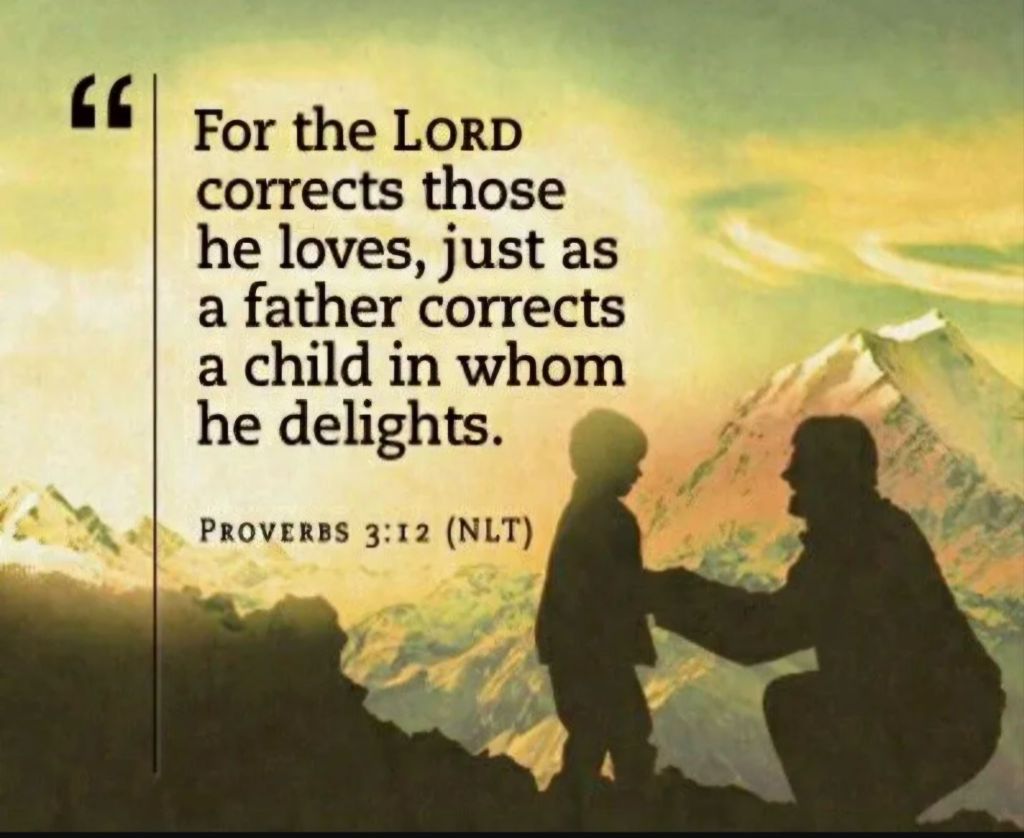
In Amos 4, we read of God’s discipline of the Israelites throughout the generations. His actions weren’t capricious or vindictive. Throughout the Old Testament, we’re told and see ample evidence that God is “gracious and compassionate, slow to anger and rich in love” (Psalm 145:8; see Exodus 34:6; Psalm 86:15; Joel 2:13). He disciplines out of love to bring wayward people back to Him in repentance (Proverbs 3:11-12; Revelation 3:19). When Amos prophesied, the people had strayed far from God. The rich were living immoral lives and abusing the poor. They made sacrifices to God, but their hearts were far from Him. As the prophet Samuel declared, “To obey is better than sacrifice, and to heed is better than the fat of rams” (1 Samuel 15:22). (Insight, Our Daily Bread, 25th November 2026)
I imagine no one will like it when we are being disciplined. Sometimes it’s just a natural consequence of our bad behaviour but if it has to do with the law, then the repercussions may be more far-reaching. For example, a criminal conviction may lead to an advocate and solicitor being disbarred. So in Singapore lawyers will nearly surely take Grab if they want to drink. It’s just not worth the consequences.
It is usually after the fact, and much later, that we appreciate the effects of the discipline we received. Mostly when punishing, our parents and teachers have our future in mind. It is done in love for our own good. If we were notoriously naughty, they hoped we will turn a new leaf and be responsible citizens with a proper job, a stable income and a family to raise. I had friends who mixed with bad hats when young and ended up in gangs and an uncertain future.
Even in our walk of faith, there are times when God will discipline us. There was a period of time when I just indulged in my own things and sometines compromising my own standards. It was a lull when I was distracted. Then God brought in an event which completely stopped me in my tracks. I had to pause, repent and turn back to Him. On reflection, I’m glad that God shook me up to wake me. If I had been left to my own devices, I could have gone so far astray that turning back would have brought much more severe consequences. Some who indulged in excessive drinks or dabble in drugs ended with a substance abuse issue and ruined lives!
God when He disciplines us, like He disciplined the Israelites, is not capricious nor vindictive. He is compassionate, gracious and intentional. He doesn’t want us to turn from bad to worse as there have been those who had left Him completely, to trudge on the path that leads to destruction. Even those, He will not let go and will try to bring back to the narrow path.
We will not welcome discipline. That’s natural. But with God, it’s usually inevitable as He loves us. Repent and turn back to Him, and He will make our paths straight.

