https://odb.org/2026/06/22/ready-to-be-generous
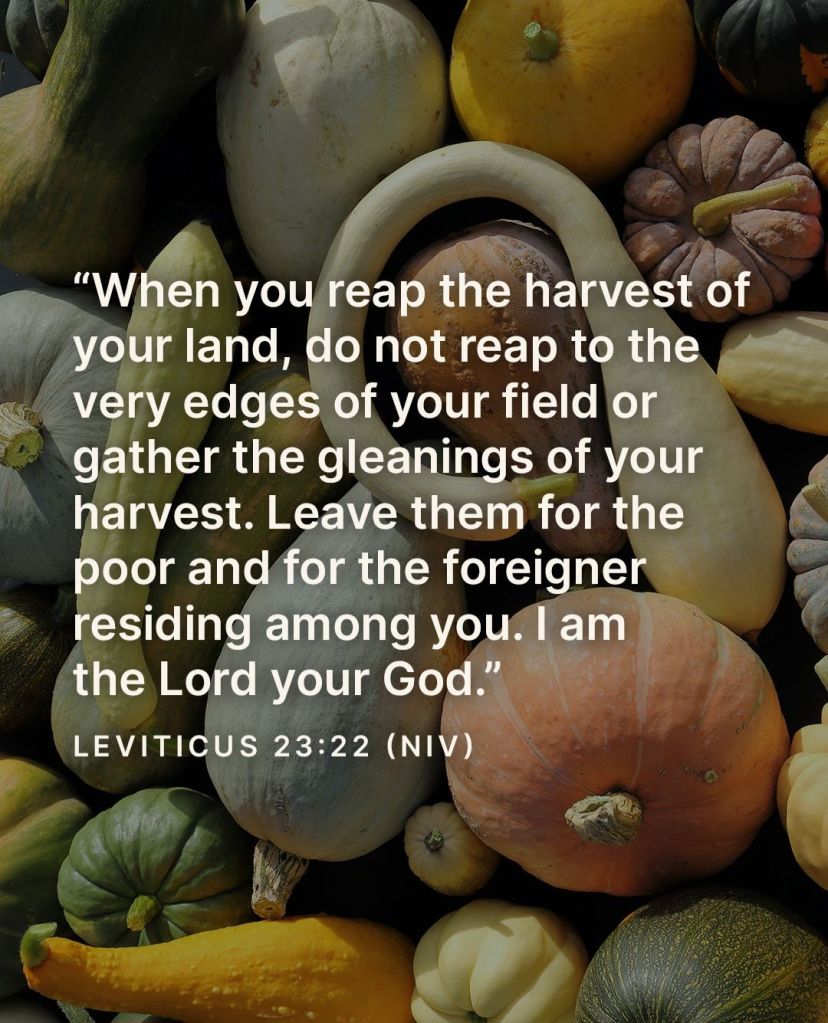
Leviticus 19:9-10 9 “ ‘When you reap the harvest of your land, do not reap to the very edgesq of your field or gather the gleanings of your harvest. 10 Do not go over your vineyard a second times or pick up the grapes that have fallen. Leave them for the poor and the foreigner. I am the Lord your God.
My great-uncle’s memorial service featured a meal of roast beef, corn, and beans to honor the hospitality that he and his wife had lived out for many years. Each Sunday morning, they would put a large roast and veggies in the Crock-Pot before going to church. After the service, they would look for someone to invite for lunch. Sometimes it was a good friend, sometimes a stranger. Either way, they made sure there was plenty of food at home and those afternoons were especially set aside for hospitality. Their Sunday habit required an intentional readiness for generosity.
The Israelites followed a similar pattern. Through Moses, God commanded them to leave a portion of their food “for the poor and the foreigner” (Leviticus 19:10). During harvest time, they were instructed not to reap to the edges of their field, leave what had fallen, and not re-harvest their vineyards (vv. 9-10). With these redeeming methods, those who didn’t own land could still work to gather food. For the people of God, this wasn’t a one-time, spontaneous act—although that can be a beautiful blessing too. It was how they lived year after year. (Karen Pimpo, Our Daily Bread 22nd June 2026)
God promised to abundantly provide food for His people (Leviticus 25:18-19), and so, in remembrance of their enslavement in Egypt, He commanded them to feed the poor and needy (19:9-10; Deuteronomy 24:19-22). The story of Ruth took place in the backdrop of this law of gleaning (Ruth 2). God also wants us to be open-handed with his material blessings (see Deuteronomy 15:7-11). The apostle Paul says that God gives us material blessings for our enjoyment and commands believers in Jesus “to use their money to do good. . . . Be rich in good works and generous to those in need, always being ready to share with others” (1 Timothy 6:18 nlt). (KT Sim, Insight, Our Daily Bread 22nd June 2026)
I’m sure by now we already know that it was a law made by the LORD since the time of Moses that the Israelites when harvesting should not be too exact in gathering the wheat. This was to enable those without land and the poorer ones amongst society and the widows, the orphans and the foreigner the opportunity to work and gather the leftovers for themselves. It was in remembrance of their enslavement in Egypt and for them to be grateful for God having delivered them from slavery and gave them land at Canaan. Practically, it ensured that no one went hungry. In fact, that was how Naomi and Ruth survived after returning to Israel from Moab penniless. Of course, the story of Ruth, set against the backdrop of this law, led to her marrying Boaz whose great grandson was David and it was this glorious house of David that Jesus Christ our Lord and Saviour traced his ancestry to.
If we research this point on “gleaning” in ancient Israel history, we will find that this was strictly adhered to as part of the landowners’ civil and religious obligations. There were three elements to allow gleaning – one, was to leave the edges unharvested; two, was to leave the gleanings behind (not permitted to return to pick them up) and three, was to leave behind fallen fruit (like grapes in their vineyards). It was part of their societal responsibility and it was practiced every single time there was a harvest (not once in a while) and this religiously imposed social welfare system helped the poor, the fatherless, widows and the foreigner to have access to food.
In the contemporary modern context, the law does not apply to us believers in Christ. However it is a law that speaks of God’s heart for the needy and underprivileged in society. In terms of our own hearts, it encourages us to use our money to do good and help those in need generously (1 Timothy 6:18), amongst those in the congregation and those we know. In this connection, there will always be those who may not have or were not able to prepare effectively for their old age, particularly, some of those in full-time ministry who gave themselves to the Kingdom service but may not have had much to contribute to any provident or pension schemes. I know small independent churches in the early days do not provide EPF or pension contributions for their workers and when those workers are retired, many are left to fend for themselves with no or little family support as many remained single in their old age.
Thus, if we know of avenues to contribute to the welfare of these older and retired warriors of God, we should do so while we ourselves are financially able. God did not ask us to give them our “fields” or sell our “fields” to feed them, but let them have the edges. In the modern context, it means a portion of what we have. The church should be involved in this but I don’t believe it is structured to do so as retired workers are not usually kept on the churches’ payroll until death. The church sadly in this sense is very much like the world, if you’re no longer staff, you’re effectively forgotten.
Have a good week ahead, everyone! As we work, we remember that God has given us this opportunity to earn not just to feed our families but also to feed those in need! Take care and have a blessed week!
 Ronnie's Thoughts