Recognising Jesus

https://odb.org/2025/05/09/loves-great-surprise

John 20:11–16 (NIV): 11 Now Mary stood outside the tomb crying. As she wept, she bent over to look into the tomb 12 and saw two angels in white, seated where Jesus’ body had been, one at the head and the other at the foot. 13 They asked her, “Woman, why are you crying?” “They have taken my Lord away,” she said, “and I don’t know where they have put him.” 14 At this, she turned around and saw Jesus standing there, but she did not realize that it was Jesus. 15 He asked her, “Woman, why are you crying? Who is it you are looking for?”
Thinking he was the gardener, she said, “Sir, if you have carried him away, tell me where you have put him, and I will get him.” 16 Jesus said to her, “Mary.”
She turned toward him and cried out in Aramaic, “Rabboni!” (which means “Teacher”).

All four Gospels have the account of Mary visiting Jesus’s tomb but with varying details. The main takeaway, however, was that Mary initially couldn’t recognise Jesus, although He had risen. It’s not unique to Mary either as the other accounts of others walking with Jesus for hours also were in the same situation. It is only when Jesus opened their eyes and revealed Himself, in the case of Mary, when He called her name, that they recognised Him. The conclusion from all these accounts is that the glorified body of Christ post resurrection is not the same as the one He had before His crucifixion and death. And yet when He reveals Himself, they all knew He was Christ Himself.

Consequently, we could deduce from the resurrected body of Christ that our glorified bodies one day will be different from our bodies when we die. Come to think of it, it is logical since we all die at varying ages (of decay in our fallen bodies), and we can assume that at Eden Recreated we will no longer age or grow old (since we will live for eternity) and thus it is likely all of us will be at the same age and optimal physical condition.

But the point I like to make today is Mary’s response when Christ called her name. She instantly knew it was Christ, and she replied in Aramaic “Rabboni” (meaning “Teacher”). We can feel the tenderness, closeness, and familiarity between Christ and Mary even as we read the verse. We know, like with the disciples, Peter and Andrew, James and John and the others, Jesus was close to both Mary and Martha.

The question this morning is, are we close enough to Jesus that we will recognise Him the moment He calls our name as we pass through, one day, from the land of the living to the realm of the dead? Will we call Him “Lord, Lord, you are my God”? “You, O Lord, are the King of Kings and Lord of Lords!”. Will we?

But do not despair as there is still time here on earth. Get to know our Lord more and more each day. Develop that personal relationship with Him. Become as close to the Lord as we can in our fallen mortal state. Pray and speak to Him. Serve Him. Do the will of our Father God. Fulfil God’s plans and purposes for our lives! Become the son or daughter that He always wanted us to be! Amen!

Deeply rooted in Christ

https://odb.org/2025/05/08/deeply-rooted

Ephesians 3:14–21 (NIV): 14 For this reason I kneel before the Father, 15 from whom every family in heaven and on earth derives its name. 16 I pray that out of his glorious riches he may strengthen you with power through his Spirit in your inner being, 17 so that Christ may dwell in your hearts through faith. And I pray that you, being rooted and established in love, 18 may have power, together with all the Lord’s holy people, to grasp how wide and long and high and deep is the love of Christ, 19 and to know this love that surpasses knowledge—that you may be filled to the measure of all the fullness of God.
20 Now to him who is able to do immeasurably more than all we ask or imagine, according to his power that is at work within us, 21 to him be glory in the church and in Christ Jesus throughout all generations, for ever and ever! Amen.

A benediction is a horizontal statement of blessing bestowed by a person on another. A classic example is the Aaronic blessing in Numbers 6:22-26. A doxology, however, is a vertical statement of worship to God. The word doxology comes from two Greek words—doxa (“glory”) and logia (“word” or “saying”). It’s a declaration of the glory of God. An example is the angels’ doxology on the night of Jesus’ birth in Luke 2:13-14. In Ephesians 3:14-21, Paul blends both. In verses 14-19, he prays for God’s blessing on the Ephesian church, and in verses 20-21, he declares God’s “glory in the church.” We could practice both benediction and doxoloy when we pray, speaking of God’s blessings upon our loved ones, our brethren in church, and all those who are going to hard times and giving glory to God for the goodness He bestows on us and in our lives.

Coming back to the topic of the day, we need to be deeply rooted in Christ, in His love so that our faith remains strong in the face of both adversity and deception, the latter will become more prevalent in these end times.

How do we be rooted in Christ? We read God’s word and meditate upon it more. We spend our quiet time with both Christ and the Father, with the Holy Spirit helping us along in the communion. We learn and grow more in the knowledge of Christ and His Wotd. Ultimately, we need to learn more of our faith in order not to be deceived. Then we practise what we learn as we apply His Word and teachings into our daily life, in our interactions with one another. In the process, we are transformed into the person God wants us to be in our words, deeds and thoughts. We embody the fruit of the Spirit. We become more loving with more joy, peace, patience, kindness, goodness, faithfulness, gentleness, and self-control. We become a person of good character, living out the goodness of God in our lives. In this way, we will stand firm despite adversities life brings, deceptions of the devil, or even temptations of the world. We will always stand firm in our faith! Amen!

Mephibosheth – faithfulness and love

https://odb.org/2025/05/07/a-new-game

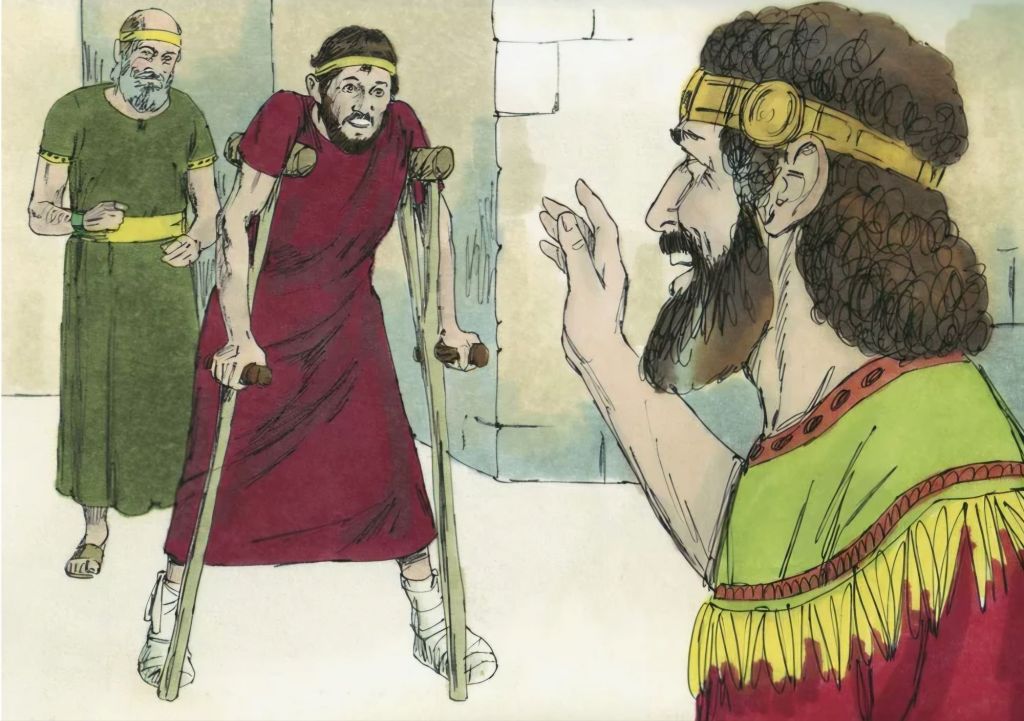
2 Samuel 9 (NIV): 3 The king asked, “Is there no one still alive from the house of Saul to whom I can show God’s kindness?” Ziba answered the king, “There is still a son of Jonathan; he is lame in both feet.” 6 When Mephibosheth son of Jonathan, the son of Saul, came to David, he bowed down to pay him honour.
David said, “Mephibosheth!”
“At your service,” he replied. 7 “Don’t be afraid,” David said to him, “for I will surely show you kindness for the sake of your father Jonathan. I will restore to you all the land that belonged to your grandfather Saul, and you will always eat at my table.”
9 Then the king summoned Ziba, Saul’s steward, and said to him, “I have given your master’s grandson everything that belonged to Saul and his family. 10 You and your sons and your servants are to farm the land for him and bring in the crops so that your master’s grandson may be provided for. And Mephibosheth, grandson of your master, will always eat at my table.” (Now Ziba had fifteen sons and twenty servants.)

I have written a few times on Mephibosheth in these pages, and until today, David’s love and compassion for Mephibosheth still fascinates me. It is a love borne out of a pact made with Jonathan while he was young and was in hiding from King Saul, who was bent on killing him on the mistaken notion that by eliminating David, he will preserve his throne. It was mistaken because God preserved David’s life and, in fact, gave David two opportunities to kill Saul, which the former declined because he believed that the throne should come to him by God’s will and not through his hands. Saul, on the other hand, had become known as the man who took things into his hands and suffered the devastating divine consequences. Saul eventually died in battle, and unfortunately, his son and David’s best friend, Jonathan, also died in the same battle. See 1 Samuel 31 – the battle at Mount Gilboa.

In 2 Samuel 9:3, David asked whether there was anyone left in Saul’s household to whom he could “show God’s kindness” for the sake of his friend Jonathan. The word translated “kindness” is the Hebrew word hesed, which is often used to describe God’s steadfast love and faithfulness to fulfil covenant promises to His people. In this context, David shows hesed, or covenant faithfulness, by keeping the covenant promises he had previously made with Jonathan when he was young by restoring the lands and servants Saul used to have to Mephibosheth, Jonathan’s son, and promising the latter a permanent place at his table.

There are times when we ourselves as the redeemed of the Lord should show the hesed kindness that David had for Mephibosheth. It speaks of the covenant love and faithfulness of God. A love and compassion and kindness that is steadfast and unfailing. A love and kindness God has for us as His children translated into our love and kindness for others. A love that is steadfast and unwavering for our spouse, our children, and our brothers and sisters in Christ.

Humility and honour

https://odb.org/2025/05/06/humble-honor

Luke 14:7–11 (NIV): 7 When he noticed how the guests picked the places of honor at the table, he told them this parable: 8 “When someone invites you to a wedding feast, do not take the place of honor, for a person more distinguished than you may have been invited. 9 If so, the host who invited both of you will come and say to you, ‘Give this person your seat.’ Then, humiliated, you will have to take the least important place. 10 But when you are invited, take the lowest place, so that when your host comes, he will say to you, ‘Friend, move up to a better place.’ Then you will be honored in the presence of all the other guests. 11 For all those who exalt themselves will be humbled, and those who humble themselves will be exalted.”

I always thought of this concept of humility, as taught by Jesus, is for us to be humble now in order to be honoured in heaven as those who are last will be first in the kingdom of God. But when we read Luke 14 above, we will see that this principle also applies here on earth. Meaning to say if we are humble at the beginning, we will be honoured or exalted in the end while still on earth. Or one of the ways to achieve honour is humility. This is also in line with another teaching of Jesus where He taught that if we are faithful in little, we will be given more. In a way, it also means that we are not to look down on our humble beginnings as one day we will achieve much for God. Start small in serving Him. Eventually, we will be doing mighty works for Jesus.

A great example is King David. He was the youngest in his family of seven brothers and two sisters, and among the males, he was chosen to be the next King of Israel despite his youth and his then scrawny appearance. It is from this narrative that came the famous expression – “While men look at the appearance, God looks at the heart.” David had humble beginnings. Yet because of that, God exalted him as he grew up, and he eventually became the greatest King Israel ever had, so much so that Jesus Christ traced His geneology to David. Jesus, the Son of God, the second Yahweh, the Son of Man, was proud to be from the House of David.

What does this mean to us? Like we started in an organisation as a fresh graduate right at the bottom, we will one day rise to the top if we hone our skills and be good at what we do. We may become senior management one day. Don’t despise our humble beginnings. Or we may start a business with little revenue and sales at the beginning. But one day, we will have revenues exceeding a million MYR a year and then a million a month. Similarly, we may serve God as ushers or, like some of us, in the early days, we started by cleaning toilets. But one day, we will do much more for God, leading missions, setting up outreaches, opening churches, leading and discipling hundreds in the Kingdom of God. Don’t despise our humble beginnings. It is from our humility that God will raise us up and exalt and honour us one day!

God of fresh starts

https://odb.org/2025/05/05/god-of-the-fresh-start

2 Chronicles 33:10–17 (NIV): 10 The LORD spoke to Manasseh and his people, but they paid no attention. 11 So the LORD brought against them the army commanders of the king of Assyria who took Manasseh prisoner, put a hook in his nose, bound him with bronze shackles and took him to Babylon. 12 In his distress he sought the favor of the LORD his God and humbled himself greatly before the God of his ancestors. 13 And when he prayed to him, the LORD was moved by his entreaty and listened to his plea; so he brought him back to Jerusalem and to his kingdom. Then Manasseh knew that the LORD is God. 14 Afterward he rebuilt the outer wall of the City of David, west of the Gihon spring in the valley, as far as the entrance of the Fish Gate and encircling the hill of Ophel; he also made it much higher. He stationed military commanders in all the fortified cities in Judah. 15 He got rid of the foreign gods and removed the image from the temple of the LORD, as well as all the altars he had built on the temple hill and in Jerusalem; and he threw them out of the city. 16 Then he restored the altar of the LORD and sacrificed fellowship offerings and thank offerings on it, and told Judah to serve the LORD, the God of Israel. 17 The people, however, continued to sacrifice at the high places, but only to the LORD their God.

Before I start writing today’s devotional reading, I just like to remember my late dad, who passed away 3 years back on 19th March. If he is alive, he would be 83 years old today as today, 5th of May, is his birthday. As much as I miss him, I know he is in a better place with the Lord, and our hope is that we will see him again one day if we hold on fast to the faith that our Heavenly Father has bestowed us through our Lord Jesus. https://ronnielim.com/2022/03/21/obituary-mr-michael-lim-5-may-1942-19-march-2022/

Today’s passage and ODB article are about repentance of King Manasseh, who disobeyed God when he ruled Judah cruelly and set up an Asherah poles that honoured the pagan goddess Asherah and later built altars for Baal, both the then dominant gods in the region. As a result, the LORD allowed the Babylonians to overrun Israel and took King Manasseh captive to Babylon by putting a hook on his nose and bound him in bronze shackles. In his distress, he cried out to the LORD in humility, and later, the LORD allowed him to return to Israel. On his return, he restored the altar of the LORD and removed the Asherah poles and the altars to Baal in Jerusalem. He spent the rest of his rule in peace, serving God and doing his best to undo the wrongs he’d done before.

In a similar fashion, Alfred Nobel, the inventor of the dynamite, was shocked to read press headlines declaring that “the merchant of death was dead.” Although the press mistaken his brother’s passing for his, he realised that people will remember him for the many deaths his invention caused, and so he donated most of his significant wealth to establishing an award for those who had benefited humanity. It became known as the Nobel Prize, and this award is still given out today under 6 distinct categories, namely, Physics, Chemistry,  Physiology or Medicine, Literature, Peace, and Economic Sciences. There have been 627 Nobel Prizes awarded to date, and from 2023, each recipient gets 11 million Swedish Kronos equivalent to USD1,035,000.

If we have not been close to God lately or have fallen away from the narrow path, it is never too late to repent and return to the LORD. God is a God of fresh starts, and Jesus, our Lord and Saviour will accept us back with open arms. In fact, He will help us fulfil God’s original plans and purposes for our lives so that we will become the person God wants us to be! The past is the past. Let’s look forward to all the things He has in store for us. Like Alfred Nobel, as much as his invention led to many deaths, his contribution to society in the form of the Nobel Prize has led to great advancements by humanity. If we repent in humility like King Manasseh, we will have the opportunity to live the rest of our days in peace, correcting our past wrongs and fulfilling God’s plans and purposes fir our lives!

The 12 spies

https://odb.org/2025/04/29/hopeless-or-hopeful

Numbers 13:26–33 (NIV): 26 They came back to Moses and Aaron and the whole Israelite community at Kadesh in the Desert of Paran. There, they reported to them and to the whole assembly and showed them the fruit of the land. 27 They gave Moses this account: “We went into the land to which you sent us, and it does flow with milk and honey! Here is its fruit. 28 But the people who live there are powerful, and the cities are fortified and very large. We even saw descendants of Anak there. 29 The Amalekites live in the Negev; the Hittites, Jebusites and Amorites live in the hill country; and the Canaanites live near the sea and along the Jordan.” 30 Then Caleb silenced the people before Moses and said, “We should go up and take possession of the land, for we can certainly do it.” 31 But the men who had gone up with him said, “We can’t attack those people; they are stronger than we are.” 32 And they spread among the Israelites a bad report about the land they had explored. They said, “The land we explored devours those living in it. All the people we saw there are of great size. 33 We saw the Nephilim there (the descendants of Anak come from the Nephilim). We seemed like grasshoppers in our own eyes, and we looked the same to them.”

The story of the 12 spies is well-known for the spiritual principle of the devastating consequences of not trusting God despite living in the midst of God’s miracles. The problem with the 10 spies (other than Caleb and Joshua) was they saw the stark reality of the strong armies, fortified cities, and giants (sons of Anak) but instead of trusting God who parted the Red Sea for them to flee from the mighty Egyptian army, they were terrified and feared for their lives!

If you read on, you will see that they demanded to be returned to Egypt, despite the LORD having expanded so much effort to bring them out of slavery and put them on the journey to the Promised Land. That must have deeply shattered God’s heart and was the last straw that broke the camel’s back, and the LORD then decreed that everyone who was 20 years of age when they left Egypt will not enter the Promised Land except Joshua and Caleb. Thus, the Israelites ended up in the wilderness for 40 years before they could finally enter Canaan and do what Caleb and Joshua believed they could do 40 years earlier – trusting that the LORD their God will fight the battles for them!

There are many angles one could expound on this event as it has and will always be a good bible story to preach on the pulpit. We could prepare many sermons as many no doubt have shared on it.

What I feel is relevant this morning is that we must be grateful and thankful for God’s love and compassion and grace and mercy for our lives. For how He had brought us through all the trials and hurdles in life so far, we must trust that He will bring us through whatever we are facing today. Never ever long to return to our old life after all that God has done for us to bring us into this journey of faith on the narrow path that leads to eternal life.

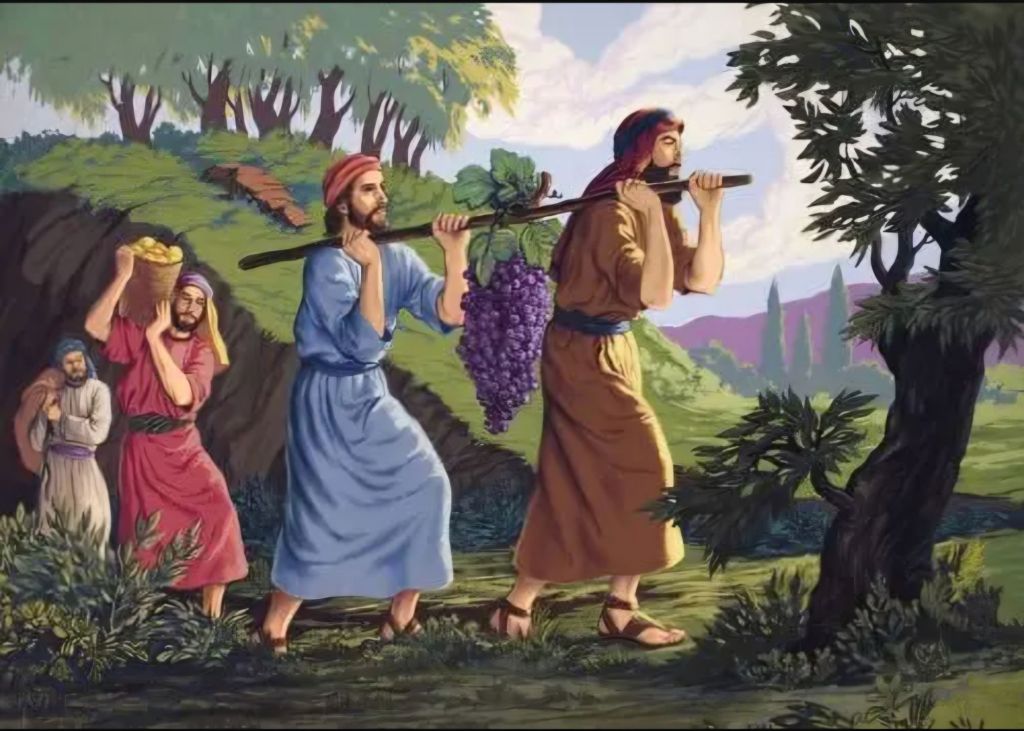
Never ever look back to the past. Like Paul, we need to forget what is behind and look forward to the promises, plans, and purposes God has for our lives. Lot’s wife looked back, and she became a pillar of salt! The Israelites wanted to go back to Egypt, and they ended up dead in the wilderness, missing out on the promises God had for them in Canaan. In fact, God waited for every one of them to perish (except Joshua and Caleb) before the rest could enter and conquer the Promised Land, the land flowing with milk and honey, where a bunch of grapes needed two men to carry!

Testing produces perseverance

https://odb.org/2025/04/25/832-steps

James 1:2–6, 12 (NIV):
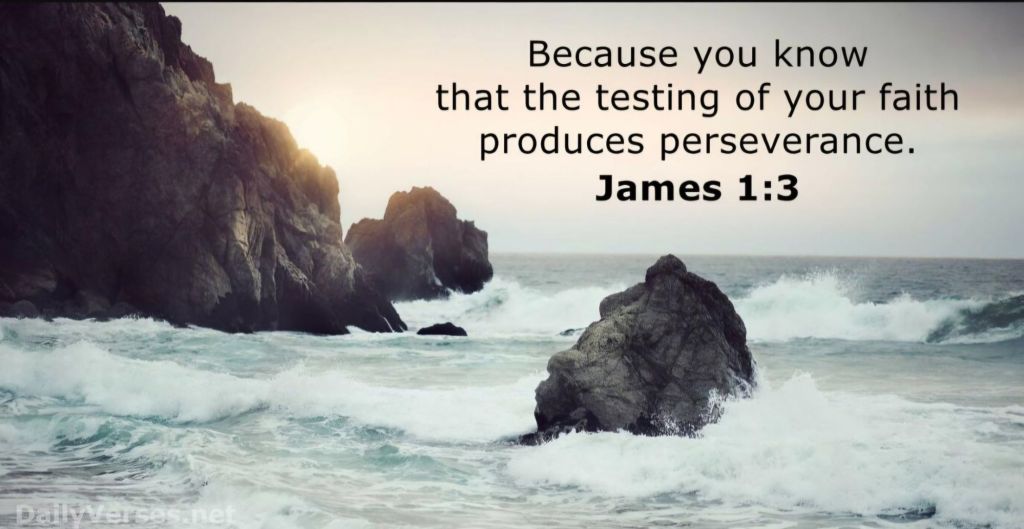
2 Consider it pure joy, my brothers and sisters, whenever you face trials of many kinds, 3 because you know that the testing of your faith produces perseverance. 4 Let perseverance finish its work so that you may be mature and complete, not lacking anything. 5 If any of you lacks wisdom, you should ask God, who gives generously to all without finding fault, and it will be given to you. 6 But when you ask, you must believe and not doubt because the one who doubts is like a wave of the sea, blown and tossed by the wind. 12 Blessed is the one who perseveres under trial because, having stood the test, that person will receive the crown of life that the Lord has promised to those who love him.

Sometimes, we equate testing in our faith with the trials and tribulations of life. As we persevere to make ends meet, we see and experience the grace and mercy and provision and providence of God.

Life brings its share of challenges. From young when we learn how to walk and speak, to learning how to read, write, and count when we reach kindergarten and primary school to socialising and sports and learning more complex stuff in secondary and university.

Then, we face new challenges as a rookie at work, how to survive and succeed in the corporate or work set up. From having our finances taken care of by our parents or through loans or grants for our university education, we then embark on a journey of financial independence, attempting to accumulate wealth to provide for our family and prepare for our old age.

If we are in the faith, we will likely do well to retire with enough savings to see us through our old age provided we are thrifty and careful with money when we are no longer earning. This is because the Lord will take care of our needs for this life.

However, James is not actually talking about the above. It is not about testing in life but testing of our faith that leads to perseverance and which brings us to maturity and completion in our faith, lacking nothing. In the end, we will receive our crown of life.

Paul puts it in another way in the oft-quoted Romans 5:3-4 that suffering produces perseverance and perseverance, character, and character hope. In other words, the suffering and hardship we go through on account of our faith will bring us to the hope of glory. Our faith and fire for Jesus burns bright and strong despite the persecution we may go through because we honour God with our lives. In spite of the difficulties and sufferings life brings, our faith in our Lord Jesus Christ is not only unwavering but becomes even stronger.

We serve Him more and give glory to Him more even if we are out of a job or lost someone we dearly loved or faced major disappointments in life. Even if we are fighting a life-threatening illness, our faith in God is unchanging because the testing of our faith produces perseverance. We will not give up on God. We will strive on and serve Him with all our heart, soul, mind, and strength because Jesus Christ is our Lord, and God is our Heavenly Father. We hold on tight to the eternal life Jesus promised us, the hope Paul talked about in Romans 5:4.

My exaltation for us today is that in whatever we are facing in life that tests our faith, make sure that we persevere through and keep our faith in Christ Jesus intact. Our fire must burn bright and brighter for Him. Serve Him. Continue to be a good and faithful servant for our Lord Jesus Christ! Amen!

Confessing our sins

https://odb.org/2025/04/24/hidden-toxins

Proverbs 28:9–13 (ESV): 9 If one turns away his ear from hearing the law,
even his prayer is an abomination.
10 Whoever misleads the upright into an evil way will fall into his own pit,
but the blameless will have a goodly inheritance. 11 A rich man is wise in his own eyes, but a poor man who has understanding will find him out.
12 When the righteous triumph, there is great glory, but when the wicked rise, people hide themselves. 13 Whoever conceals his transgressions will not prosper, but he who confesses and forsakes them will obtain mercy.

Two major things we learn as believers as we grow in the faith are the need to confess our sins before God and the need to forgive others who have sinned against us. Crucial practices – as if we fail, our connection with God is somewhat impeded. If we analyse the Lord’s prayer as taught by Jesus in Matthew 6:9-13, you will see this principle at play – forgive us O Lord our trangressions as we forgive those who trangressed against us.

Thus, even though we have been cleansed by the blood of Christ on Calvary, we still need to confess and seek forgiveness if there are areas where we still sinned. Or we got impatient and lost our temper against that motorist who cut into our lane. While on earth, we are still living in our broken and imperfect earthen vessels. Our flesh is still alive even as we crucify it daily. Our new inner man may not be as strong just yet.

Solomon, in his wisdom, also advised in Proverbs 28:13 that the one who conceals his sins will not prosper, but he who confesses and forsakes (repents of) them will obtain mercy. The sense is that God can only forgive us if we confess our sins before Him. But forgive He will. His steadfast love endures forever. His mercy never ceases as it is renewed every morning like dew.

Spend some time this morning. Bow before Him and confess our sins before Him. Pray for His strength that we will repent and turn away from our sins. Let us have the victory over our own selfish and conniving heart. Father, let our hearts be sanctified and purified by the blood of the Lamb. In the most precious name of our Lord Jesus Christ, we pray. Amen!

Forgiveness and gratitude

https://odb.org/2025/04/23/to-infinity-and-beyond

Matthew 18:21–35 (NIV): 21 Then Peter came to Jesus and asked, “Lord, how many times shall I forgive my brother or sister who sins against me? Up to seven times?”
22 Jesus answered, “I tell you, not seven times, but seventy-seven times. 23 “Therefore, the kingdom of heaven is like a king who wanted to settle accounts with his servants. 24 As he began the settlement, a man who owed him ten thousand bags of gold was brought to him. 25 Since he was not able to pay, the master ordered that he and his wife and his children and all that he had be sold to repay the debt. 26 “At this, the servant fell on his knees before him. ‘Be patient with me,’ he begged, ‘and I will pay back everything.’ 27 The servant’s master took pity on him, cancelled the debt, and let him go. 28 “But when that servant went out, he found one of his fellow servants who owed him a hundred silver coins. He grabbed him and began to choke him. ‘Pay back what you owe me!’ he demanded. 29 “His fellow servant fell to his knees and begged him, ‘Be patient with me, and I will pay it back.’ 30 “But he refused. Instead, he went off and had the man thrown into prison until he could pay the debt. 31 When the other servants saw what had happened, they were outraged and went and told their master everything that had happened. 32 “Then the master called the servant in. ‘You wicked servant,’ he said, ‘I cancelled all that debt of yours because you begged me to. 33 Shouldn’t you have had mercy on your fellow servant just as I had on you?’ 34 In anger, his master handed him over to the jailers to be tortured until he should pay back all he owed. 35 “This is how my heavenly Father will treat each of you unless you forgive your brother or sister from your heart.

The above passage from Matthew 18 is a little long but speaks of a very important principle that our Lord Jesus Himself taught, that is, there is expectation in heaven that if God treats us special, we ought to treat others special too. Thus, if God forgives us multiple times for the sins we committed, we must, in return, forgive others for their sins against us. If God does that to infinity and beyond, we need to likewise do so. It is quite impossible as we are only human, but in God, all things are possible. So let’s do so with the power and strength of the Holy Spirit.

If the Lord doesn’t feel He lost out when He chose to forgive us again and again, then we must not feel we lost out when we do the same with others. Forgiveness and compassion must be an integral part of us. Let His will for our lives be done here on earth as it is heaven.

A good application of this is when we catch a good break like the servant in the story above who was forgiven of his debt of 10,000 bags of gold (Jesus was obviously using hyperbole to illustrate the point). Perhaps our boss was compassionate to us when we made a major mistake. Maybe we fumbled badly on something important, but he forgave us, managed the ramifications, and told us to move on.

If our subordinates do the same thing, we must likewise forgive them, manage the fallout, and move on. Give others the break that we ourselves received from God so that Jesus will not judge us to be an ungrateful servant. Thus, if we are blessed with a good bonus, we must be generous in our giving or if our business did very well, we must reward our staff with a good bonus. Thankfulness and gratefulness are hallmarks of a good and faithful servant of Christ. If we receive grace and mercy, let us be gracious and merciful. Do this both in words and deeds. Always remember that change must come from within. Let genuine love and compassion flow from our thankful and grateful hearts! Amen!

Love the foreigner

https://odb.org/2025/04/22/loving-others

Deuteronomy 10:14–19 (NIV): 14 To the LORD your God belong the heavens, even the highest heavens, the earth and everything in it. 15 Yet the LORD set his affection on your ancestors and loved them, and he chose you, their descendants, above all the nations—as it is today. 16 Circumcise your hearts, therefore, and do not be stiff-necked any longer. 17 For the LORD, your God is God of gods and Lord of lords, the great God, mighty and awesome, who shows no partiality and accepts no bribes. 18 He defends the cause of the fatherless and the widow and loves the foreigner residing among you, giving them food and clothing. 19 And you are to love those who are foreigners, for you yourselves were foreigners in Egypt.

Every now and then, we have new joiners at work. In a sense, these are “foreigners” in our midst. I’ve noticed that some have it good as they are properly welcomed and that much effort are expanded by the incumbents to make the new joiners feel at home. In my previous organisation, they assigned specific buddies to welcome specific new joiners. One is assigned to one. But unless the new joiner is joining your department, the euphoria is usually over after the first day. One lunch together, and after that, it is BAU (business as usual).

I have not experienced it myself, but I have heard stories of new joiners getting the cold shoulder. For some reason, the new joiner is boycotted and made to feel unwanted. Perhaps a popular colleague had been let go, and his replacement is seen through hostile and bitter eyes. Loyalty to the previous guy, but in most cases, it is no fault of the new joiner. This is most unfortunate. However, like the euphoria over the welcomed new joiner fading after the first day, most of these boycotts will also not last long, overwhelmed by the pressures of your own workload.

In understanding God’s heart, it is necessary that we look at passages like today’s Deuteronomy 10. The LORD in telling the Israelites to be grateful, told them that despite the heavens and earth and everything in them are His, He chose their ancestors (Abraham, Isaac and Jacob) and loved them as His own. Likewise, he chose them (the Israelites delivered out of Egypt) above all other nations. Thus, they must likewise love the foreigners among them as they were once foreigners in Egypt.

God’s heart is always with the orphans, widows, and foreigners. During those ancient ancient times, these underprivileged groups were likely slaves (or captured prisoners of war or debtors) or those who lost their lands through some misfortune (every family who came out of Egypt were given a piece of land) or families who lost their fathers fighting battles to conquer the Promised Land of Canaan.

Our eyes must always be on the underprivileged even as we have been given the privilege to know Jesus and are destined for eternal life. We ourselves may be struggling, but there are many worse off than us. Extend them a helping hand whenever we can. Have a compassionate heart because that’s the heart of our God, our Heavenly Father and that of His beloved Son, our Lord Jesus Christ!