Confessing our sins

https://odb.org/2025/04/24/hidden-toxins

Proverbs 28:9–13 (ESV): 9 If one turns away his ear from hearing the law,
even his prayer is an abomination.
10 Whoever misleads the upright into an evil way will fall into his own pit,
but the blameless will have a goodly inheritance. 11 A rich man is wise in his own eyes, but a poor man who has understanding will find him out.
12 When the righteous triumph, there is great glory, but when the wicked rise, people hide themselves. 13 Whoever conceals his transgressions will not prosper, but he who confesses and forsakes them will obtain mercy.

Two major things we learn as believers as we grow in the faith are the need to confess our sins before God and the need to forgive others who have sinned against us. Crucial practices – as if we fail, our connection with God is somewhat impeded. If we analyse the Lord’s prayer as taught by Jesus in Matthew 6:9-13, you will see this principle at play – forgive us O Lord our trangressions as we forgive those who trangressed against us.

Thus, even though we have been cleansed by the blood of Christ on Calvary, we still need to confess and seek forgiveness if there are areas where we still sinned. Or we got impatient and lost our temper against that motorist who cut into our lane. While on earth, we are still living in our broken and imperfect earthen vessels. Our flesh is still alive even as we crucify it daily. Our new inner man may not be as strong just yet.

Solomon, in his wisdom, also advised in Proverbs 28:13 that the one who conceals his sins will not prosper, but he who confesses and forsakes (repents of) them will obtain mercy. The sense is that God can only forgive us if we confess our sins before Him. But forgive He will. His steadfast love endures forever. His mercy never ceases as it is renewed every morning like dew.

Spend some time this morning. Bow before Him and confess our sins before Him. Pray for His strength that we will repent and turn away from our sins. Let us have the victory over our own selfish and conniving heart. Father, let our hearts be sanctified and purified by the blood of the Lamb. In the most precious name of our Lord Jesus Christ, we pray. Amen!

Forgiveness and gratitude

https://odb.org/2025/04/23/to-infinity-and-beyond

Matthew 18:21–35 (NIV): 21 Then Peter came to Jesus and asked, “Lord, how many times shall I forgive my brother or sister who sins against me? Up to seven times?”
22 Jesus answered, “I tell you, not seven times, but seventy-seven times. 23 “Therefore, the kingdom of heaven is like a king who wanted to settle accounts with his servants. 24 As he began the settlement, a man who owed him ten thousand bags of gold was brought to him. 25 Since he was not able to pay, the master ordered that he and his wife and his children and all that he had be sold to repay the debt. 26 “At this, the servant fell on his knees before him. ‘Be patient with me,’ he begged, ‘and I will pay back everything.’ 27 The servant’s master took pity on him, cancelled the debt, and let him go. 28 “But when that servant went out, he found one of his fellow servants who owed him a hundred silver coins. He grabbed him and began to choke him. ‘Pay back what you owe me!’ he demanded. 29 “His fellow servant fell to his knees and begged him, ‘Be patient with me, and I will pay it back.’ 30 “But he refused. Instead, he went off and had the man thrown into prison until he could pay the debt. 31 When the other servants saw what had happened, they were outraged and went and told their master everything that had happened. 32 “Then the master called the servant in. ‘You wicked servant,’ he said, ‘I cancelled all that debt of yours because you begged me to. 33 Shouldn’t you have had mercy on your fellow servant just as I had on you?’ 34 In anger, his master handed him over to the jailers to be tortured until he should pay back all he owed. 35 “This is how my heavenly Father will treat each of you unless you forgive your brother or sister from your heart.

The above passage from Matthew 18 is a little long but speaks of a very important principle that our Lord Jesus Himself taught, that is, there is expectation in heaven that if God treats us special, we ought to treat others special too. Thus, if God forgives us multiple times for the sins we committed, we must, in return, forgive others for their sins against us. If God does that to infinity and beyond, we need to likewise do so. It is quite impossible as we are only human, but in God, all things are possible. So let’s do so with the power and strength of the Holy Spirit.

If the Lord doesn’t feel He lost out when He chose to forgive us again and again, then we must not feel we lost out when we do the same with others. Forgiveness and compassion must be an integral part of us. Let His will for our lives be done here on earth as it is heaven.

A good application of this is when we catch a good break like the servant in the story above who was forgiven of his debt of 10,000 bags of gold (Jesus was obviously using hyperbole to illustrate the point). Perhaps our boss was compassionate to us when we made a major mistake. Maybe we fumbled badly on something important, but he forgave us, managed the ramifications, and told us to move on.

If our subordinates do the same thing, we must likewise forgive them, manage the fallout, and move on. Give others the break that we ourselves received from God so that Jesus will not judge us to be an ungrateful servant. Thus, if we are blessed with a good bonus, we must be generous in our giving or if our business did very well, we must reward our staff with a good bonus. Thankfulness and gratefulness are hallmarks of a good and faithful servant of Christ. If we receive grace and mercy, let us be gracious and merciful. Do this both in words and deeds. Always remember that change must come from within. Let genuine love and compassion flow from our thankful and grateful hearts! Amen!

Love the foreigner

https://odb.org/2025/04/22/loving-others

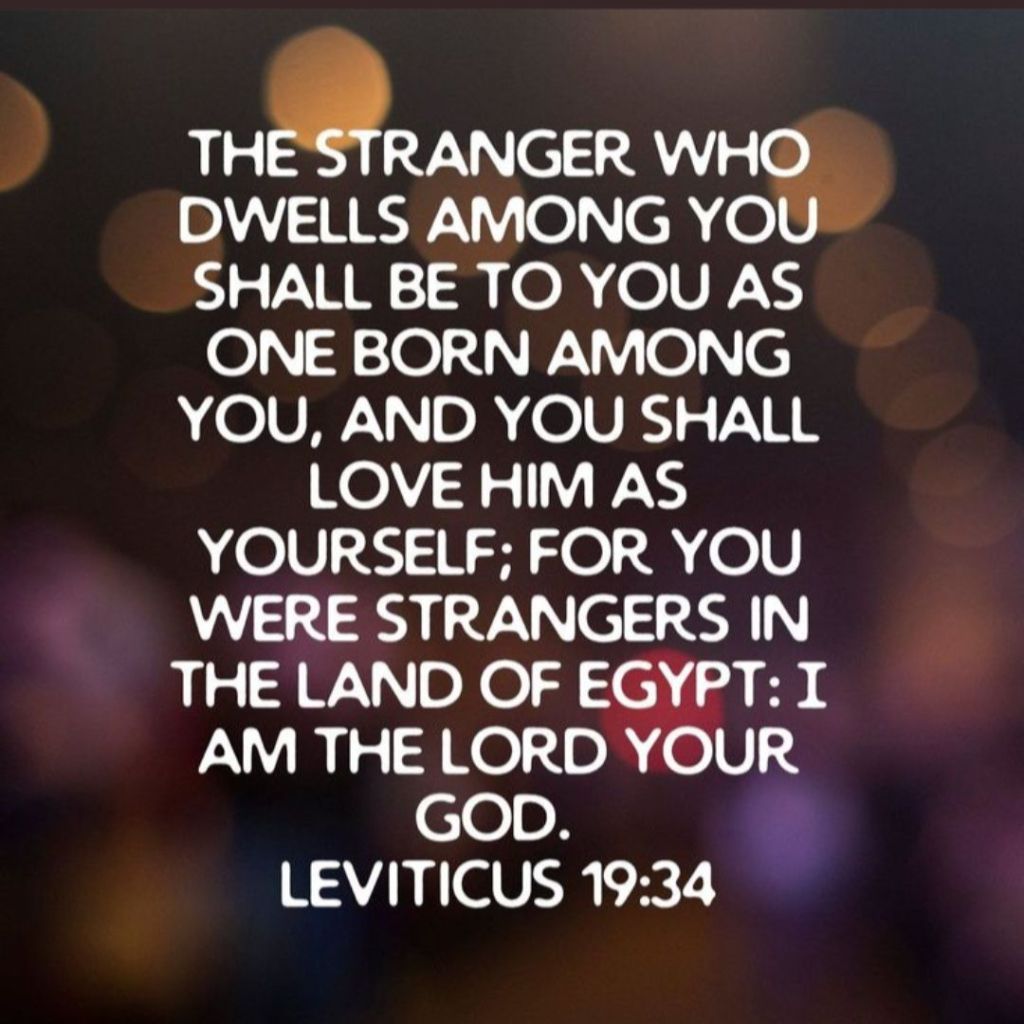
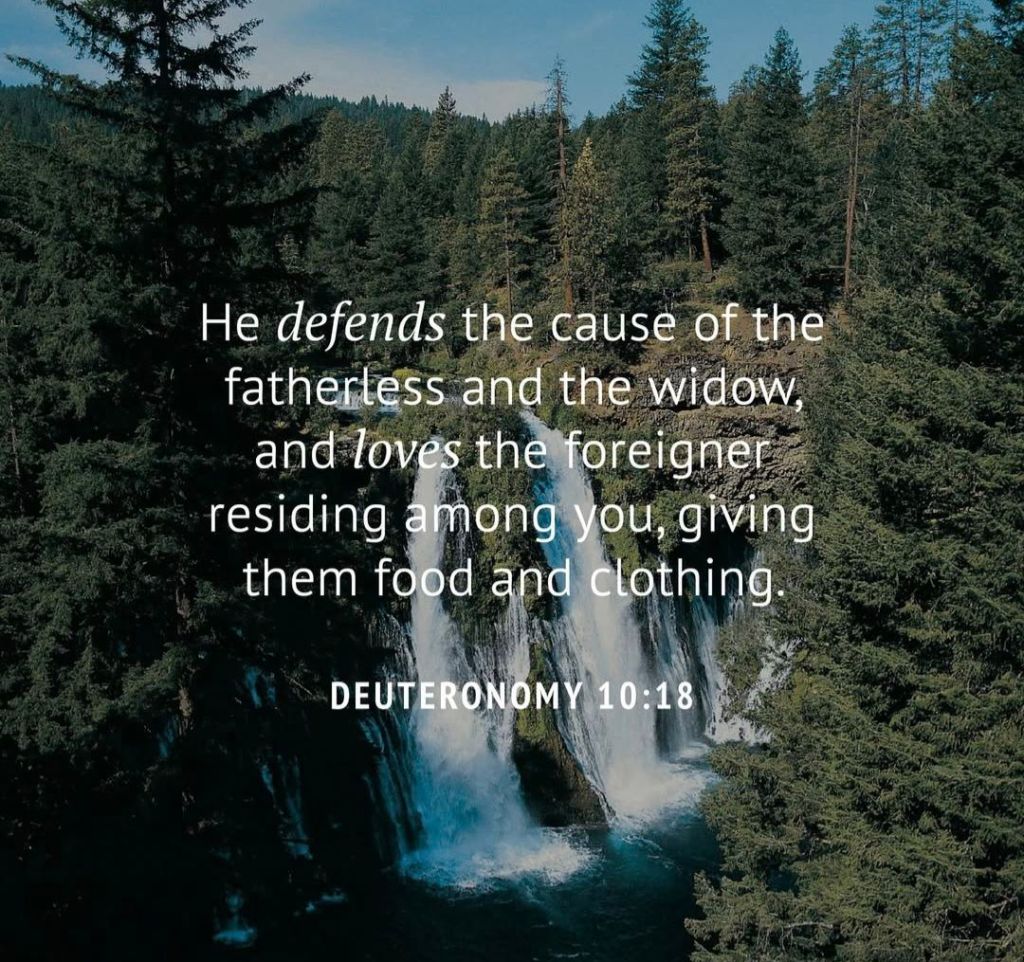
Deuteronomy 10:14–19 (NIV): 14 To the LORD your God belong the heavens, even the highest heavens, the earth and everything in it. 15 Yet the LORD set his affection on your ancestors and loved them, and he chose you, their descendants, above all the nations—as it is today. 16 Circumcise your hearts, therefore, and do not be stiff-necked any longer. 17 For the LORD, your God is God of gods and Lord of lords, the great God, mighty and awesome, who shows no partiality and accepts no bribes. 18 He defends the cause of the fatherless and the widow and loves the foreigner residing among you, giving them food and clothing. 19 And you are to love those who are foreigners, for you yourselves were foreigners in Egypt.

Every now and then, we have new joiners at work. In a sense, these are “foreigners” in our midst. I’ve noticed that some have it good as they are properly welcomed and that much effort are expanded by the incumbents to make the new joiners feel at home. In my previous organisation, they assigned specific buddies to welcome specific new joiners. One is assigned to one. But unless the new joiner is joining your department, the euphoria is usually over after the first day. One lunch together, and after that, it is BAU (business as usual).

I have not experienced it myself, but I have heard stories of new joiners getting the cold shoulder. For some reason, the new joiner is boycotted and made to feel unwanted. Perhaps a popular colleague had been let go, and his replacement is seen through hostile and bitter eyes. Loyalty to the previous guy, but in most cases, it is no fault of the new joiner. This is most unfortunate. However, like the euphoria over the welcomed new joiner fading after the first day, most of these boycotts will also not last long, overwhelmed by the pressures of your own workload.

In understanding God’s heart, it is necessary that we look at passages like today’s Deuteronomy 10. The LORD in telling the Israelites to be grateful, told them that despite the heavens and earth and everything in them are His, He chose their ancestors (Abraham, Isaac and Jacob) and loved them as His own. Likewise, he chose them (the Israelites delivered out of Egypt) above all other nations. Thus, they must likewise love the foreigners among them as they were once foreigners in Egypt.

God’s heart is always with the orphans, widows, and foreigners. During those ancient ancient times, these underprivileged groups were likely slaves (or captured prisoners of war or debtors) or those who lost their lands through some misfortune (every family who came out of Egypt were given a piece of land) or families who lost their fathers fighting battles to conquer the Promised Land of Canaan.

Our eyes must always be on the underprivileged even as we have been given the privilege to know Jesus and are destined for eternal life. We ourselves may be struggling, but there are many worse off than us. Extend them a helping hand whenever we can. Have a compassionate heart because that’s the heart of our God, our Heavenly Father and that of His beloved Son, our Lord Jesus Christ!

Clean from the inside

https://odb.org/2025/04/21/deep-clean

Matthew 23:23–26 (NIV): 23 “Woe to you, teachers of the law and Pharisees, you hypocrites! You give a tenth of your spices—mint, dill, and cumin. But you have neglected the more important matters of the law—justice, mercy, and faithfulness. You should have practised the latter without neglecting the former. 24 You blind guides! You strain out a gnat but swallow a camel. 25 “Woe to you, teachers of the law and Pharisees, you hypocrites! You clean the outside of the cup and dish, but inside, they are full of greed and self-indulgence. 26 Blind Pharisee! First, clean the inside of the cup and dish, and then the outside will also be clean.

Jesus has always emphasised that the thing that makes us unclean lies within us. That is, what comes out matters more than what goes into us. Thus, the argument by Paul against not eating certain foods as it makes us unclean before God and, in the process, removed from our faith the Jewish concept of kosher. As Christians, there is no prohibition on us eating pork as is being practised by the Jews. The only restrictions we have are not to consume blood and food offered to idols.

In Matthew 23, Jesus speaks of giving tithes while observing justice, mercy, and faithfulness and not only doing the former but neglecting the latter. It is what’s inside that really matters. Jesus is always focusing on the heart as the heart is where evil resides. We may be all good and holy in our appearance but harbour hatred, conceited and bitter thoughts on the inside. We may be praising God with our lips, but if our heart is unchanged, we will remain selfish, egoistic, greedy, and self-serving. Our focus in life is still ourselves, rather than the interests of others and God’s plans and purposes.

It is a fundamental tenet of our faith that what is unseen is what matters. God sees our hearts while others can only guess. Faith is believing in things unseen, which are eternal, and yet God also sees what’s unseen in us, and that is our heart.

We are, of course, not perfect. Our natural and old selves are still powerful. But we need to be on that journey to transform from within us to be more Christ-like. Allow the Holy Spirit to work within us. Don’t resist the work of the Spirit. Strive to become the person God wants us to be. Leave behind our own dreams and ambitions and sanctify them before God. Allow Jesus to take control of our lives.

Jesus speaks of the heart and to the heart, and on that day, He will also see our heart!

He is the Risen Christ!

https://odb.org/2025/04/20/the-best-evidence

Acts 2 – 34 For David did not ascend to heaven, and yet he said,

“ ‘The Lord said to my Lord: “Sit at my right hand 35 until I make your enemies a footstool for your feet.” ‘

36 “Therefore let all Israel be assured of this: God has made this Jesus, whom you crucified, both Lord and Messiah.”

It’s true that the best evidence of the resurrection of Christ is the transformation of the lives of those who believed in Him. As much as Peter, the other Apostles, and the believers then  were eyewitnesses of the resurrection, it is their changed lives that gave the strongest evidence of Christ crucified and resurrected. From denying Christ 3 times, Peter preached Christ crucified and resurrected with the power and boldness of the Holy Spirit. The Apostle Paul, from prosecuting the followers of the Way, went through so much pain and suffering to preach Christ crucified and resurrected that Christ used his Pharisee training and Jewish theological education to flesh out the fundamentals of the Christian faith. It was done in a way that related to the Greek thought of the day that the non-Jewish could understand and thus expanded the faith beyond Jerusalem, Judah, and Samaria to Rome and the rest of the world.

Millions have been impacted by Christ throughout the generations, among others, lifting many from a life of crime and poverty to righteousness and abundance. My family is a good example. From making ends meet nearly every month, relying on a sole breadwinner, we have now progressed to become a dual income middle-class family with enough to finance the education of our children. And even as we are approaching retirement age, we have employee providence savings to help us in our old age. Could we have achieved the same had we not known Christ? I’m not sure. But one thing I’m 100% sure of is that even if we could have achieved the same without Christ, we will not have the eternal life and everlasting hope without Jesus in our lives!

The resurrection of Christ can not be untrue. Sometimes, when I read Jewish discourse and unbelief of the Messiah and their denial of the prophesies having been fulfilled, I cry deep within me. It is as clear as daylight, and yet they couldn’t see it two thousand years ago, and they still can’t see it today. Similarly, our cousins who are hell-bent to conquer the world.

Today, as we celebrate Easter Sunday (or as some have chosen to rename it Resurrection Sunday), let us remember and honour Christ for His sacrifice on the cross and His victory over the grave, by living a life worthy of His name. The best evidence of His resurrection is still our lives reflecting His glory and goodness! Amen!

Have a Blessed Esater and Resurrection Sunday, everyone!

Blessed Good Friday

https://odb.org/2025/04/17/life-and-death-in-christ

John 12:23–26 (NIV): 23 Jesus replied, “The hour has come for the Son of Man to be glorified. 24 Very truly I tell you, unless a kernel of wheat falls to the ground and dies, it remains only a single seed. But if it dies, it produces many seeds. 25 Anyone who loves their life will lose it, while anyone who hates their life in this world will keep it for eternal life. 26 Whoever serves me must follow me; and where I am, my servant also will be. My Father will honour the one who serves me.

The illustration of a seed used by Jesus is apt as the dying of the seed results in the birth of the plant, which eventually becomes a tree with lots of leaves and fruits. It is from the seeds in the fruits that this process is repeated and the species of that plant is perpetuated. This is how nature works. That is how God has created nature to work.

In the spiritual context, the death of Christ on the cross led us to have eternal life, that anyone who loves their life will lose it, while those who hate their life will keep it for eternal life. Meaning to say we need to prioritise our spiritual life while on earth so that we gain it in eternal life. Even as we may struggle living here on earth with the bills to pay, the scarcity of income, as we live a thrifty life to make ends meet and save up for a rainy day, we must never let our spiritual life take a backseat. One day, we will leave this earth in our physical form and transcend into the spiritual realm, and what we have done for our spiritual life will count for our eternal life.

One way taught by Paul was for us to let our old self die and let our new self in Christ live and be victorious. If we dwell deeper into the seed, the seed never actually died. Because a dead seed will not be able to produce life. The seed transforms into another form and becomes a plant that sprouts flowers, leaves, and fruits. The illustration given by Christ is thus correct. It is the transformation of the seed that gives life. As much as we crucify our old self, it still lives on to haunt us. That is why we need to transform our old self to become our new self in Christ. If Christ just died on the cross, He would not have defeated the devil and would not have overcome sin and death. Instead, He rose again after 3 days, proving that through Him, the sting of death over sin is no more. His death and resurrection are the keys to eternal life. His resurrected body is the glorified body we look forward to one day, so we may dwell again with God and Christ in Eden recreated. That is our hope of glory.

Blessed Good Friday, everyone! If you have the chance to go to church today, remember and honour Christ for His sacrifice on the cross of Calvary, for dying for our sins that we may be reconciled with God. We look forward to Resurrection Sunday to honour and commensurate His victory over sin and death! He is risen! Indeed He is alive even today! Hallelujah! Praise the Lord!

Forget me not

https://odb.org/2025/04/18/to-be-remembered

Luke 23:39–43 (NIV): 39 One of the criminals who hung there hurled insults at him: “Aren’t you the Messiah? Save yourself and us!”
40 But the other criminal rebuked him. “Don’t you fear God,” he said, “since you are under the same sentence? 41 We are punished justly, for we are getting what our deeds deserve. But this man has done nothing wrong.”
42 Then he said, “Jesus, remember me when you come into your kingdom.”
43 Jesus answered him, “Truly I tell you, today you will be with me in paradise.”

The story is that when God was naming flowers, the little flower was worried that God would forget it and blurted out – forget me not! God then named them “Forget Me Not!” Of course, this is folk tale, but it is an interesting story.

In the Gospel, there is the real story of two criminals who were to be crucified with Jesus as recorded in Luke 22:39-43. One mocked Jesus to save them and Himself since He is the Messiah. But the other defended Jesus that while they deserved their sentence because of their deeds, Jesus had done nothing wrong. The second criminal, having faith in the innocence of Christ and believing Christ to be the Messiah, asked Jesus to remember him when Christ comes into His kingdom. In other words, don’t forget him when He really becomes the King. Jesus assured him that he would be with Him in paradise that day itself. So even though he will die, he will live (John 11:25).

For us who are justified by faith in our faith and belief in Jesus Christ, our salvation is assured since we know salvation is a free gift from God. It is not by works of man. Nevertheless, faith without works or good deeds is dead. See James 2:17. If we look at the parable of talents personally taught by Jesus, we will see that there is an expectation that we do something with the life given to us. We are not to hide the talent that represents our lives and the giftings God gave us. We need to put it to work. Practically, it means that we need to serve God and live our lives in accordance with His Word and fulfil God’s plans and purposes for our lives. We need to be like Paul and declare that to die is gain, but to live is Christ (Philippians 1:21). Simply said, we live for Christ and not for ourselves or our own ambitions and dreams even as we align and sanctify our ambitions and dreams with God’s plans and purposes for our lives.

When we die one day, there will not be that need to make that plea – forget me not. We were in constant contact with Christ when we were living, praying, and speaking to Him in our quiet time. When we pass away in the body, it will just be a transition to another dimension into the spiritual realm. We will see Christ face to face. One day, we will live with Christ and Father God in the new heaven and new earth where there will not be any tears or night as the glory of God will fill the place. We will be rightful citizens of the new heaven and new earth as our names are written in the Book of Life!

Anger

https://odb.org/2025/04/16/a-pastry-war

Ecclesiastes 7:9 Do not be quickly provoked in your spirit, for anger resides in the lap of fools.

Married couples will bear witness that a small spark can quickly become a raging fire if both parties do not back down. That is why for a marriage to last, usually it is better for opposites to attract (like a magnet) than for both to have a similarly fiery demeanour. If the husband is the fierce type and the wife is non-confrontational, the likelihood that the marriage is peaceful is high, but it is also possible that the wife will always be bullied.

However, I think in the present society, it is less common to find non-confrontational women – women are now more eloquent, confident, and smart. Look at the public universities today. The male/female ratio for 2022 in Malaysian public universities was 39/61!

The best way to avoid conflicts, especially between married couples, is to walk away, more so if you’re the man and the aggressive one. This is because the possibility of the man inflicting harm is much higher. Ecclesiastes 3:9 teaches us not to be easily provoked. It means don’t easily get angry. If we are not angry, we need not walk away. We may remain calm and composed even when provoked. It’s a strong character trait we can be proud of in Christ if we are really able to control our anger when provoked.

We have probably read many news reports of how a sudden provocation can lead to dire consequences. A fight or an altercation may lead to someone being killed, and chances are the perpetrator may face the death penalty. Husbands and wives suffer unwanted deaths when a sudden provocation leads to a homicide. In criminal law, the defence of grave and sudden provocation can reduce a murder charge to a charge of culpable homicide not amounting to murder; in American parlance, from first to second degree murder. In Malaysian law, the reduction of the charge reduces the penalty from death to life imprisonment (means 20 years maximum). Sometimes, wars even start from trivial matters due to issues of anger and loss of face.

As a believer in Christ redeemed by the blood of Christ, I think the most important point we should remember is not to provoke our Father God to anger. God is super composed and abundantly patient. But even He is capable of anger even if He may be slowest being to ever be provoked to anger. Nevertheless, we must exercise restraint and caution in the way we live!

As we usher in Good Friday and Easter Sunday this week, exercise restraint and not be quickly provoked to anger for indeed anger resides in the laps of fools! Do not live by our emotions but by our faith in our Lord Jesus Christ!

Ruth

https://odb.org/2025/04/15/i-will-stay

Ruth 1:16–17 (NIV):
16 But Ruth replied, “Don’t urge me to leave you or to turn back from you. Where you go I will go, and where you stay I will stay. Your people will be my people and your God my God. 17 Where you die I will die, and there I will be buried. May the LORD deal with me, be it ever so severely, if even death separates you and me.”

During ancient times, women were largely not given much prominence. They usually support men in most narratives. The bible is no exception as it was written in the literary style of the then existing period of time. Thus, as much as we know Sarah/Sarai was the wife of Abraham/Abram, those chapters in Genesis were more about Abraham than Sarah. It was the same with Isaac’s Rebecca and Jacob’s Rachel and Leah. The wives were supporting characters to Abraham, Isaac, and Jacob. Another example was Joseph. Although the Egyptian Pharoah made him second in command and gave him a wife, Asenath, an Egyptian aristocrat, who bore him two sons, Manasseh and Ephraim (who later formed two of the 12 tribes of Israel), little is known of her.

But Ruth was different. A whole book in the Bible is about her, with only Queen Esther being the other exception. What made Ruth special was that she was a Moabite who chose to follow her mother-in-law, Naomi, back to Israel and adopt Jewish culture and Yahweh as hers. Her famous and often quoted words are, “Your people will be my people, and your God my God.” It illustrates God’s love and compassion and inclusiveness, way before Jesus commissioned Paul to preach the Gospel to the Gentiles. Ruth later married Boaz as the story goes, and she became the great grandmother of David, the most illustrious King Israel ever produced. When Jesus was born, He proudly traced his ancestry to the House of David, and Jesus is thus also a human descendant of Ruth!

The parallel we have with Ruth is that we are also grafted into the family of God as adopted sons and daughters through the blood of Christ shed on Calvary, which we will remember and honour this coming Good Friday. We were not the chosen ones but became the chosen ones through Christ. In a way, we are like Ruth. The God of Israel has become our God, and His people, Israelites, are now our people. We are now a part of the universal and spiritual family of God. Like Ruth, who was a foreigner, we were Gentiles (not Jewish).

God could have chosen to remain God of only the Jews. Instead, He so loved the world that He sent Jesus to the world so that whosoever believes in Him shall not perish but have life everlasting. The irony is that the Jews rejected His Messiah and Son and His message of hope and reconciliation. We as believers and disciples of Christ are the new spiritual Israel.

This week, as we celebrate Good Friday and Easter Sunday, honour, remember and celebrate Christ’s death and resurrection! The day of His return is not far away. There will be turmoil and chaos. Cling on to Him steadfastly, and we will be saved! Amen!

Gospel resources

https://odb.org/2025/04/14/sharing-gospel-resources

Romans 1:16 (NIV): 16 For I am not ashamed of the gospel, because it is the power of God that brings salvation to everyone who believes: first to the Jew, then to the Gentile.

Recently, I had the privilege and honour to help out in a mission trip by a brother and his son to a faraway people in a faraway land. I only gave him some funding, a small amount I can afford. One day, I hope to be able to be a part of such trips that teach, minister, and share the Good News. Different organisations do this differently as some organise city-wide evangelistic healing campaigns. While others do it on a smaller scale, like joining teaching retreats or camps.

This is what the author of today’s ODB article calls Gospel resources. That is anything given by God to spread the message of His love and salvation. The point is that we must get Gospel resources to places where they are needed most. Small communities that are encouraged and strengthened will go a long way to proclaim and bring the message of hope to the larger community there. We must help, in one way or another, to place the spiritual flag of salvation in such needy places that the name of Jesus Christ is proclaimed.

Don’t look down upon ourselves. We ourselves are Gospel resources. Whatever spiritual talents and giftings God have given us, use them for His glory. Volunteer ourselves that we may be a blessing unto others. Focus on our strengths and not our weaknesses. But if we are unable to personally attend, help by giving finance and pray for their spiritual wellbeing. Pray for the power of God to be manifested in their midst and for the spirit of salvation to prevail and reign!

Have a good week ahead even as we prepare to celebrate Easter Sunday! In fact, have a good Holy Week ahead, the week that starts yesterday as Palm Sunday and eases into Good Friday and Easter Sunday! Remember – the Gospel is the power of God that brings salvation to everyone who believes, whether Jew or Gentile.