Rebuilding the walls of Jerusalem

https://odb.org/2025/03/10/resting-in-christ

Nehemiah 4:1–9 (NIV): 6 So we rebuilt the wall till all of it reached half its height, for the people worked with all their heart.
7 But when Sanballat, Tobiah, the Arabs, the Ammonites and the people of Ashdod heard that the repairs to Jerusalem’s walls had gone ahead and that the gaps were being closed, they were very angry. 8 They all plotted together to come and fight against Jerusalem and stir up trouble against it. 9 But we prayed to our God and posted a guard day and night to meet this threat.

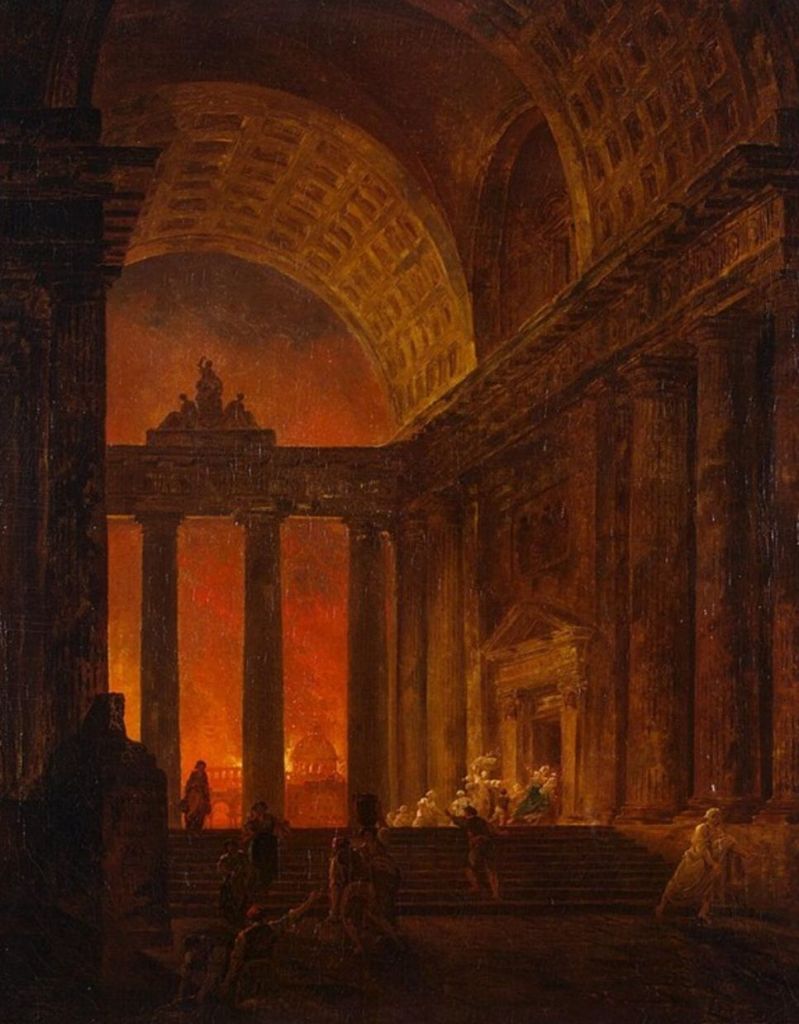
If Moses is known for bringing the Israelites out of Egypt and the introduction of the Mosaic law and Joshua is known for his conquest of Canaan (especially the fall of walls of Jericho), then Nehemiah is known for rebuilding the walls of Jerusalem after the return of the Jews from Babylon during the period of the Second Temple. Nehemiah, a high official in the Persian court, sought and was granted permission by King Artaxerxes I to return to Jerusalem as the governor to rebuild not only the walls of Jerusalem but also the Temple. He faced opposition and ridicule from the surrounding enemies of Israel but persevered through. With the people united in strength and vision, they rebuilt the walls of Jerusalem in fifty-two days, doing masonry work as well as posting armed men to keep guard. They displayed both diligence and bravery, working tirelessly to lay the bricks and stones and yet willing to take up arms to fight if they were attacked by their enemies. They prayed to God at the same time, and perhaps because they stood guard and the LORD protected them, none of their enemies attacked them. Although their resources were divided (stonework and brickwork/armed guards), they finished their work in record time!

Nehemiah teaches us an important lesson in rebuilding our spiritual lives. When we are rebuilding, we need to be vigilant at the same time. With prayer and by committing our spiritual lives to God, we have Him on our side to help us rebuild our spiritual lives. Yet, we must remain vigilant to protect ourselves from the evil one. Practically even as we devote time to pray and dwell in His Word, we mustn’t do anything that may allow room for the enemy to attack or distract us. We must stand strong in the midst of the devil’s vile schemes and temptations.

Nehemiah also speaks of rebuilding our natural lives in the sense that God is able to restore what the locusts have devoured. The Lord will rebuild our lives if we have been devastated by events or circumstances, the same way He sent Nehemiah to do so for Jerusalem. As He did not allow Jerusalem to lay in ruins, He will not allow our ruins to overcome our resolve to rise again both, spiritually and naturally. Our Lord will pick us up and carry us through the storm, and then we will walk again, in the splendour of His love and grace. The LORD our God is the rebuilder of Jerusalem and is the rebuilder of lives! Jesus Christ is the resurrection and the life! Amen!

Name lists and the Book of Life

https://odb.org/2025/03/08/the-list-is-life

Numbers 26:4 (NIV): 4 “Take a census of the men twenty years old or more, as the LORD commanded Moses.” These were the Israelites who came out of Egypt:

We needed to wake up at 5.30 a.m. and travel out of the city early yesterday morning to come back to Seremban for the weekend and thus didn’t have time to write and send out yesterday’s morning devotion. But the topic was intriguing, and thus, I am writing about it today.

The bible has places where a list of names appears, like in Numbers 26. In the latter, a census was taken, and those who were delivered by Moses out of Egypt en route to the Promised Land were accounted for one by one. Other lists are found like in Genesis 5, tracing the descendants of Adam or the famous geneology of Jesus in Matthew 1. It is interesting to read name lists if we are history buffs looking for “who is who” in a lineage of kings and emperors or even ordinary people but if we need to memorise the names for exams, then it becomes a nightmare indeed! But usually name lists in the bible are boring to read. They have little meaning to us unless we are in them somehow like a great descendant is amongst the many names, like the memoriam set up for those who fought and died in wars.

Even though name lists may be boring to read, it does reflect one thing – that our God the LORD made the effort throughout generations to remember people who had come and gone. They may be mere human beings, but the LORD remembers each and every single one of them. It goes to show that though we have limited lifespans and life stretches thousands of years, we were never a mere statistic. Each and every one of us has a name and a lifetime of history and memories. We all have millions of moments lived out in life.

This brings us to the ultimate name list that we all seek out for, and that is the names of those written in the Book of Life. Through the blood of Jesus Christ shed on the cross of Calvary, and our faith in Jesus, we have our names written in the Book of Life, and as much as the Devil tries to distract, deceive and draw us away from the narrow path of righteousness that leads to eternal life, we will stand firm to ensure that our names remain written in the Book of Life!

This morning, as we set out to our respective churches to worship God, be thankful that our Lord Jesus Christ has done the work for our names to be written in the Book of Life and that we are now co-heirs with Christ to share in the inheritance of the saints! Amen! Hallelujah! All praises be unto God!

Worry adds nothing

https://odb.org/2025/03/07/life-without-worry

Matthew 6:25-34 NIV25 “Therefore I tell you, do not worry about your life, what you will eat or drink; or about your body, what you will wear. Is not life more than food, and the body more than clothes? 26 Look at the birds of the air; they do not sow or reap or store away in barns, and yet your heavenly Father feeds them. Are you not much more valuable than they? 27 Can any one of you by worrying add a single hour to your life? 28 “And why do you worry about clothes? See how the flowers of the field grow. They do not labour or spin. 29 Yet I tell you that not even Solomon in all his splendour was dressed like one of these. 30 If that is how God clothes the grass of the field, which is here today and tomorrow is thrown into the fire, will he not much more clothe you—you of little faith? 31 So do not worry, saying, ‘What shall we eat?’ or ‘What shall we drink?’ or ‘What shall we wear?’ 32 For the pagans run after all these things, and your heavenly Father knows that you need them. 33 But seek first his kingdom and his righteousness, and all these things will be given to you as well. 34 Therefore do not worry about tomorrow, for tomorrow will worry about itself. Each day has enough trouble of its own.

If we have been in the faith for a while, we would know that worry adds nothing to our lives. It is a direct teaching of Jesus as set out in Matthew 6:25-34, and since Jesus is the Son of God and He is God in the flesh, His words are wiser than even the words of Solomon. In fact, worry can sometimes be detrimental to our health, especially our mental health. Experience will show that nothing changes with worry. Will we add an hour to our life by worrying? No. Look at the birds of the air or the flowers that bloom. God takes care of them. In the same way, God will take care of us.

Having said that, we know that we will still worry. We will still worry about the future. What tomorrow will bring? Will our children and their children have a good future? Will they carve a place for themselves in this big wide world? Will they find peace and joy in God? Or will they stray away, distracted by the challenges of life and the bright lights of the world? Will we have enough to retire when we are no longer earning? Will we be doing anything useful for society and God after we retire? In what tangible way can we really serve Him? Missions? Ministry?

The teaching of Jesus in Matthew 6:25-34 is simple – worry adds nothing, God will take care, so seek first the Kingdom of God and His righteousness and all these shall be added unto us. Instead of worrying about things and the future, just put God first in all that we do. Pursue the things of God and His righteousness. Dwell deeper into His Word. Serve God more meaningfully. Focus on what really matters in eternity, not just what we can see in the natural. As faith is believing in things unseen. Have a kingdom mindset. Make sure we are always on the narrow path. We can not escape the challenges of this world, but as we give our lives to God, we can be rest assured that He will bring us safely through this world.

Remember Psalm 23? Though I walk through the valley of the shadow of death, I will fear no evil; For You are with me; Your rod and Your staff, they comfort me. Don’t forget and be reminded that the LORD always wants the best for us. Put our trust fully in Him instead of worrying. That will serve us better in the long run, in our run up to eternity.

Not easily angered or offended

https://odb.org/2025/03/06/not-easily-offended

Proverbs 19:11 Sensible people control their temper; they earn respect by overlooking wrongs.

I believe one of the toughest emotions for humans to control is anger and offence. This was on display for all the world to see when President Volodymyr Zelenskyy recently met President Donald Trump at the Oval Office, which ended disastrously. Trump’s reaction was swift as he suspended US military aid to Ukraine the next day or two. There were indications that Vice President JD Vance and Trump baited Zelenskyy. But then a seasoned politician would have sensed that a mile away and should have been alert enough not to take the bait. Instead, he escalated the situation! As much as many do not like Trump, he was right to say that Ukraine has no cards without the US, and good diplomacy is always to ensure that one gets the cards one way or another. Thus, if Zelenskyy had remained humble and followed Proverbs 19:11 by overlooking the wrong (the baiting), he would have come out on top at the Oval Office meeting.

However, as human beings, it is usually exceptional for us to be able to overlook wrongs and not get offended. It is an unfortunate human condition. In fact, the higher we are in the pecking order, the more respect we demand. People at the top have the liberty to pick on anything and blast us if they want to, and usually, any attempt at defending or justifying ourselves will make us look “defensive” as though we were wrong in the first place. Not a question of who is really right or wrong, but who is the more powerful one in the room and our relationship with that person. Some people say we can not have a room full of yesmen, and that’s true, but it requires extreme tact to put a contrary view across a room full of egoistic and powerful people. That is why Proverbs 19:11 is very wise – sensible people control their temper. They don’t get angry easily, especially if it is not their place to get angry.

I find that personally, as I get older, I get grumpier and sometimes easily get offended and upset. Maybe it is part of growing old. Maybe it is because I am more senior in terms of life experience or have achieved more in terms of monetary wealth. It is not a good trait, though, when our bodies have various afflictions. Getting too angry may lead to a stroke or a heart attack! They say, if you can’t take the heat, get out of the kitchen!

Today’s message is a reminder of ancient wisdom taught by the LORD God through Solomon. Just a few words, but it contains a gem of advice! A sensible person indeed is slow to anger and does not easily get offended! Apply it, it will be better for our overall well-being!

Unfathomable God

https://odb.org/2025/03/05/unfathomable-god

Isaiah 40:25–26 (NIV): 25 “To whom will you compare me? Or who is my equal?” says the Holy One. 26 Lift up your eyes and look to the heavens: Who created all these? He who brings out the starry host one by one and calls forth each of them by name. Because of his great power and mighty strength, not one of them is missing.

It’s a given that as mere humans, although His highest creation, we will not fully understand Him or His creation. Thus, as we look to outer space, there is so much more to be discovered. New galaxies, new planetary or new solar systems. The universe out there is so vast and infinite that it is like we in our neighbourhood compared to the big, big world out there. The different cultures and peoples out there, each locality like our own neighbourhood or town having its distinctive features and history. Different people who had made their mark and passed on, the generations that came before us, and even our forefathers.

I am an ardent fan of history and geography, and we know that as humans, we mostly populate places that are near water sources like rivers, lakes, and sea sides. The latter because that is where the trade routes have been since ancient times. With large rivers, the interior of a nation becomes accessible like the Mekong, Irrawaddy, Yangtze, and the Nile. Thus, dessert places like the Northern Territories in Australia or the tumultuous Indian Ocean, the depths of the oceans, or even Antarctica, are largely unexplored and hold mysteries of God’s creations. Within planet earth itself, there is still much to be discovered, what more the vast universe out there which is totally inaccessible by us with our present day technology. The stars are definitely not gods but another one of the many creations of the one true and living Almighty God, the Great I Am.

Despite the vastness of creation vis-a-vis us as a mere human individual, God the creator of the universe and all things reaches out to us since ancient times. Who can compare with you, O God? You who created the stars and the sky. Yet you know us by name and have a plan for each and every one of us formulated since the foundations of the world. We can not fathom how this is all possible, but you are Jehovah Elohim, the mighty God!

This morning, we would like to thank you for your calling upon our lives. For your plans and purposes for us. For your desire to see us become the best we could be in you. You are infinitely great, and yet you know each and every one of us by name. You know every moment of our lives, every tear we had shed, every struggle we faced, every disappointment we experienced. Everything we have gone through, you know and remember. Our sins, your forgiveness, your redemption. We especially thank you for our future in Christ Jesus, our inheritance of the saints, the treasures we have stored in heaven, and the time we will spend in eternity with you.

We commit the rest of the week to you, O Lord, that you bless us with wisdom and discernment in all that we do, in our tasks at work and in church. Jesus, you are our Lord and Saviour. We put our trust in you. Help us, O Lord, to become the best we could be even for this week and month! Amen!

Jesus, the author of life

https://odb.org/2025/03/04/reading-writing-and-jesus

Acts 3:15–24 (NIV): 15 You killed the author of life, but God raised him from the dead. We are witnesses of this. 16 By faith in the name of Jesus, this man whom you see and know was made strong. It is Jesus’ name and the faith that comes through him that has completely healed him, as you can all see. 17 “Now, fellow Israelites, I know that you acted in ignorance, as did your leaders. 18 But this is how God fulfilled what he had foretold through all the prophets, saying that his Messiah would suffer. 19 Repent, then, and turn to God, so that your sins may be wiped out, that times of refreshing may come from the Lord, 20 and that he may send the Messiah, who has been appointed for you—even Jesus. 21 Heaven must receive him until the time comes for God to restore everything, as he promised long ago through his holy prophets. 22 For Moses said, ‘The Lord your God will raise up for you a prophet like me from among your own people; you must listen to everything he tells you. 23 Anyone who does not listen to him will be completely cut off from their people.’
24 “Indeed, beginning with Samuel, all the prophets who have spoken have foretold these days.

In Acts 3:15-24, Peter preached after healing a man crippled from birth by the power of the Holy Spirit. In that healing encounter, Peter, who was with John, spoke the famous words, “Silver and gold I do not have, but what I do have I give you. In the name of Jesus Christ of Nazareth walk!” Peter preached that the Jews killed the author of life, and yet God raised Him from the dead. Peter said, “By faith in the name of Jesus, this man whom you see and know was made strong. It is Jesus’ name and the faith that comes through him that has completely healed him, as you can all see.” The healing of the man crippled from birth was significant as the instrument of healing was Peter himself and not Jesus Christ our Lord. Likewise, we as ordinary believers are able to call upon the healing power of God for ourselves or for others the same way Peter healed the crippled man. Silver and gold we may not have, but what we have we may give for others to experience the power of God.

But what I like to emphasise this morning is that Jesus is the author of life. He was there at the beginning and created the world with God as He was God and the Logos (Word). He is thus able to shape and transform our lives, not just heal us. He may help us realise our full potential in life and in God. Jesus, as the author of life, is able to transform us from who we are today to someone who will fulfil God’s plans and purposes for our lives, formulated since the foundations of the world. Our destiny in God may be shaped by Christ as the author of life. He is the Alpha and Omega, the author and finisher of our faith. He is the way, the truth, and the life! He is the resurrection and the life. The one who believes in Him will live even though they may die.

I like to remind ourselves that as we go through life in the coming days, with the challenges and disappointments that it brings as well as peace, joy, and love God’s grace bestows us, we need to allow Christ the author of life do His magic in our lives. Yield to Him to change and transform us into His image even as we serve Him with all our heart, soul, mind, and strength. May the glory of God shine forth from us that others around us may be blessed and experience the goodness of God! Amen!

The Good Samaritan

https://odb.org/2025/03/03/unexpected-neighbors

Luke 10:27–37 (NIV): 27 He answered, “ ‘Love the Lord your God with all your heart and with all your soul and with all your strength and with all your mind’; and, ‘Love your neighbor as yourself.’” 28 “You have answered correctly,” Jesus replied. “Do this, and you will live.” 29 But he wanted to justify himself, so he asked Jesus, “And who is my neighbour?” 30 In reply Jesus said: “A man was going down from Jerusalem to Jericho when he was attacked by robbers. They stripped him of his clothes, beat him, and went away, leaving him half dead. 31 A priest happened to be going down the same road, and when he saw the man, he passed by on the other side. 32 So too, a Levite, when he came to the place and saw him, passed by on the other side. 33 But a Samaritan, as he travelled, came where the man was; and when he saw him, he took pity on him. 34 He went to him and bandaged his wounds, pouring on oil and wine. Then he put the man on his own donkey, brought him to an inn, and took care of him. 35 The next day, he took out two denarii and gave them to the innkeeper. ‘Look after him,’ he said, ‘and when I return, I will reimburse you for any extra expense you may have.’
36 “Which of these three do you think was a neighbour to the man who fell into the hands of robbers?” 37 The expert in the law replied, “The one who had mercy on him.” Jesus told him, “Go and do likewise.”

As we were growing up, we would have heard of the phrase “Good Samaritan” and, thus, the encouragement to be a good Samaritan. To be a good Samaritan is really to help someone else in need. Similar to the Boy Scout’s slogan, to do a good turn daily or to do a good deed a day. At that point, I didn’t know that the Good Samaritan actually originated from the bible in a parable taught by Jesus within the context of the commandment to love your neighbour as yourself. Jesus narrated the story of the Good Samaritan to illustrate the point on who your neighbour is and to stress the point that your neighbour could well be a stranger you meet who may have been robbed, beaten, and left on the road to die. If you love your neighbour, you will stop by and help him, and in the parable, the person who helped was a Samaritan, and the Samaritan did not only tended to his wounds but sent him to an inn for him to be cared for and guaranteeing his expenses there with a deposit and a promise to reimburse the inn later.

Pointedly in the parable, a priest and a Levite walked the other way when they saw the wounded man. The reason was that as the man was badly injured and bloodied, he could be close to dying. According to Jewish law, contact with a dead body would have rendered both the priest and the Levite unable to discharge their religious obligations. Jesus indirectly castigated Jewish society’s obsession with the law that they’ll rather leave an injured man to die to preserve their religious customary purity when human life should always take precedence. Either the religious law should provide an exemption, or they should attempt to save the man and be unclean. To add salt to the wound, in the parable, the person who helped was a Samaritan, an enemy of the Jews, or at least someone who is looked down on by them. Samaritans are actually descendants of Northern Jews left behind by the invading Assyrians and who intermarried with the Assyrians. As a religious sect, there are probably only 800-900 of them in the modern world, compared to more than 14 million Jews worldwide.

What’s our application for this parable? I think we tend to help people at our convenience, and it is justifiable since we are taking the trouble to help. In the real world, helping is not an obligation as people mind their own business. Thus, it is entirely voluntary, and we do it out of the goodness of our hearts. But as believers, our Lord has a higher calling for us. We should help even if it is troublesome for us. So long as we are not abeting a crime (for example, like help a criminal conceal his stolen goods), we should help whenever we see a need. How much we should help or how involved we should get? That’s based on the prompting of the Holy Spirit. I don’t think Jesus expects us to do as the Good Samaritan did as He teaches using extremes. But stopping and tending to his wounds is the least we could have done if we had met him on the infamous road from Jerusalem to Jericho.

Let the peace of God rule

https://odb.org/2025/02/28/common-ground-2

Colossians 3:12–17 (NIV):
12 Therefore, as God’s chosen people, holy and dearly loved, clothe yourselves with compassion, kindness, humility, gentleness, and patience. 13 Bear with each other and forgive one another if any of you has a grievance against someone. Forgive as the Lord forgave you. 14 And over all these virtues put on love, which binds them all together in perfect unity. 15 Let the peace of Christ rule in your hearts, since as members of one body, you were called to peace. And be thankful. 16 Let the message of Christ dwell among you richly as you teach and admonish one another with all wisdom through psalms, hymns, and songs from the Spirit, singing to God with gratitude in your hearts. 17 And whatever you do, whether in word or deed, do it all in the name of the Lord Jesus, giving thanks to God the Father through him.

I just saw a short dashcam video of a Honda CRV trying to get ahead of a Perodua Myvi in busy crawling traffic because the Myvi had earlier overtaken it. At one point, the CRV driver even got down from the car. Fortunately, nothing untoward happened as he had to get back into his car when the traffic moved on. I’m sure we have seen before such theatrics being played out, or perhaps we ourselves could have been the perpetrators. Not so much of the faster time but more of the ego of sometimes not accepting that someone else has overtaken us and took a place ahead of us. Actually, so what if we are one car behind? The time difference to arrival at our destination is probably just 10 seconds! But still, we sometimes find it difficult to let it go. We want to get ahead nevertheless. We want to win.

But as believers, we are supposed to be peacemakers and not become an instigator of trouble or conflict or turmoil. Don’t become the troublemaker or the trouble itself! Instead, we are to be peaceful in any situation. Like Paul taught in Colossians 3:15, let the peace of God rule in our hearts since, as members of one body, we are called to peace. We are not to create discord, strife, or unrest. We are not to get into fights. Let the peace of God rule and take control. Because one thing may lead to another, and we may end up in a bad situation. There could be consequences which we could have avoided. I still remember a traffic skirmish led to a driver wielding a machete on an accountant who had a severed carotid artery and bled to death. As it turned out, the culprit was likely an underworld figure as he was using false plates and was never found.

Let the peace of God rule. We don’t need to win that argument. We don’t need to be ahead. Make our point and let it go. Not everyone will agree with us.

Have a good weekend, everyone! May we experience the peace of God that surpasses all understanding as we worship Him this Sunday, and may we be an instrument of the peace of God in all situations! Amen!

Hosea and Gomer

https://odb.org/2025/02/27/a-path-forward

Hosea 3:1–5 (NIV): 3 The LORD said to me, “Go, show your love to your wife again, though she is loved by another man and is an adulteress. Love her as the LORD loves the Israelites, though they turn to other gods and love the sacred raisin cakes.”
2 So I bought her for fifteen shekels of silver and about a homer and a lethek of barley. 3 Then I told her, “You are to live with me many days; you must not be a prostitute or be intimate with any man, and I will behave the same way toward you.” 4 For the Israelites will live many days without king or prince, without sacrifice or sacred stones, without ephod or household gods. 5 Afterward, the Israelites will return and seek the LORD their God and David their king. They will come trembling to the LORD and to his blessings in the last days.

Hosea is a strange book as the LORD instructed His prophet Hosea to marry Gomer, daughter of Diblaim, a prostitute and she bore him three children. After that, she went back to her old ways and became a prostitute again. Despite her wavering and adulterous ways, the LORD instructed Hosea to reconcile with Gomer, and he redeemed her for 15 shekels of silver and a homer and a lethek (about half a homer) of barley, the homer costing also 15 shekels of silver. Thus, all in Hosea spent roughly 37.5 shekels of silver (about US$560 in today’s money) to redeem Gomer. We are not told the circumstances why Gomer went into prostitution in the first place or later.

In the spiritual sense, the LORD used Hosea’s love for Gomer to illustrate His love for Israel that despite their worship of other gods, He still loved and remembered them. He had never forsaken and abandoned them in spite of their insolence and idolatry. As history has shown, the LORD has always stood with and for Israel, even modern-day Israel. 

The application of the story of Hosea and Gomer is for us to love and reconcile with our loved ones and Christian friends even if they are not walking in godly ways right now. Gomer was a prostitute and thus adulterous, and yet God instructed Hosea to marry her, and when she went back to her old ways, the LORD instructed him to reconcile with her. We do not know why Gomer was who she was, and in a way, this implies that whatever may be the reason, we are still to love those who have gone astray. Jesus taught us that we are not to judge and are to love our neighbours, even our enemies. What more our loved ones and Christian friends who may have gone astray. Stand with them and for them, like God does with Israel. Why did Israel worship Baal and the Asherah poles? It doesn’t matter. God still loved Israel.

The joy of giving

https://odb.org/2025/02/26/the-joy-of-giving-2

Acts 9:36–43 (NIV): 36 In Joppa there was a disciple named Tabitha (in Greek her name is Dorcas); she was always doing good and helping the poor. 37 About that time she became sick and died, and her body was washed and placed in an upstairs room. 38 Lydda was near Joppa; so when the disciples heard that Peter was in Lydda, they sent two men to him and urged him, “Please come at once!” 39 Peter went with them, and when he arrived, he was taken upstairs to the room. All the widows stood around him, crying and showing him the robes and other clothing that Dorcas had made while she was still with them. 40 Peter sent them all out of the room; then he got down on his knees and prayed. Turning toward the dead woman, he said, “Tabitha, get up.” She opened her eyes, and seeing Pete, she sat up. 41 He took her by the hand and helped her to her feet. Then he called for the believers, especially the widows, and presented her to them alive. 42 This became known all over Joppa, and many people believed in the Lord. 43 Peter stayed in Joppa for some time with a tanner named Simon.

The natural tendency of us humans is self-preservation, and that includes keeping rather than giving. In terms of money, we save up to keep for the future. If we are young, we save up to pay for a large purchase like a home or to prepare for a wedding. If we are older, like at my stage of life near retirement, we save for our old age when we will no longer be earning. It is fortunate that in Malaysia, we have the Employees Provident Fund that forces us by law to save for our old age the moment we start working. We may not have much liability to carry when we reach 60, as hopefully we would have paid off our mortgages and settled our children’s education needs. But on top of the day to day living, there is the question of the delayed gratification of starting to see more of the world or travelling more for missions. Then we may also want to give a headstart to our children by helping them buy their first property or prepare for married life or start a family.

As much as we pay our tithes and offerings and help out people with cash gifts when prompted by the Holy Spirit, the point this morning is that giving is not only about money. Thus, when we retire and don’t earn as much anymore (some of us may have passive income), we could start using our time (no longer bound by office hours) to give by blessing others. Tabitha (or her name in Greek, Dorcas) used her tailoring skills to make clothes for others. So when she died as recorded in Acts 9, those who were previously blessed by her, the widows, were really grieved and asked Peter, who was nearby, to come and see her body. They showed him the robes and clothing made by her. The generosity and generous giving and helpful nature of Tabitha shone through, although the thrust of the passage was Peter’s first raising of someone from the dead. It was Lazarus reenacted! Only this time, it is Peter and not our Lord Jesus Christ!

Giving our money to someone in need as prompted by the Holy Spirit is indeed joyful and is an excellent way to use our earthly resources to store up our treasure in heaven. But the joy of giving is not limited to money only. Spending an hour with someone hearing about his struggles in life could be our way of giving. Or, like Tabitha, we could make things and bless people with the things we make. We could grow plants and give them away, or if we have fruit trees, we could give away the fruits to bless others.

I guess, most of the time, if we could, we want to catch up on our sleep, especially as we grow older. That’s true of me! 😀😀😀…. But I trust God will surely appreciate and be very happy with us if we resist the temptation to sleep and make the effort to go bless someone with something. That is the joy of giving!