
https://odb.org/2026/02/12/a-non-anxious-presence
Psalm 4: 6-8 NIV: 6 Many, Lord, are asking, “Who will bring us prosperity?” Let the light of your face shine on us. 7 Fill my heart with joy when their grain and new wine abound. 8 In peace I will lie down and sleep, for you alone, Lord, make me dwell in safety.
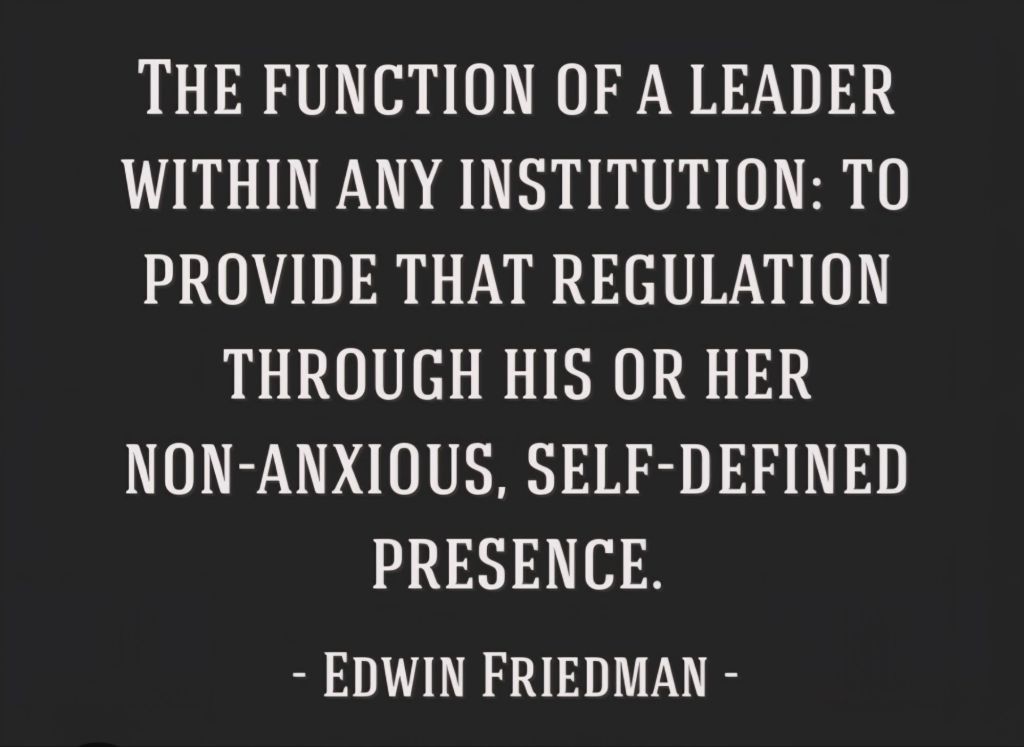
In his 1985 book Generation to Generation, family therapist and Rabbi Edwin Friedman introduced the phrase “a nonanxious presence.” Friedman’s thesis, later articulated in A Failure of Nerve, is that “the climate of contemporary America has become so chronically anxious that our society has gone into an emotional regression that is toxic to well-defined leadership.” Friedman focused on how chronic anxiety spreads within a system—a family, a workplace, a congregation. Yet in the same way, a leader can offer a nonanxious presence that will spread through a system, becoming a person of peace in the middle of a storm. (John Blasé, Our Daily Bread 12th February 2026)
I think it is quite tough for anyone not to be anxious when they are anxious over something. Anxiety is a natural reaction even though you know you cannot change the outcome through your anxiety. So if you’re waiting for your exam results, you cannot but feel anxious. For example, you will roughly know how you did and you are anxious hoping to do better than your realistic expectations and you are also hopeful that it will not be your worse case scenario, turning iut to be far below your expectations. Things like that makes anxiety quite unavoidable.
But in Psalm 4, David felt he could sleep in peace because he trusted God to ensure his safety. But David was probably not a young lad then. In most of his struggles recorded in the Psalms, David was running away from his own son, Absalom. He had years of experience trusting God as he probably had many instances of the LORD preserving his life at the battlefield. Trust that comes from his relationship with God as well as his strong belief in his own destiny in God.
We are not likely to face life and death situations like David. But if there are things that bother us, that cause us to be anxious, we will need to rely on our past experiences of how God had delivered us before. Trusting also in His calling and plans and purposes for our lives. So the results turned out to be not what we had hoped for. It’s OK because we are assured of our future well-being. We know His calling for us. We know that as we respond, God will make those plans and purposes materialise through our lives. Our destiny in eternal life is also assured. So if things in the world are not going as planned, we are good knowing we are in good hands in the Lord. He knows what’s best for us!
A non anxious presence is not an impossibility. If we are grounded in our relationship with God and in our destiny in Him here on earth and in heaven, perhaps it is more achievable. For we know that His plans for us are not to destroy us but to prosper us. To give us a hope and a future. See Jeremiah 29:11.
 Ronnie's Thoughts