
https://odb.org/2025/12/08/hospitable-generosity
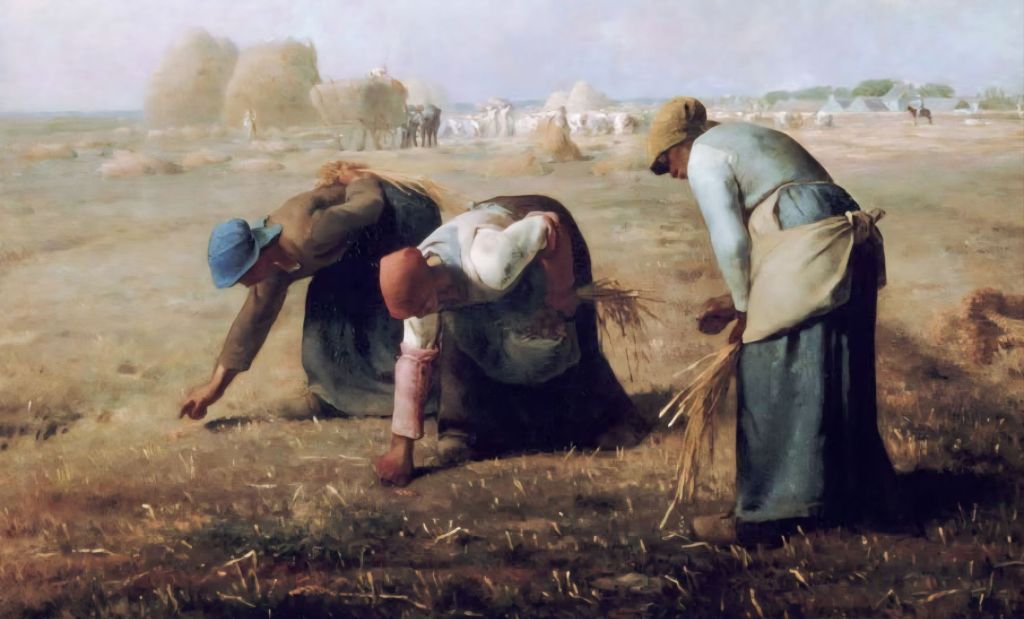
Deuteronomy 24:17–22 (NIV): 17 Do not deprive the foreigner or the fatherless of justice, or take the cloak of the widow as a pledge. 18 Remember that you were slaves in Egypt and the LORD your God redeemed you from there. That is why I command you to do this. 19 When you are harvesting in your field and you overlook a sheaf, do not go back to get it. Leave it for the foreigner, the fatherless and the widow, so that the LORD your God may bless you in all the work of your hands. 20 When you beat the olives from your trees, do not go over the branches a second time. Leave what remains for the foreigner, the fatherless and the widow. 21 When you harvest the grapes in your vineyard, do not go over the vines again. Leave what remains for the foreigner, the fatherless and the widow. 22 Remember that you were slaves in Egypt. That is why I command you to do this.
A few years ago, our church hosted refugees fleeing their country because of a change in their political leadership. Entire families came with only what they could fit in a small bag. Several of our church families opened their homes, some with little room to spare.
Such gracious hospitality echoes God’s command to the Israelites before they inhabited the promised land. As an agricultural society, they understood the importance of the harvest. Every bit of food would be essential to get them through until next year’s harvest. God told the Israelites when harvesting not to go back to retrieve what they may have missed. “Leave it for the foreigner, the fatherless and the widow” (Deuteronomy 24:19). They were to practice generosity not by giving when they knew they had enough but by giving out of a heart of trusting in God’s provision “so that the Lord [their] God may bless [them] in all the work of their hands” (v. 19). God always has enough. (Matt Lucas, Our Daily Bread, 8th December 2025)
The law in Deuteronomy for the Israelites not to go back and glean the harvest but to leave the leftovers to the foreigner, widows and orphans is one of more intriguing aspects I learnt from the Lord these past few years. It is through my morning devotional preparations that I learnt of this and I have not ceased to be amazed ever since.
It goes to show where our LORD God’s heart is and it is something we need to emulate when dealing with people in general. Unfortunately, the Israelites didn’t practice this law religiously as much as they didn’t adhere to the Mosaic law most of the time as can be seen during the reigns of their kings, most of whom rebelled against God whether in Judah or Northern Israel. This was amongst the reasons why the LORD allowed them to be exiled by the Assyrians and then by the Babylonians.
In the world, we are conditioned “not to leave anything on the table” when negotiating. This means we extract as much as we can from the other side. Similarly, we bargain for as low a price as possible when procuring. Process efficiency means we have zero tolerance for wastage or leakage. In fact, auditors conduct exercises to test for revenue leakages in businesses. That is why although RM1,000 may mean much less to a very wealthy person, like a multimillionaire, it is surprisingly painful for such a person to give it away.
As a Christian, however, in our own affairs, we need to practice generosity in giving to God, His causes or in just helping those in need. It is indeed a tragedy of the faith if we have RM100 million and yet find it hard to give away RM10,000 although we have less issue buying a car worth RM500,000 or more for ourselves.
In fact, we are to practice generosity not by giving when we know we had enough but by giving out of a heart of trusting in God’s provision “so that the Lord God may bless us in all the work of our hands”. God always has enough! We give willingly because we trust God! Amen!
Have a good week ahead, everyone! As we usher in the spirit of love, compassion and generosity this Christmas season!
 Ronnie's Thoughts